


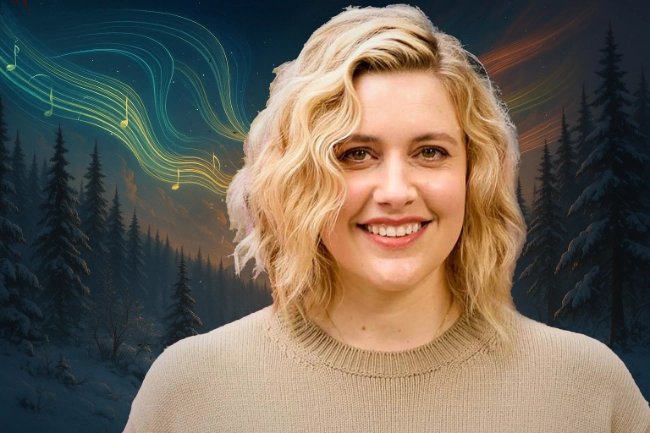
I’m a big fan of film scores. I have many soundtracks and film scores on CD in my music collection. And yes, I still buy CDs because some of this music is not being released digitally, and it largely still has a much richer sound than the digital versions. But I digress. Recently, we’ve been learning about the score for Greta Gerwig’s Narnia, and what that’s going to be like. Ever since producer Amy Pascal hinted that the film is “all about rock-and-roll,” I have wondered if that means we’re getting something like a musical version of Narnia on the big screen. And that is still possible, but we’ve recently learned more that starts to clear things up. Let’s dive in.
Why the Score Matters More Than You Think
For nearly a century, fantasy cinema has shared one defining musical characteristic: it is almost always scored with a symphony orchestra. From The Wizard of Oz to The Lord of the Rings, from Harry Potter to Disney and Walden’s earlier Chronicles of Narnia films, the orchestral palette has been the genre’s musical backbone. Sweeping strings, brass fanfares, and choral grandeur have come to signal myth, magic, and timelessness. In fact, The Lord of the Rings is one of my favorite film scores of all time.
Because of the history, this is why the rumors surrounding Greta Gerwig’s upcoming The Chronicles of Narnia adaptation have made me very curious. Reportedly drawing inspiration from artists like Pink Floyd and The Doors—not through needle-drops but through stylistic influence—the project may be preparing to leave behind the orchestral tradition that has defined fantasy storytelling for almost 100 years.
And it wouldn’t be the first time. When I heard this, I suddenly recalled the film Ladyhawke. I only saw the movie once, in a class when I was in high school, and I remembered the score.
The Rare Moments Fantasy Broke the Orchestral Mold
Although orchestral music dominates the genre, a handful of fantasy or fantasy-adjacent works have stepped outside that tradition:
-
Ladyhawke (1985), as we said above, used an Alan Parsons–style synth and prog-rock score.
-
Stranger Things, while not classical fantasy, built its identity around 80s-inspired synthwave.
-
A small number of experimental or animated projects have also pushed against orchestral expectations.
These productions have little in common stylistically, yet they share one structural trait: They abandon the symphonic grammar of fantasy and replace it with a distinctly contemporary musical vocabulary.
That’s the category Greta Gerwig’s Narnia could join. Not because its sound will resemble Ladyhawke or Stranger Things, but because it represents the same type of departure: a fantasy world scored in a modern idiom rather than an orchestral one.
This category is extremely small. And when an outlier succeeds, it has the potential to reshape expectations.
Why Industry Observers Think This Narnia Could Influence the Landscape
Gerwig is already regarded as a trend-shifting filmmaker. Her Little Women reenergized conversations about period adaptations through nonlinear structure and meta-textual framing, while Barbie demonstrated that a major piece of branded IP could carry a strong auteur voice, bold thematic ambition, and global blockbuster appeal. When Gerwig makes a stylistic swing, people pay attention.
This could be a similar cultural shift to the time that John Williams and George Lucas almost single-handedly brought back the orchestral score to feature films with Star Wars in 1977.
If Gerwig’s Narnia breaks from the orchestral norm and becomes a hit, the industry will notice. For studios, a new approach to fantasy scoring could:
-
validate non-orchestral palettes for big-budget worldbuilding
-
broaden tonal possibilities for future fantasy films and series
-
appeal to audiences increasingly comfortable with hybrid styles
- lead to more experimenting with film scores in fantasy filmmaking and beyond
In short, this musical choice, if successful, could redefine what fantasy is “allowed” to sound like.
Andrew Wyatt’s Early Comments Point to Something “Different”
Musician and songwriter Andrew Wyatt, who is co-writing the film’s music with Mark Ronson, recently spoke with PEOPLE about the early stages of the project. While cautious not to reveal details, he expressed confidence in the direction they’re heading.
“It’s exciting. I think a lot of people are going to be happy, I think people are going to really dig it.”
Wyatt noted that the team is just beginning what will be a long creative process:
“I can’t really speak too much about it because it’s [in the] very, very early days.”
“It’s going to keep us nice and busy for the next eight or nine months.”
As a lifelong Narnia fan—
“I think I read The Lion the Witch and the Wardrobe to my first grade class … and I know the story and I love the story”—
Wyatt brings personal affection for the material, but also acknowledged the uniqueness of Gerwig’s vision:
“Greta of course is [doing it] in her own way and it’s going to be different.”
That word—different—is doing a lot of work here. It doesn’t confirm the psychedelic-rock rumors. It doesn’t reveal the instrumentation or palette. But it does align perfectly with the larger pattern: This Narnia is not going to sonically resemble the orchestral fantasy films audiences are used to.
Why This Matters
Music is not just decoration in fantasy. It is the emotional architecture of the world. It tells us what is sacred, what is mysterious, what is heroic, what is dangerous.
Because fantasy so rarely deviates from orchestral scoring, breaking from that tradition is inherently significant. Whether Gerwig and her collaborators choose a rock-inflected sound, a hybrid approach, or something entirely unexpected, they will be stepping into one of the few uncharted territories left in fantasy filmmaking.
And if they succeed?
We may look back on this moment as the point where the musical identity of the fantasy genre began to evolve, opening doors for future filmmakers to imagine other worlds with new sonic languages.