
You are using an out of date browser. It may not display this or other websites correctly.
You should upgrade or use an alternative browser.
You should upgrade or use an alternative browser.
The Crow's Cry
- Thread starter Glenburne
- Start date

You bet they did!!!!!!Avess and Belaine deserved that.

Anlaida refused to so much as glance up from her sowing when a dogless Arran reentered the room. That she was stitching on his pants burned at her ears, but she refused to acknowledge either their redness or her brother’s presence. He pulled a chair close to hers and watched silently as she yanked the needle through the brown fabric. An uncomfortable quiet wedged between them.
Arran touched her chair. “Is everything all right?”
She jabbed the needle in.
“Anlaida?”
She shoved locks of hair behind her shoulder, clenching the fabric with white knuckles. “Do you know—what you’ve just done?”
He kicked at the floor with one foot. “Someone had to do something. If they haven’t learned common courtesy, then the Midlands are less civilized than most folk would give them credit for.”
She shoved to her feet, flinging down his half-completed pants. “You ruined everything!”
“Everything was already ruined,” Arran said flatly, rising to his feet. “When two so-called ‘ladies’ are insulting your family to your face, there’s not much left to salvage.”
“And now they have even more to gossip about, thanks to you! Not only do the savage Barons of the North marry two wives, have an incomprehensible system of inheritance, and live surrounded by the barbarians, they sic mangy animals on guests they dislike!" Anlaida stalked towards the window.
Arran stepped after her, adjusting his sling. “I didn’t sic anything on them. If they spent more time on life and less on foolishness, neither one would have cared about a few dogs wanting to lick them.”
“A few dogs? You sent the pack into the room!”
“No one got bit,” he countered. “And they wouldn’t have, either. Those dogs wouldn’t hurt a fly.”
“Pardon me for thinking we keep them to track criminals, then,” Anlaida snapped. Avess’s cool face hovered between them. “And if they had been bitten, frankly, they might have been less hysterical. Speaking of civility, has anyone ever told you that making your guests scream is generally a bad idea?”
Arran laughed aloud. “Less hysterical? They would probably have fainted.” He leaned back against the wall, a wryness dancing in his night-dark eyes.
Anlaida turned her back, tension driving through her stomach. “You don’t understand, do you?”
He shrugged. “No, I don’t. I don’t understand why you care what two rude women think.”
“How else am I supposed to get out of this place?” she burst, a desperate fury tearing her through.
“I—what?” He stepped forward, instinct pulling him toward her. “You’ll probably marry out—”
“Will I? Soldor still needs a housekeeper. And no nobleman wants to marry a Northlander if he has any other choice.”
“But why—”
“Who would want to stay here? With your mother's grave to remind me that my mother was only a second wife?"
“His favorite!”
“I don’t care!” she cried, her pale gown shivering with the weight of her words. “It’s the way barbarians live!”
Arran straightened. “No, they never—”
“Shut up!”
Arran backed away, and Anlaida’s fury melted into sobs. “All I want—is a chance—somewhere else—like my sisters—” She covered her face with her hands, tears dripping through her fingers. “If I make a good impression, maybe—someday—someone will—”
“Why not just leave, if that’s all you want anyway?”
“Why not?” She whirled toward him, suddenly fierce again. “Like you did? And where did that get you, Arran Crow? Tell me.”
He bit at his lip.
“Back here, after living like a barbarian pig for four years, beaten so you couldn’t even stand. Effective, wasn’t it?” She violently swept the tears from her cheeks. “And where, pray tell, would I go? Not the Midlands; Soldor would force me back. Not Denaton. I won’t live in an empire like that, all crumbling and cruelty. We’re fighting the barbarians right now, and I refuse to live in a dugout. The Southern Downs are too wild, and beyond—who knows what lies beyond?”
“There’s Orrinshad.”
“A child’s dream.” She knelt and retrieved her sewing, gathering it in her hands. She looked up at him, her eyes brown and wet. “We’re not children anymore, Arran. I don’t care if we haven’t yet reached twenty. We’re not children.”
"Anlaida—”
“You haven’t been a child since the night your mother died. I saw your face when Father—”
Something shattered in Arran’s gaze. “I know.” He turned toward the window. Dark feathered birds swooped over the town of Jadoth. A dog barked.
Arran touched her chair. “Is everything all right?”
She jabbed the needle in.
“Anlaida?”
She shoved locks of hair behind her shoulder, clenching the fabric with white knuckles. “Do you know—what you’ve just done?”
He kicked at the floor with one foot. “Someone had to do something. If they haven’t learned common courtesy, then the Midlands are less civilized than most folk would give them credit for.”
She shoved to her feet, flinging down his half-completed pants. “You ruined everything!”
“Everything was already ruined,” Arran said flatly, rising to his feet. “When two so-called ‘ladies’ are insulting your family to your face, there’s not much left to salvage.”
“And now they have even more to gossip about, thanks to you! Not only do the savage Barons of the North marry two wives, have an incomprehensible system of inheritance, and live surrounded by the barbarians, they sic mangy animals on guests they dislike!" Anlaida stalked towards the window.
Arran stepped after her, adjusting his sling. “I didn’t sic anything on them. If they spent more time on life and less on foolishness, neither one would have cared about a few dogs wanting to lick them.”
“A few dogs? You sent the pack into the room!”
“No one got bit,” he countered. “And they wouldn’t have, either. Those dogs wouldn’t hurt a fly.”
“Pardon me for thinking we keep them to track criminals, then,” Anlaida snapped. Avess’s cool face hovered between them. “And if they had been bitten, frankly, they might have been less hysterical. Speaking of civility, has anyone ever told you that making your guests scream is generally a bad idea?”
Arran laughed aloud. “Less hysterical? They would probably have fainted.” He leaned back against the wall, a wryness dancing in his night-dark eyes.
Anlaida turned her back, tension driving through her stomach. “You don’t understand, do you?”
He shrugged. “No, I don’t. I don’t understand why you care what two rude women think.”
“How else am I supposed to get out of this place?” she burst, a desperate fury tearing her through.
“I—what?” He stepped forward, instinct pulling him toward her. “You’ll probably marry out—”
“Will I? Soldor still needs a housekeeper. And no nobleman wants to marry a Northlander if he has any other choice.”
“But why—”
“Who would want to stay here? With your mother's grave to remind me that my mother was only a second wife?"
“His favorite!”
“I don’t care!” she cried, her pale gown shivering with the weight of her words. “It’s the way barbarians live!”
Arran straightened. “No, they never—”
“Shut up!”
Arran backed away, and Anlaida’s fury melted into sobs. “All I want—is a chance—somewhere else—like my sisters—” She covered her face with her hands, tears dripping through her fingers. “If I make a good impression, maybe—someday—someone will—”
“Why not just leave, if that’s all you want anyway?”
“Why not?” She whirled toward him, suddenly fierce again. “Like you did? And where did that get you, Arran Crow? Tell me.”
He bit at his lip.
“Back here, after living like a barbarian pig for four years, beaten so you couldn’t even stand. Effective, wasn’t it?” She violently swept the tears from her cheeks. “And where, pray tell, would I go? Not the Midlands; Soldor would force me back. Not Denaton. I won’t live in an empire like that, all crumbling and cruelty. We’re fighting the barbarians right now, and I refuse to live in a dugout. The Southern Downs are too wild, and beyond—who knows what lies beyond?”
“There’s Orrinshad.”
“A child’s dream.” She knelt and retrieved her sewing, gathering it in her hands. She looked up at him, her eyes brown and wet. “We’re not children anymore, Arran. I don’t care if we haven’t yet reached twenty. We’re not children.”
"Anlaida—”
“You haven’t been a child since the night your mother died. I saw your face when Father—”
Something shattered in Arran’s gaze. “I know.” He turned toward the window. Dark feathered birds swooped over the town of Jadoth. A dog barked.
Last edited:
Whether they had planned to leave or whether Corath had been upset by the dog incient, he and his sisters departed Jadoth Rock the following day. Anlaida was scarcely sorry to see them go, but she feared what they would say once they returned to the Midlands.
Secretly, she admired what Arran had done, although she had hardly spoken to him since their argument the previous day. He had been a bit of a rebel even when he was young. A fragile rebel, she remembered, never comfortable around her mother or Soldor, never at ease around their father, and usually avoiding her two oldest sisters. Perhaps it was his mother’s awkward feud with their father that had driven him to seek friendships with those on the outside: Lohar, Javedon Bear’s-arm, unnamed peddlers, the village boys. Likely he had ranged farther, even as a young child. Calwen had never stopped him.
Anlaida suspected that, had Calwen been a few years younger, she would have been doing the same. But a woman of her rank and station could hardly spend her days staring at sparks flying like stars from the anvil, or scrabbling in the dust of the streets. As it was, she read or applied herself to the small loom an aunt had given her as a bridal gift, creating small tapestry-like pieces that she used as rugs or table ornaments. And when she tired of weaving, she slipped into the kennels without her husband’s knowledge and played with the dogs. It was she, Anlaida remembered, who had taught them to leap up on people at their handler’s command. A small wonder that Arran had managed his trick so efficiently.
The servants knew full well the procedures for cleaning up after guests, and Anlaida wanted to see neither of her brothers. She donned a grey wool cloak and slipped through the front gates of Jadoth Rock. The town of Jadoth lay in front of her, but she followed a smaller path, barely worn into the dying shortgrass, that led to a very different place.
She heaved open the rust-stiffened gate, silently reminding herself to have the servants sand it properly, and stepped into the wide enclosure, circled by rough stone walls. The family cemetery.
The graves nearest her belonged to the ancient dead: the fathers of Orr the Wise, those whose names, though recorded in the provincial histories, had been wiped cleanly from their gravestones by centuries of wind and gusting rains. Her feet crunched in the dry yellow grass, swiftly passing the memorial for Orr the Wise and continuing for hundreds of yards to where the youngest tombstones stood.
The gray marker for Callan, Arran’s brother, small as he had been small, lay in the shadow of his mother's brownstone tablet. CALWEN OF IREDAIL, it read. 3,188-3,239, FOLLOWING THE COLD YEAR. “THE SKY-LORD EVER WATCHES.”
It was Mostaras, Anlaida recalled, who had insisted on an epitaph beyond Calwen’s name and her dates of birth and death. “You’ve heard her sing more than I have,” Mostaras had told her. “Is there a line from one of the songs she used to sing that would make a decent epitaph?”
Anlaida had struggled to recall specific songs. “Aurah Adair,” one of Calwen’s favorites, had been a love song—hardly appropriate for a woman whose marriage had been under doom’s head from its beginning. “Faddan’s Chest,” on a warrior who had gained immortality for his mercy, was no better. Only one other song had she known clearly enough to even consider, and that was “Oran’s Song,” the bitter death lament of the man who had founded Orrinshad. Choosing a line from it seemed rather cruel to Calwen, but Anlaida could do no better. The full stanza ran,
At least the line that Anlaida had finally chosen, taken singularly, seemed comforting to one unfamiliar with the ancient lament. Calwen, she hoped, would at least appreciated the reference to the Sky-lord, if not necessarily its source.
Yet it was not Calwen’s grave that Anlaida had come to see. Her mother, Vara, lay just beyond, beside Uliath; and it had been on this day three years before that Vara, weakened by moor-fever, had passed through Virtue’s gates.
Her mother’s tombstone was more elaborate: imported marble, carved with swirls of ivy, and adorned by a stanza by a lauded Axelarrain poet: “She who is loved greatly, she who has loved greatly, will pass through Virtue’s grandest gate, and in the glories of Her golden tower.” Her father had chosen the quotation. Not long after her mother’s death, he had followed her. People said that he died for love.
As Anlaida had expected, the traditional bowl carved at the base of Vara’s tombstone had been picked clean by birds. Pulling a wrapped cake from her cloak, she removed the paper around it and nestled it carefully inside the bowl. The yearly gesture of honor, a prerogative of daughters or sons’ wives, hardly compensated for the loss. During her mother’s lifetime, the world had almost seemed safe.
Anlaida straightened, massaging her lower back, and turned toward the castle gates. She really should find Arran and attempt a calm talk with him this time. But the menus for next week’s meals were waiting first.
Secretly, she admired what Arran had done, although she had hardly spoken to him since their argument the previous day. He had been a bit of a rebel even when he was young. A fragile rebel, she remembered, never comfortable around her mother or Soldor, never at ease around their father, and usually avoiding her two oldest sisters. Perhaps it was his mother’s awkward feud with their father that had driven him to seek friendships with those on the outside: Lohar, Javedon Bear’s-arm, unnamed peddlers, the village boys. Likely he had ranged farther, even as a young child. Calwen had never stopped him.
Anlaida suspected that, had Calwen been a few years younger, she would have been doing the same. But a woman of her rank and station could hardly spend her days staring at sparks flying like stars from the anvil, or scrabbling in the dust of the streets. As it was, she read or applied herself to the small loom an aunt had given her as a bridal gift, creating small tapestry-like pieces that she used as rugs or table ornaments. And when she tired of weaving, she slipped into the kennels without her husband’s knowledge and played with the dogs. It was she, Anlaida remembered, who had taught them to leap up on people at their handler’s command. A small wonder that Arran had managed his trick so efficiently.
The servants knew full well the procedures for cleaning up after guests, and Anlaida wanted to see neither of her brothers. She donned a grey wool cloak and slipped through the front gates of Jadoth Rock. The town of Jadoth lay in front of her, but she followed a smaller path, barely worn into the dying shortgrass, that led to a very different place.
She heaved open the rust-stiffened gate, silently reminding herself to have the servants sand it properly, and stepped into the wide enclosure, circled by rough stone walls. The family cemetery.
The graves nearest her belonged to the ancient dead: the fathers of Orr the Wise, those whose names, though recorded in the provincial histories, had been wiped cleanly from their gravestones by centuries of wind and gusting rains. Her feet crunched in the dry yellow grass, swiftly passing the memorial for Orr the Wise and continuing for hundreds of yards to where the youngest tombstones stood.
The gray marker for Callan, Arran’s brother, small as he had been small, lay in the shadow of his mother's brownstone tablet. CALWEN OF IREDAIL, it read. 3,188-3,239, FOLLOWING THE COLD YEAR. “THE SKY-LORD EVER WATCHES.”
It was Mostaras, Anlaida recalled, who had insisted on an epitaph beyond Calwen’s name and her dates of birth and death. “You’ve heard her sing more than I have,” Mostaras had told her. “Is there a line from one of the songs she used to sing that would make a decent epitaph?”
Anlaida had struggled to recall specific songs. “Aurah Adair,” one of Calwen’s favorites, had been a love song—hardly appropriate for a woman whose marriage had been under doom’s head from its beginning. “Faddan’s Chest,” on a warrior who had gained immortality for his mercy, was no better. Only one other song had she known clearly enough to even consider, and that was “Oran’s Song,” the bitter death lament of the man who had founded Orrinshad. Choosing a line from it seemed rather cruel to Calwen, but Anlaida could do no better. The full stanza ran,
I stand on Fallad’s Mountain
And look toward the sky—
The Sky-lord ever watches
But beneath these heavy branches
I am condemned to die.
And look toward the sky—
The Sky-lord ever watches
But beneath these heavy branches
I am condemned to die.
At least the line that Anlaida had finally chosen, taken singularly, seemed comforting to one unfamiliar with the ancient lament. Calwen, she hoped, would at least appreciated the reference to the Sky-lord, if not necessarily its source.
Yet it was not Calwen’s grave that Anlaida had come to see. Her mother, Vara, lay just beyond, beside Uliath; and it had been on this day three years before that Vara, weakened by moor-fever, had passed through Virtue’s gates.
Her mother’s tombstone was more elaborate: imported marble, carved with swirls of ivy, and adorned by a stanza by a lauded Axelarrain poet: “She who is loved greatly, she who has loved greatly, will pass through Virtue’s grandest gate, and in the glories of Her golden tower.” Her father had chosen the quotation. Not long after her mother’s death, he had followed her. People said that he died for love.
As Anlaida had expected, the traditional bowl carved at the base of Vara’s tombstone had been picked clean by birds. Pulling a wrapped cake from her cloak, she removed the paper around it and nestled it carefully inside the bowl. The yearly gesture of honor, a prerogative of daughters or sons’ wives, hardly compensated for the loss. During her mother’s lifetime, the world had almost seemed safe.
Anlaida straightened, massaging her lower back, and turned toward the castle gates. She really should find Arran and attempt a calm talk with him this time. But the menus for next week’s meals were waiting first.

Zella
New member
Whether they had planned to leave or whether Corath had been upset by the dog incient, he and his sisters departed Jadoth Rock the following day.
Good riddance!
You wrote that part very well. It was sad without being too sad.
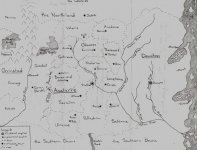
Map of Axelarre
Thanks to Victorian Lady's scanner, below is a map of Axelarre. Underlined words are names of countries. Denaton's empire, as well as the larger portion of Orrinshad, are not shown.
Thanks to Victorian Lady's scanner, below is a map of Axelarre. Underlined words are names of countries. Denaton's empire, as well as the larger portion of Orrinshad, are not shown.
Attachments
Last edited:
That's awesome! Thanks for posting the map, Glen!
Arran felt very little guilt about the practical joke he had played on Belaine and Avess the previous day: it was Anlaida who concerned him, who had been concerning him all day.
They had been ten and twelve years old when they had spoken of leaving the Northland—the first time, and the last. Arran had slipped a book of maps from the library shelves and into a little-used room where he hoped that he would not be found by the adults. But Anlaida had found him. Not yet grown into womanhood, she had plopped herself down beside him. “Does Father know you have his book?”
The beautifully drawn maps proved impossible for her to resist, however, with the whole of their Roharran continent laid out before her in bright color. Tracing her eyes from the cold lands to the north, where all things lay frozen, to the thick southern swamps, she looked with fascination on the pictures of foreign cities and peoples. Across the Southern Downs, a rough cattle herder came striding.
“I wanna go there,” Arran said, pointing to the Downs. “I’ll ride cows all day.” He smirked a ten-year-old grin. “And you’ll stay back here and sew all day.”
Her eyes had flashed at him. “No, I’m going there.” She pointed to the White City of the Swamps. “I’ll go there, and I’ll have a big house and a nice husband and you’ll be stuck riding a cow all day!”
Arran slipped up the steps to the top levels of the castle. The stars were out and shining, but it was the Sky-father’s voice that he wanted. The mad dance of the Star People was less mad than the world they looked down upon.
Cold dampness slid through the fibers of his shirt, promising winter. The Northland snows were beautiful, but Arran also knew what they meant to those miners too poor to purchase sufficient fuel.
He rounded a corner, wishing he had thought to bring a cloak along with him. But he had no desire to turn around now that he had reached the castle’s highest passages.
“I hoped you would show up eventually.”
Arran jolted, heart pounding, as a man, clad in a heavy horsehair cloak, materialized in front of him. The hood draped over the man’s head, covering his face in shadow. The cloak reached nearly to the ground, covering every part of the man’s body but the toe of his two worn leather boots.
“What are you talking about?” Arran demanded, using his sharp tone as a buckler.
“You don’t know?” the man asked, amusement tracing his words. “You want to leave. Am I right?”
“Maybe.” Arran eyed the hooded form.
“I can get you out.”
“Right,” Arran said. He could not place the voice; it could have been the voice of any man in the Northland, or in all Axelarre, for what he knew.
The man’s gaze, though shrouded by his hood, seemed to linger on Arran’s sling. “All depends on what it is you want. If it’s freedom you’re hoping for, I can offer it. But you prefer this place—”
Arran gritted his teeth. “Let’s see what your freedom looks like.”
“It’s one man who keeps it from you.” The man drew his hand from inside his dark cloak. It seemed to swing in front of him, weather-chapped, but filled with black beans that glittered like jewels in the red torchlight. “Freedom is worth any price—or so they say.”
“What are you setting me up for?” Arran growled, clenching his good fist.
“Many a thing comes up from the Southland, friend, and this one would solve more problems than a man could name. Yours, and your sister’s. You seem to care for her.” The voice skimmed coolly over the words.
“Many a thing comes up from the Southland,” Arran mocked. “Well, I, for one, want none of it. You think I would poison my own blood with your beans?”
“Half your blood, or so I’m told.” The man’s shadow shifted about the stones of the floor.
“I wouldn’t even poison you with them. I prefer facing a man to murdering him.” Arran spat at the floor between them. “Leave me in peace.”
The hand slipped back inside the dark cloak, and Arran was turning toward the corner again when the same hand darted out and slammed him against the wall. He pulled his foot back to kick his assailant, but a hard strike to his healing arm nearly doubled him in pain. The man grabbed at his shirt and dragged him upright, pushing a forearm across his windpipe. “Want to live, you fool?” he whispered hoarsely. “You’ll change your mind, or I’ll see you regret it. I’ll leave the beans in your room. Grind them up and slip them in your brother’s wine. He’ll not notice the taste. Three beans will seal the matter.”
Arran turned his head to the side, struggling to breathe. The cloaked man only drove the forearm into Arran’s neck with renewed force.
“You have two weeks. If you haven’t handled things on your own by that time, I’ll handle them, and you with them. You won’t see me coming any more than you did just now. Hear me?” He shoved Arran to the floor and kicked him violently in the stomach before rounding the corner into oblivion.
Arran curled against the pain in his stomach, fighting for air. It was the Sky-father he had wanted, but he feared to abandon the spot where he lay. The cloaked man might be lurking anywhere.
A sudden crackle from the torch mounted on the wall finally roused him. He pulled himself upright, wincing at the ache in his stomach, and shuffled around the corner and down the cold stairway toward his bedchamber.
On his dresser, nestled safely inside a small bowl, lay twelve black beans.
They had been ten and twelve years old when they had spoken of leaving the Northland—the first time, and the last. Arran had slipped a book of maps from the library shelves and into a little-used room where he hoped that he would not be found by the adults. But Anlaida had found him. Not yet grown into womanhood, she had plopped herself down beside him. “Does Father know you have his book?”
The beautifully drawn maps proved impossible for her to resist, however, with the whole of their Roharran continent laid out before her in bright color. Tracing her eyes from the cold lands to the north, where all things lay frozen, to the thick southern swamps, she looked with fascination on the pictures of foreign cities and peoples. Across the Southern Downs, a rough cattle herder came striding.
“I wanna go there,” Arran said, pointing to the Downs. “I’ll ride cows all day.” He smirked a ten-year-old grin. “And you’ll stay back here and sew all day.”
Her eyes had flashed at him. “No, I’m going there.” She pointed to the White City of the Swamps. “I’ll go there, and I’ll have a big house and a nice husband and you’ll be stuck riding a cow all day!”
Arran slipped up the steps to the top levels of the castle. The stars were out and shining, but it was the Sky-father’s voice that he wanted. The mad dance of the Star People was less mad than the world they looked down upon.
Cold dampness slid through the fibers of his shirt, promising winter. The Northland snows were beautiful, but Arran also knew what they meant to those miners too poor to purchase sufficient fuel.
He rounded a corner, wishing he had thought to bring a cloak along with him. But he had no desire to turn around now that he had reached the castle’s highest passages.
“I hoped you would show up eventually.”
Arran jolted, heart pounding, as a man, clad in a heavy horsehair cloak, materialized in front of him. The hood draped over the man’s head, covering his face in shadow. The cloak reached nearly to the ground, covering every part of the man’s body but the toe of his two worn leather boots.
“What are you talking about?” Arran demanded, using his sharp tone as a buckler.
“You don’t know?” the man asked, amusement tracing his words. “You want to leave. Am I right?”
“Maybe.” Arran eyed the hooded form.
“I can get you out.”
“Right,” Arran said. He could not place the voice; it could have been the voice of any man in the Northland, or in all Axelarre, for what he knew.
The man’s gaze, though shrouded by his hood, seemed to linger on Arran’s sling. “All depends on what it is you want. If it’s freedom you’re hoping for, I can offer it. But you prefer this place—”
Arran gritted his teeth. “Let’s see what your freedom looks like.”
“It’s one man who keeps it from you.” The man drew his hand from inside his dark cloak. It seemed to swing in front of him, weather-chapped, but filled with black beans that glittered like jewels in the red torchlight. “Freedom is worth any price—or so they say.”
“What are you setting me up for?” Arran growled, clenching his good fist.
“Many a thing comes up from the Southland, friend, and this one would solve more problems than a man could name. Yours, and your sister’s. You seem to care for her.” The voice skimmed coolly over the words.
“Many a thing comes up from the Southland,” Arran mocked. “Well, I, for one, want none of it. You think I would poison my own blood with your beans?”
“Half your blood, or so I’m told.” The man’s shadow shifted about the stones of the floor.
“I wouldn’t even poison you with them. I prefer facing a man to murdering him.” Arran spat at the floor between them. “Leave me in peace.”
The hand slipped back inside the dark cloak, and Arran was turning toward the corner again when the same hand darted out and slammed him against the wall. He pulled his foot back to kick his assailant, but a hard strike to his healing arm nearly doubled him in pain. The man grabbed at his shirt and dragged him upright, pushing a forearm across his windpipe. “Want to live, you fool?” he whispered hoarsely. “You’ll change your mind, or I’ll see you regret it. I’ll leave the beans in your room. Grind them up and slip them in your brother’s wine. He’ll not notice the taste. Three beans will seal the matter.”
Arran turned his head to the side, struggling to breathe. The cloaked man only drove the forearm into Arran’s neck with renewed force.
“You have two weeks. If you haven’t handled things on your own by that time, I’ll handle them, and you with them. You won’t see me coming any more than you did just now. Hear me?” He shoved Arran to the floor and kicked him violently in the stomach before rounding the corner into oblivion.
Arran curled against the pain in his stomach, fighting for air. It was the Sky-father he had wanted, but he feared to abandon the spot where he lay. The cloaked man might be lurking anywhere.
A sudden crackle from the torch mounted on the wall finally roused him. He pulled himself upright, wincing at the ache in his stomach, and shuffled around the corner and down the cold stairway toward his bedchamber.
On his dresser, nestled safely inside a small bowl, lay twelve black beans.

Lossëndil
Well-known member
At first I thought this would be a story about someone with split loyalties between the People and the Northlanders. Apparently the political mess spreads much further.
And why do poisons and assassins often seem to come from the south? Perhaps it is merely in the last few books I read...
(when I saw the star lossyr, I was like 0.o Nice coincidence. )
)
And why do poisons and assassins often seem to come from the south? Perhaps it is merely in the last few books I read...
(when I saw the star lossyr, I was like 0.o Nice coincidence.
)
Arran tossed sweaty-footed in his bed for what seemed like hours. The deadly beans lay hidden within his closet, but they might have been in his hand for the quality of sleep that he was getting. Dragging a blanket from the foot of the bed, he squirmed from between his hot covers and attempted to make himself comfortable on the floor.
He slept for a time, but soon awoke shivering from the coldness of the flagstones. Pulling the blanket around his shoulders, Arran padded barefoot from his room, seeking the hallway window.
Darkness still shrouded the sky, and the North Wind blew in at him, but distant—distant and sober and terribly bright—the old one, Mor, gazed down. Arran could only see a hint of his features. This window was hardly meant for sky-watching.
Stretching his head through the small window, he gazed toward Mor with burning eyes. Mor seemed to dip his head, and then he flew under the horizon in a wide swathe of silver. The oldest star had nothing to tell him. Eliane was probably dancing her last star-steps to greet the morning: the eastern sky seemed gray. But Eliane herself was hidden from his view by the stone ramparts of the castle.
He touched his sore neck gingerly. His assailant had been wise in his method of choking Arran: the forearm against his windpipe left fewer marks than would have shown had the man used his fingers. Probably no bruises would appear at all. Only his burning throat and tender stomach remained of the assault, but for the beans.
If I hide them— He banished the thought from his mind. The assailant was no passive player in the power-grabbing games that unsettled the Axelarrain from time to time. To wait until Arran felt safely in control of himself would be foolish.
“Soldor? Soldor!” Arran banged his fist against the wood of his brother’s door.
A dim clattering echoed from the first floor. One of the servingmaids had knocked something over as she prepared the table for breakfast.
“Seriously, Soldor! I need to talk to you!”
A thump sounded behind the door, followed by silence.
“Soldor!”
A muffled objection. Arran waited.
Soldor dragged back the heavy oak door and stood there, clumsily wrapped in a robe, his hair duck-tailed. “What,” he said shortly.
In answer, Arran shoved forward his handful of beans. They glittered like jet in the light of the torch bound in brackets to the wall.
Soldor’s brows jolted. Gingerly, he lifted one bean from Arran’s palm and touched it briefly against his tongue before jerking it back. He stared wild-eyed at Arran. “Where did you get these?”
“Someone—held me up in the hall last night.” Arran pushed the beans into Soldor’s hand. “He tried to threaten me into putting these—”
“Pardon me if I think this whole thing is a little odd,” Soldor said flatly. “What do you gain by telling me all this?”
Arran’s neck began to throb.
“What did the man look like?”
Arran swallowed painfully. “He was wrapped in a horsehair cloak so I couldn’t see him well. He was wearing boots, I think. Not a young man, by the sound of his voice.”
Soldor’s eyes met Arran’s and held them. Arran did not dare lower his gaze. He stared at Soldor’s face, the deep brown eyes so like Anlaida’s, until Soldor spoke again. “You said the man threatened you. How?”
“He didn’t say anything specific,” Arran faltered. “Only that I had two weeks.”
“Frightening.”
“He was blocking my windpipe. Do you call that pleasant?”
“Have you seen him before?” A lock of Soldor’s hair dropped over his left eye. He shoved it back.
“He left me notes. Wanted me to meet him on my own. I avoided the places he said. So no. I haven’t seen him.” Arran dug his toes into the soles of his shoes.
“Do you know the kind of beans these are?” Soldor spread them in his fingers. “They grow somewhere past the Southern Downs. Used to sedate animals, I’m told. One bean will put a grown horse to sleep for days and kill anything smaller than a dog. Two and the animal—or man—is never right again. Three, and whatever takes them is dead, man or beast.”
In the histories, they were called death’s-mouth. Arran watched the beans glint in Soldor’s hand. “I’ve heard of them.”
Soldor’s eyes locked on his. “Where did the man supposedly stop you?”
Arran gritted his teeth. “The upper passages. I don’t know how he got in.”
“I’ll ask the guards.” Soldor studied Arran’s face closely. “And you had better not be lying to me, or I’ll see you regret it.”
Silently Arran shoved his good hand into his pocket. The smell of hot meats drifted up the main stairway and into the hall. He turned away.
Soldor raked a hand through his duck-tailed hair and jerked the door shut.
He slept for a time, but soon awoke shivering from the coldness of the flagstones. Pulling the blanket around his shoulders, Arran padded barefoot from his room, seeking the hallway window.
Darkness still shrouded the sky, and the North Wind blew in at him, but distant—distant and sober and terribly bright—the old one, Mor, gazed down. Arran could only see a hint of his features. This window was hardly meant for sky-watching.
Stretching his head through the small window, he gazed toward Mor with burning eyes. Mor seemed to dip his head, and then he flew under the horizon in a wide swathe of silver. The oldest star had nothing to tell him. Eliane was probably dancing her last star-steps to greet the morning: the eastern sky seemed gray. But Eliane herself was hidden from his view by the stone ramparts of the castle.
He touched his sore neck gingerly. His assailant had been wise in his method of choking Arran: the forearm against his windpipe left fewer marks than would have shown had the man used his fingers. Probably no bruises would appear at all. Only his burning throat and tender stomach remained of the assault, but for the beans.
If I hide them— He banished the thought from his mind. The assailant was no passive player in the power-grabbing games that unsettled the Axelarrain from time to time. To wait until Arran felt safely in control of himself would be foolish.
______________________________________________
“Soldor? Soldor!” Arran banged his fist against the wood of his brother’s door.
A dim clattering echoed from the first floor. One of the servingmaids had knocked something over as she prepared the table for breakfast.
“Seriously, Soldor! I need to talk to you!”
A thump sounded behind the door, followed by silence.
“Soldor!”
A muffled objection. Arran waited.
Soldor dragged back the heavy oak door and stood there, clumsily wrapped in a robe, his hair duck-tailed. “What,” he said shortly.
In answer, Arran shoved forward his handful of beans. They glittered like jet in the light of the torch bound in brackets to the wall.
Soldor’s brows jolted. Gingerly, he lifted one bean from Arran’s palm and touched it briefly against his tongue before jerking it back. He stared wild-eyed at Arran. “Where did you get these?”
“Someone—held me up in the hall last night.” Arran pushed the beans into Soldor’s hand. “He tried to threaten me into putting these—”
“Pardon me if I think this whole thing is a little odd,” Soldor said flatly. “What do you gain by telling me all this?”
Arran’s neck began to throb.
“What did the man look like?”
Arran swallowed painfully. “He was wrapped in a horsehair cloak so I couldn’t see him well. He was wearing boots, I think. Not a young man, by the sound of his voice.”
Soldor’s eyes met Arran’s and held them. Arran did not dare lower his gaze. He stared at Soldor’s face, the deep brown eyes so like Anlaida’s, until Soldor spoke again. “You said the man threatened you. How?”
“He didn’t say anything specific,” Arran faltered. “Only that I had two weeks.”
“Frightening.”
“He was blocking my windpipe. Do you call that pleasant?”
“Have you seen him before?” A lock of Soldor’s hair dropped over his left eye. He shoved it back.
“He left me notes. Wanted me to meet him on my own. I avoided the places he said. So no. I haven’t seen him.” Arran dug his toes into the soles of his shoes.
“Do you know the kind of beans these are?” Soldor spread them in his fingers. “They grow somewhere past the Southern Downs. Used to sedate animals, I’m told. One bean will put a grown horse to sleep for days and kill anything smaller than a dog. Two and the animal—or man—is never right again. Three, and whatever takes them is dead, man or beast.”
In the histories, they were called death’s-mouth. Arran watched the beans glint in Soldor’s hand. “I’ve heard of them.”
Soldor’s eyes locked on his. “Where did the man supposedly stop you?”
Arran gritted his teeth. “The upper passages. I don’t know how he got in.”
“I’ll ask the guards.” Soldor studied Arran’s face closely. “And you had better not be lying to me, or I’ll see you regret it.”
Silently Arran shoved his good hand into his pocket. The smell of hot meats drifted up the main stairway and into the hall. He turned away.
Soldor raked a hand through his duck-tailed hair and jerked the door shut.
 Awesome! This was the best scene yet!
Anlaida grabbed at her brother’s worn stirrup. “Soldor, this is insane. Would you think logically for a minute?”
He kicked his foot back, pulling the stirrup from her hands. “I told you, Anlaida, I’ve got things to tend to in Mithras. It’s a trip I would have taken anyway. Couldn’t you be a good girl and see me off with a kiss and a smile or something?”
She moved suddenly and slid his boot off.
Soldor swung his white-socked foot in her direction, but she nimbly leaped backwards. “Smelly feet you’ve got, brother.”
He jerked at his horsehair cloak impatiently. “Give it back.”
“Say please.”
He glared at her. The six soldiers who he had assigned to travel as his guard stiffened in their saddles, but their stiffness was that of barely controlled laughter.
Anlaida sniffed the inside of the faded boot and contorted her face. “Don’t you ever air these out?”
“None of your business.” Soldor scowled at her.
“You shouldn’t sleep in them. Your feet will itch.”
“I don’t sleep in my boots!” he snapped. A guardsman snickered aloud, and Soldor swung to face him. “Did you have something to say?”
The guardsman shook his head, attempting an innocent expression.
“And,” Anlaida continued, “your feet will begin cracking if they itch long enough. At that point, of course—”
“Please,” said Soldor.
“Thank you,” Anlaida returned sweetly. “I’ll even put the boot right back on your nice little toes once you’ve listened to what I have to say.”
“Just hand it over, sparrow-foot.” Soldor rubbed his sock against his stallion’s smooth dark middle, and the animal jolted awkwardly.
“Why would Arran bring you those beans if he was part of a plot? It would ruin the plot’s secrecy, for one thing.”
“It’s not hard to think of reasons.” Soldor curled his stocking foot. “Can you just go ahead and give my boot back?”
Anlaida smiled.
“He might be trying to paint himself as the Good Brother, so when his friends kill me, he’ll get the barony with no trouble.”
Anlaida shook her head, disgusted. “He’s technically a prisoner of war. I can’t see him being given the barony yet, and his Good Brother image was ruined when he ran off. Besides, he hasn’t even been out of the castle courtyard. How on earth could he manage—”
“He didn’t get those beans from the castle kitchen, Anlaida.”
“What if he’s telling the truth? You need to look into things—be a baron over your own household for once! If someone really got in—”
“My boot, please.” Soldor extended his foot toward her. She sighed and began fitting the hide boot on again.
“Why Mithras, anyway? Salenna province is so far south—why would you want to meet Denath in his capital? He’s got nothing to offer the Northland.”
“That’s where you’re wrong.” Soldor returned his foot to the stirrup. His horse pawed a hoof into the packed earth of the courtyard. “Keep well, Anlaida.”
“Enjoy the pleasures of the Midlands, brother dear.” She smiled with the sweetness to flavor an Orr’s-day pudding.
“Will you ever stop?” He nudged the stallion with his heels.
“Keep well, Soldor.”
The guardsmen pulled around him, and the small group rode through the castle gates, down the muddy village street, and into the barren southern hills.
Fortune has this, Anlaida thought. If Arran is too severed from Soldor to see him off, he’s too severed from Soldor to hear Soldor's parting insults. Clear logic was uncommon, in man or woman, her mother had once said. But Soldor’s logic was less clear than most. Her mother had also said that, though Soldor had been her only son.
Anlaida returned to her work in the weaving-room, sewing Arran a new shirt. He had several pairs now that fit, and the new clothing was a relief to her eyes, if not to her sore fingers. She hummed the wordless tune that had been played at Thessalim’s wedding.
“You sound like a bird that had his worm stolen away.” The voice, coming from the hallway, startled her, although she quickly recognized it as Arran’s.
He plopped in the chair next to her, dressed in a linen shirt and a pair of woolen pants, both of which she had finished the day before. Seeing him wear them encouraged her as if he were constantly complimenting her sewing, although she knew her feelings to be rather foolish. But he had genuinely needed clothing, whereas Soldor and the maids were not half so desperate.
“No worms here.” She forced a preoccupied laugh from her throat.
“Why’d he go?” Dark hair flopped nearly into Arran’s eye.
“Business in Salenna, he said, Arran Crow. And you need a haircut.”
“Didn’t think there’d be much for him in Salenna.” Arran pushed the hair back with his good hand.
“I don’t know what’s in his mind anymore—if I ever did,” she said.
Arran picked up her knitting basket and began sorting the tangles of yarn inside. “Saw you steal his boot.”
“You spy.” But she laughed at him.
He kicked his foot back, pulling the stirrup from her hands. “I told you, Anlaida, I’ve got things to tend to in Mithras. It’s a trip I would have taken anyway. Couldn’t you be a good girl and see me off with a kiss and a smile or something?”
She moved suddenly and slid his boot off.
Soldor swung his white-socked foot in her direction, but she nimbly leaped backwards. “Smelly feet you’ve got, brother.”
He jerked at his horsehair cloak impatiently. “Give it back.”
“Say please.”
He glared at her. The six soldiers who he had assigned to travel as his guard stiffened in their saddles, but their stiffness was that of barely controlled laughter.
Anlaida sniffed the inside of the faded boot and contorted her face. “Don’t you ever air these out?”
“None of your business.” Soldor scowled at her.
“You shouldn’t sleep in them. Your feet will itch.”
“I don’t sleep in my boots!” he snapped. A guardsman snickered aloud, and Soldor swung to face him. “Did you have something to say?”
The guardsman shook his head, attempting an innocent expression.
“And,” Anlaida continued, “your feet will begin cracking if they itch long enough. At that point, of course—”
“Please,” said Soldor.
“Thank you,” Anlaida returned sweetly. “I’ll even put the boot right back on your nice little toes once you’ve listened to what I have to say.”
“Just hand it over, sparrow-foot.” Soldor rubbed his sock against his stallion’s smooth dark middle, and the animal jolted awkwardly.
“Why would Arran bring you those beans if he was part of a plot? It would ruin the plot’s secrecy, for one thing.”
“It’s not hard to think of reasons.” Soldor curled his stocking foot. “Can you just go ahead and give my boot back?”
Anlaida smiled.
“He might be trying to paint himself as the Good Brother, so when his friends kill me, he’ll get the barony with no trouble.”
Anlaida shook her head, disgusted. “He’s technically a prisoner of war. I can’t see him being given the barony yet, and his Good Brother image was ruined when he ran off. Besides, he hasn’t even been out of the castle courtyard. How on earth could he manage—”
“He didn’t get those beans from the castle kitchen, Anlaida.”
“What if he’s telling the truth? You need to look into things—be a baron over your own household for once! If someone really got in—”
“My boot, please.” Soldor extended his foot toward her. She sighed and began fitting the hide boot on again.
“Why Mithras, anyway? Salenna province is so far south—why would you want to meet Denath in his capital? He’s got nothing to offer the Northland.”
“That’s where you’re wrong.” Soldor returned his foot to the stirrup. His horse pawed a hoof into the packed earth of the courtyard. “Keep well, Anlaida.”
“Enjoy the pleasures of the Midlands, brother dear.” She smiled with the sweetness to flavor an Orr’s-day pudding.
“Will you ever stop?” He nudged the stallion with his heels.
“Keep well, Soldor.”
The guardsmen pulled around him, and the small group rode through the castle gates, down the muddy village street, and into the barren southern hills.
Fortune has this, Anlaida thought. If Arran is too severed from Soldor to see him off, he’s too severed from Soldor to hear Soldor's parting insults. Clear logic was uncommon, in man or woman, her mother had once said. But Soldor’s logic was less clear than most. Her mother had also said that, though Soldor had been her only son.
Anlaida returned to her work in the weaving-room, sewing Arran a new shirt. He had several pairs now that fit, and the new clothing was a relief to her eyes, if not to her sore fingers. She hummed the wordless tune that had been played at Thessalim’s wedding.
“You sound like a bird that had his worm stolen away.” The voice, coming from the hallway, startled her, although she quickly recognized it as Arran’s.
He plopped in the chair next to her, dressed in a linen shirt and a pair of woolen pants, both of which she had finished the day before. Seeing him wear them encouraged her as if he were constantly complimenting her sewing, although she knew her feelings to be rather foolish. But he had genuinely needed clothing, whereas Soldor and the maids were not half so desperate.
“No worms here.” She forced a preoccupied laugh from her throat.
“Why’d he go?” Dark hair flopped nearly into Arran’s eye.
“Business in Salenna, he said, Arran Crow. And you need a haircut.”
“Didn’t think there’d be much for him in Salenna.” Arran pushed the hair back with his good hand.
“I don’t know what’s in his mind anymore—if I ever did,” she said.
Arran picked up her knitting basket and began sorting the tangles of yarn inside. “Saw you steal his boot.”
“You spy.” But she laughed at him.
I like this so much! Thanks for updating!  When Anlaida was talking about what would happen to Soldor's foot, I thought about the 'Corrupt a Wish' thread.
When Anlaida was talking about what would happen to Soldor's foot, I thought about the 'Corrupt a Wish' thread.
Anlaida, walking from the stables, noticed something from the corner of her eye that caused her to turn toward the barracks, from which Clentos, captain of the guard, was emerging.
“Clentos!” she called him.
He raised his arm in salute and hurried toward her, mail jingling. A tall man, he resembled his Northland father, but for his eyes.
The oldest of the Denna, those fishing peoples who had lived on the coast before later migrants had come from beyond the eastern sea, were noted for an eye color common among them, a shade of dark violet unseen in any other land. Clentos’s ancestry constantly gleamed down from his face.
“Aye?” He stepped beside her, sun-darkened arms crossed on his chest.
She looked toward the gate. “You doubled the guard?”
“Your brother’s orders, Lady. An enemy’s been here, and he wants you safe. All the guards are to be doubled.”
She glanced at the four guards lounging at the gate. “Seems they’d have been better minstrels than soldiers.”
Clentos laughed aloud, his teeth flashing. “I’m stationing my better men at night. The ones at the gate now are hardly more than boys. Youthful folly, you know. I’m sure you’re past that.”
Anlaida flushed at the captain’s good-natured teasing. “I understand. Thank you.”
Clentos nodded and strode off toward the gate.
Anlaida slipped inside, wishing for an apple, although she would have traded all the fruit of the universe for the key to her brother’s locked mind. The ten years between them might have been an eternity.
She carried her knitting into the library and found Arran curled up with a book. “And in my chair, too,” she said, snatching the title. “Palath’s Journey: A Road to the South.”
“Hey,” he protested, crinkling his nose.
Laughter burst from her throat at the sight. “I’ll make you a deal. I get the chair, you get the book.”
“As you wish, Great Queen.” He scrambled up, snatched the book, and dropped onto the floor.
Anlaida lowered herself into the chair and spread her knitting across her lap. “Is the book any good?”
“Better than his old brown ones.”
By his, Anlaida gathered that Arran meant their father’s. Uliath had bought a ponderous 20-volume series of Axelarran Histories from the printers at Bonarvaid, costing what would have been a year’s wages for most miners in the Northland. The books were well bound, highly recommended, and so clunkily penned that Anlaida privately thought the author would have been better served had he hired a Northland gold miner to write it for him.
Arran crossed his legs.
Anlaida stared. “What below the skies are you doing?”
Arran shrugged. “Habit.”
“With your legs. Did the barbarians teach you that?”
He shrugged again. “Yeah. I think the miners have picked it up.”
“Can you—stop doing that?” She crinkled her forehead. “It looks funny.”
“Just crossing them, that’s all.” But he pulled his knees toward his chest and began reading.
Anlaida purled two stitches and stopped. “Why were you up in those passages?”
Arran set down the book. “You mean the night that man—”
She nodded.
“Going to the roof.” He wrapped his arms around his legs and looked at her.
“Because—”
“You’ve got to be away from the buildings and things to really see it—or up on top of them. The sky.”
Anlaida saw something flicker in his eyes. “I can see the sky from my bedroom window.”
“Not well, you can’t. Half the stars are blocked. You’ve got to be where you can see the whole sky.”
She frowned. “Why are you so interested in the sky since you came back?”
“Did you ever learn the names of the stars?” he asked.
“Astrology is for the Denna,” she said. “Not for us.”
“I’m not talking astrology like they do. They think the stars are dead. And the stars look dead, too, when you’re in Denaton.”
She looked at him.
“Messengers,” he said simply. “For the Sky-father. They dance some nights, and if you watch—”
“Arran, be serious.”
“I am,” he said. “Come up some evening, and I’ll show you.”
She watched as he picked up his book and turned it to the third quarter, thankful that Arran was showing no other signs of insanity.
“Clentos!” she called him.
He raised his arm in salute and hurried toward her, mail jingling. A tall man, he resembled his Northland father, but for his eyes.
The oldest of the Denna, those fishing peoples who had lived on the coast before later migrants had come from beyond the eastern sea, were noted for an eye color common among them, a shade of dark violet unseen in any other land. Clentos’s ancestry constantly gleamed down from his face.
“Aye?” He stepped beside her, sun-darkened arms crossed on his chest.
She looked toward the gate. “You doubled the guard?”
“Your brother’s orders, Lady. An enemy’s been here, and he wants you safe. All the guards are to be doubled.”
She glanced at the four guards lounging at the gate. “Seems they’d have been better minstrels than soldiers.”
Clentos laughed aloud, his teeth flashing. “I’m stationing my better men at night. The ones at the gate now are hardly more than boys. Youthful folly, you know. I’m sure you’re past that.”
Anlaida flushed at the captain’s good-natured teasing. “I understand. Thank you.”
Clentos nodded and strode off toward the gate.
Anlaida slipped inside, wishing for an apple, although she would have traded all the fruit of the universe for the key to her brother’s locked mind. The ten years between them might have been an eternity.
She carried her knitting into the library and found Arran curled up with a book. “And in my chair, too,” she said, snatching the title. “Palath’s Journey: A Road to the South.”
“Hey,” he protested, crinkling his nose.
Laughter burst from her throat at the sight. “I’ll make you a deal. I get the chair, you get the book.”
“As you wish, Great Queen.” He scrambled up, snatched the book, and dropped onto the floor.
Anlaida lowered herself into the chair and spread her knitting across her lap. “Is the book any good?”
“Better than his old brown ones.”
By his, Anlaida gathered that Arran meant their father’s. Uliath had bought a ponderous 20-volume series of Axelarran Histories from the printers at Bonarvaid, costing what would have been a year’s wages for most miners in the Northland. The books were well bound, highly recommended, and so clunkily penned that Anlaida privately thought the author would have been better served had he hired a Northland gold miner to write it for him.
Arran crossed his legs.
Anlaida stared. “What below the skies are you doing?”
Arran shrugged. “Habit.”
“With your legs. Did the barbarians teach you that?”
He shrugged again. “Yeah. I think the miners have picked it up.”
“Can you—stop doing that?” She crinkled her forehead. “It looks funny.”
“Just crossing them, that’s all.” But he pulled his knees toward his chest and began reading.
Anlaida purled two stitches and stopped. “Why were you up in those passages?”
Arran set down the book. “You mean the night that man—”
She nodded.
“Going to the roof.” He wrapped his arms around his legs and looked at her.
“Because—”
“You’ve got to be away from the buildings and things to really see it—or up on top of them. The sky.”
Anlaida saw something flicker in his eyes. “I can see the sky from my bedroom window.”
“Not well, you can’t. Half the stars are blocked. You’ve got to be where you can see the whole sky.”
She frowned. “Why are you so interested in the sky since you came back?”
“Did you ever learn the names of the stars?” he asked.
“Astrology is for the Denna,” she said. “Not for us.”
“I’m not talking astrology like they do. They think the stars are dead. And the stars look dead, too, when you’re in Denaton.”
She looked at him.
“Messengers,” he said simply. “For the Sky-father. They dance some nights, and if you watch—”
“Arran, be serious.”
“I am,” he said. “Come up some evening, and I’ll show you.”
She watched as he picked up his book and turned it to the third quarter, thankful that Arran was showing no other signs of insanity.
The books were well bound, highly recommended, and so clunkily penned that Anlaida privately thought the author would have been better served had he hired a Northland gold miner to write it for him.
It seems that many highly recommended books turn out to be rather dreadful.
