At first glance The Chronicles of Narnia and the animated special A Charlie Brown Christmas, don’t seem to have much in common. One is a beloved work of classic British literature, considered a foundational text in the modern fantasy genre. The other is a classic television special based on a popular, long running syndicated comic strip. The Chronicles of Narnia is a fantasy, Peanuts is a “slice of life” comic strip focusing on the trials and tribulations of a determined all-American everyman hero and his friends.
However, that is only a surface level comparison. Both The Chronicles of Narnia and the comic strip Peanuts were created by devout Christians who firmly believed that their work could convey a deep and powerful message.
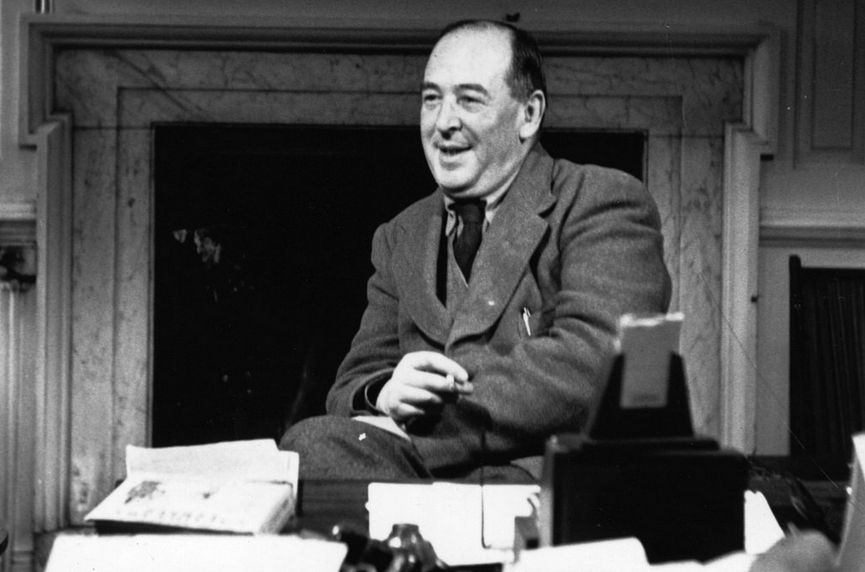
CS Lewis
As CS Lewis once wrote in his essay “Sometimes Fairy Stories May Say Best What’s to be Said” from the book On Stories and Other Essays on Literature.
“I thought I saw how stories of this kind could steal past a certain inhibition which had paralysed much of my own religion in childhood. Why did one find it so hard to feel as one was told one ought to feel about God or the sufferings of Christ? I thought the chief reason was that one was told one ought to. An obligation to feel can freeze feelings. And reverence itself did harm. The whole subject was associated with lowered voices; almost as if it were something medical. But supposing that by casting all these things into an imaginary world, stripping them of their stained-glass and Sunday School associations, one could make them for the first time appear in their real potency? Could one not thus steal past those watchful dragons? I thought one could.”
Similarly, Charles M. Schulz, creator of Peanuts believed that the sacred word of God was not just meant for clergy but for everyone. After all the words of the Angel of the Lord to the shepherds were of “glad tidings of great joy which shall be for all people,” not just the religious leaders.
Schulz observed in an interview with Decision magazine, reprinted in Robert L. Short’s book The Parables of Peanuts,
“If you do not say anything in a cartoon, you might as well not draw it at all. Humor which does not say anything is worthless humor. So, I contend that a cartoonist must be given the chance to do his own preaching.”
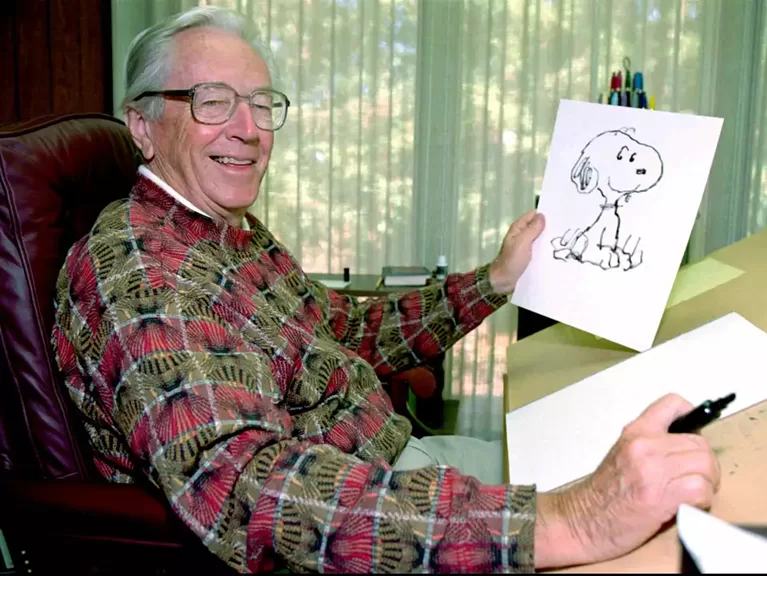
Charles M. Schulz
In fact, while the Peanuts strips may be known for such gags as Lucy pulling away the football from Charlie Brown that only occurs 36 times during the entire strips run. In contrast of the 17,8000 strips Schulz penned in his lifetime 560 of them dealt with topics of God, religion, faith, and the Bible, and not round Christmas time. In fact, these religious topics could even occur during a football gag, or even during a baseball game, making I clear how God is part of our everyday life, not just one day a week. Charlie Brown once even commented in a classic baseball strip when Schroeder quotes the book of Job and this leads to a discussion among his entire team on the most mysterious book in the Bible and topics of good and evil and the nature of human suffering,
“I don’t have a baseball team…I have a theological seminary!”
Thus, much like how Peter, Susan, Edmund, Lucy and their friend in Narnia can help readers of all ages speak past watchful dragons, so to can Charlie, Sally, Linus and Lucy and the Peanuts gang. Further, along with a shared undercurrent of faith, these two works have another thing in common: an unsung legend in animation history.
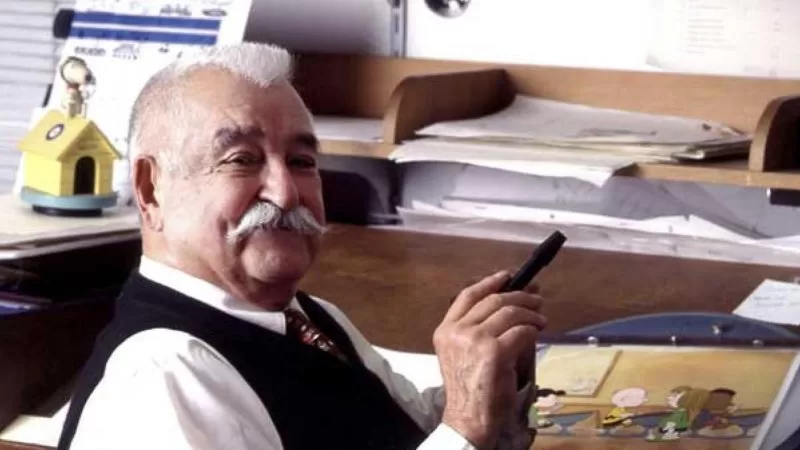
Bill Melendez. Director of A Charlie Brown Christmas and the 1979 animated adaptation of The Lion, The Witch and the Wardrobe. He also had a sweet mustache.
While not holding the same status as Friz Freleng, Chuck Jones, Tex Avery, Ub Iwerks, Walt Disney, Frank and Ollie, or even Bill Hanna and Joe Barbera, Bill Melendez was part of one of the most challenging TV specials in animation history. When John Allen of the advertising company McCann-Erickson was tasked by one of their big clients Coca-Cola to find a holiday special for them to sponsor, he contacted Lee Mendelson the producer of a documentary about Charles M Schulz and his comic strip, Peanuts, to pitch a Christmas special.
Mendelson called up Schulz and said,
“I think I just sold a Charlie Brown Christmas.”
Schulz was taken aback and said, “Oh, yeah, what’s that?”
Mendelson’s response was to the point, “Something you’re going to write tomorrow.”
They liked Schulz’s pitch, but the problem was, that they would need the special in exactly six months. Mendelson contacted animator Bill Melendez with whom he had previously worked on the documentary and pitched him the story, Melendez insisted that it was possible they could get the special ready in time, but he admitted privately he wasn’t sure it was possible, and it’s easy to see why looking at the work behind the scenes.
When it comes to storied properties, there is something about Peanuts that seems almost simple, like it would be easy to adapt. Yet everything that Peanuts creator Charles M. Schulz, producer Bill Melendez and the rest of the crew that brought the story together was one risk after another. From the insistence of hiring real children and not adults voice the characters as was the case for cartoons back then, to the refusal to use a laugh track, to the story itself, it was one up-hill battle after another. If the special bombed that would be it for Charlie and the gang.
If there was one area that was most challenging it was the now iconic moment in which Linus supplies the answer to Charlie Brown as to the true meaning of Christmas. It may not seem like it now, but back in 1965 when the special aired this was a big deal. NASA would even face a lawsuit in 1968 when the Apollo 8 Astronauts read from the first few verses of Genesis on their live television broadcast of their trip around the Moon. There were no VeggieTales or Adventures in Odyssey videos, and mainstream cartoons from Disney or Warner Brothers tended to avoid religion. Even in the chilling cartoon, Peace on Earth which was set after a war led to the extinction of the human race and saw sapient animals rebuild society after reading the more universally appealing words of “thou Shalt not Kill” in the Bible and agree to follow those rules still saw the cartoon animals singing the tune of “Hark! The Hearld Angels Sing”, but with generic lyrics “Peace on Earth Good Will to All” ad nauseum.
As Michael Keane noted in the book Charlie Brown’s Christmas Miracle: The Untold Story of the Making of a Holiday Classic,
“The Bible had never been animated before, not by Warner Bros., Not by Disney, and not by Hanna-Barbera. The men were exposing themselves to potential attacks from both religious and non-religious viewers. Churchgoers might object that animating the Bible and having sacred verses spoken by cartoon characters was sacrilegious. Those less religious might be turned off by what they might perceive as being preachy moralizing. Animated cartoons had served many purposes they had been educational…, they could be funny, even wackily funny, they could be racy even, but no one had attempted to preach and certainly no one had ever animated the Bible. As Mel Blanc noted in his biography ‘The Warner Bros. never proselytized morality-the surest way to alienate kids.’”
But Schulz was adamant telling Mendelson and Melendez,
“Billy, if we don’t do it, who will? We can do it.”
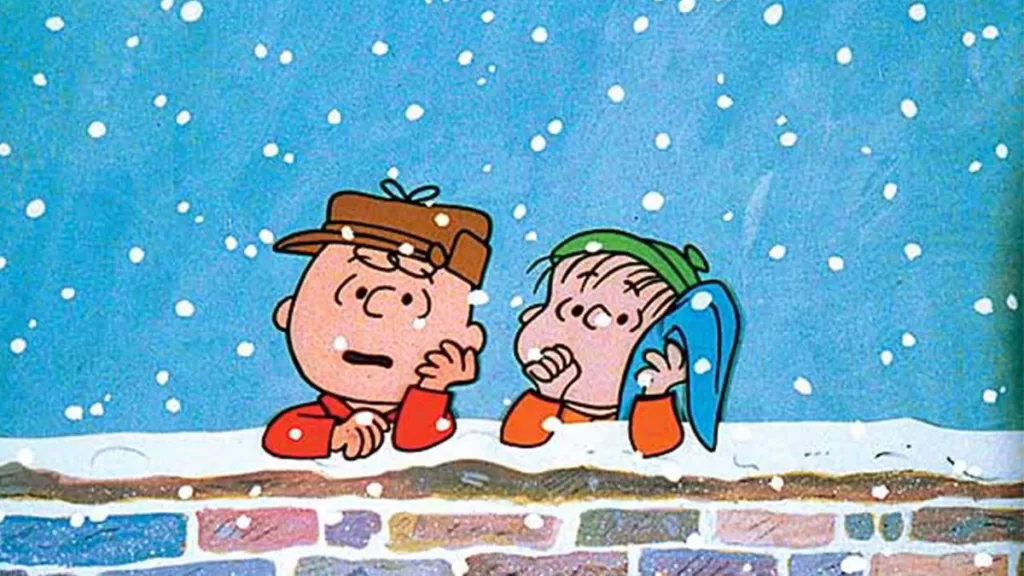
It’s the moment that “makes” the special. The true meaning of Christmas is that object that Charlie Brown is searching for at the special’s opening. When we meet him, he even admits to his friend Linus that he likes sending cards and getting presents but feels there’s something wrong with him as he’s still not happy.
Charlie Brown and Linus
Zach Gass of ScreenRant argued in 5 Reasons Charlie Brown Christmas is Timeless ( & 5 Reasons It’s Dated),
“Let’s be honest, Charlie Brown is not the most uplifting and bright-eyed character we know. He’s always fighting some sort of emotional or social battle. Whether it’s the kite-eating tree or Lucy and her infamous football, somethings always got Charlie Brown down. Even at Christmas he gets depressed…Granted the holidays can be hard for some, but Charlie Brown’s a kid! Kids are normally ecstatic and off the walls around December…(B)ut we’d be lying if we said it wasn’t a problem many individuals deal with over the supposedly most wonderful time of the year. Between the hustle and bustle of the season and the commercialism of Christmas, sometimes it can get a few of us down…the message of the Christmas holidays can get smothered and covered in tinsel and lights so much that we tend to distance ourselves for a time or two…”
As a result, I would contend that for the perpetually “melancholy” Charlie Brown (and in fact the character often admits to battling “anxiety”, and even tells Lucy in A Charlie Brown Christmas when he goes to her psychiatric booth that he feels depressed), it’s “Always winter, but never Christmas.” Thus, key to the Peanuts mythology Charlie Brown is searching or something more, something of far greater worth then what can be found in a store, something far more spiritual than a material object. Something to lift him out of his emotional winter and into the light of Christmas.
The tone of the special the special had to match the tone not only of the character but the comic strip. There is a deep sense of melancholy to Charlie Brown, something not fully felt in animation. As a result of this feeling, the pacing for the special is much slower and more thoughtful allowing for a spiritual revelation to come naturally. Since 1965 cartoons have gotten faster, more frantic and louder, yet there’s a tenderness to Charlie Brown and the gain a gentleness that guides viewers in to encounter that night in which once within our world in a humble stable, it held something bigger than the entire world.
Charlie’s friend and often times antagonist Lucy has an idea: he should direct their Christmas play. Nothing goes right for Charlie Brown and no one will cooperate. He’s sent out to get a tree, encouraged that it’ll give their play the proper mood and selects against the earlier insistence of Lucy and the suggestion of his friend Linus, a scraggly little tree that has been neglected.
His friends laugh at the tree, mocking and scorning it, seeing nothing beautiful or attractive in it, leaving Charlie despondent. wondering if he or anyone really knows what Christmas is all about. He puts his question to his friend Linus who delivers one of the most heartwarming monologues in TV animation history.
“Lights please?”
‘And there were in the same country shepherds, abiding in the fields and keeping watch over their flocks by night and lo the angel of the Lord came upon them, and they were sore afraid . And the angel said unto them, fear not for behold I bring you glad tidings of great joy, which shall be for all people. For unto you is born this day in the City of David, a Savior, Who is Christ the Lord. And suddenly there was with the angel, a multitude of the heavenly host, praising God, and saying, Glory to God in the highest, and on Earth, peace, good well to men.”
That’s what Christmas is all about Charlie Brown.”
While this may be called A Charlie Brown Christmas, it really is Linus’ time to shine. Not only is he the only one who doesn’t ridicule his friend and genuinely try to support him (only trying to talk him out of the scraggly tree because he probably knows his friend will be mocked for it), he is the only one who gets it when it comes to Christmas. So much so that when he recites the passage from the Gospel of Luke, it is the only time in Peanuts franchise history that he can willingly let go of his blanket.
As Keane noted further in the book Charlie Brown’s Christmas Miracle,
“During the special’s climactic scene, when Linus recites from the Gospel of Luke, here is a tiny detail that only the most astute viewers noticed. As soon as Linus utters the words ‘Fear not he releases his security blanket, letting it slip through his fingers. The moment is handled without any attention being brought to it, but it is rich with significance, both in the context of the character and the words being spoke. Linus had been clinging to the security of his blanket since its introduction into the comic strip on June 1, 1954. Lucy had constantly conspired to dispose of the blanket, even burning it once. Snoopy continually tried to snatch it away. Linus’s grandmother detested it, and her grandson would mail the blanket to himself when she came to visit. The words ‘fear not” or “be not afraid ‘are rich with biblical import too and are reportedly he most common phrases in The Bible, found 365 times (emphasis mine) in Scripture.”
Thus, Linus shows that faith can change you and give you a strength you never knew you had before. As Andrew Stanton, Oscar Winning director of Wall-E related to Charles Solomon in the book The Art and Making of Peanuts Animation: Celebrating Fifty Years of Television Specials.
“They stopped everything: just a single spotlight on a kid onstage, saying this long passage. It was very moving because of the stillness, because of everything stopping for the simplicity of it.”
Encouraged by his friend, Charlie Brown heads outside, determined to go home and decorate the little tree and hoe them the tree will be just fine. Then we not only see Charlie smile, we see him actually seemingly skip down the sidewalk, something he normally melancholy boy ever does. In embracing the true meaning of Christmas, he resolves not to let commercialism ruin his Christmas and tires to hold onto what Linus tells him.
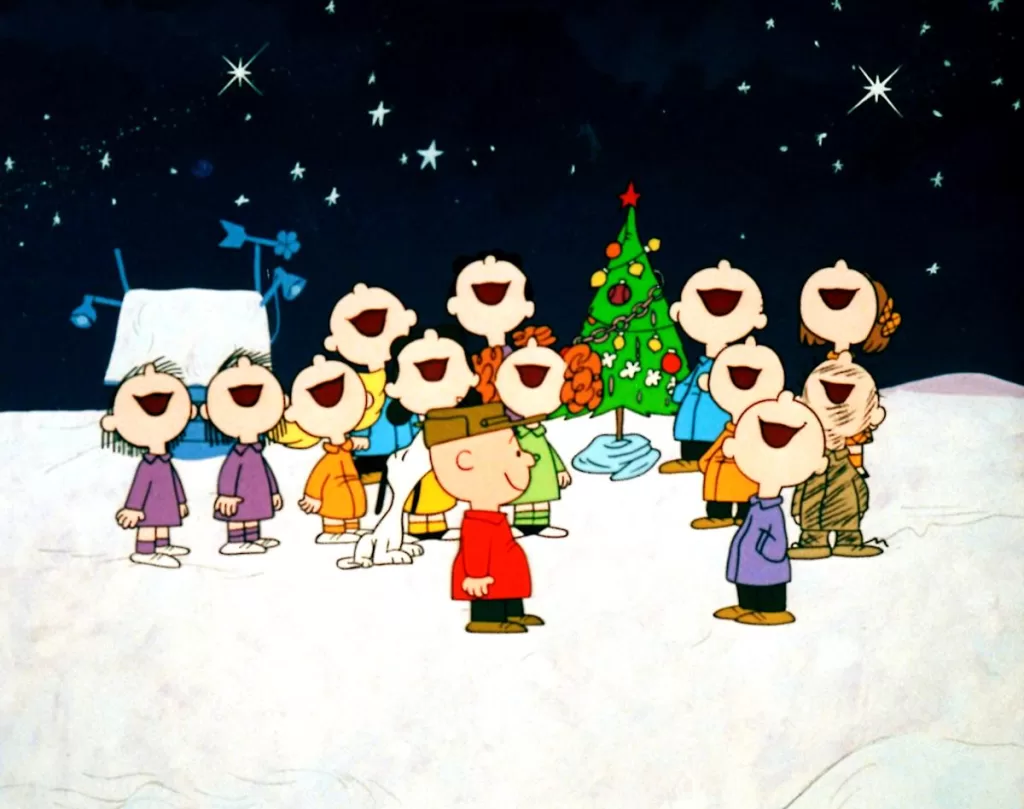
But then another crisis hits, and in the process of decorating his tree, Charlie fears he killed it. Going of too mope, his friends arrive and through what can only be described as television magic they transform his shabby little tree into a beautifully decorated object of the season. Charlie returns, hearing his friends sing “Hark! The Herald Angels Sing”, and joins them in the celebration having discovered what Christmas is all about. For Charlie, it finally feels like Christmas.
No one was sure if the special would be a hit, and odds were against it. However, it went on to be a critical and commercial hit and from its humble beginnings came additional special, including the existential It’s the Great Pumpkin, Charlie Brown, the comedy of errors of A Charlie Brown Thanksgiving and the universal themes of unrequited love in Be My Valentine, Charlie Brown. This all culminates in the pure undiluted joy at the end of It’s The Easter Beagle, Charlie Brown. Even when other specials, like Be My Valentine and It’s The Easter Beagle saw Melendez step into more of a producer role due to how many specials were being produced, with Phil Roman stepping into the director’s chair, the template for those specials still traces back to A Charlie Brown Christmas and is felt all the way down to Blue Sky Studios The Peanuts Movie to the newer specials and features from Apple TV+ to this day.
These characters were perfect for holiday specials as are ultimately searching for a deeper and more transcendent sense of joy at the season. Madeleine L’Engle, in her book An Acceptable Time, had the O’Keefe -Murry family name their new dog a name that was derived from Sanskrit that perfectly captures this deeper transcendent sense of joy,
“Ananda: that joy without which the universe will fall apart and collapse.”
As a result of the simplicity, poignancy and effectiveness of the special, in the years after A Charlie Brown Christmas other animators would take similar risks. The 1970s would see Rankin/Bass branch out from doing specials about reindeer, snowmen, and Santa to telling biblical stories like The Little Drummer Boy and Nestor the Long-Eared Donkey. Joe Barbera of Hanna-Barbera would use the money made from shows like The Flintstones, The Jetsons, and Scooby-Doo to personally finance his dream project, The Greatest Adventure: Stories from the Bible, that saw three teenagers enter a portal and travel through time to events of the Bible with an all-star cast voicing the biblical heroes and villains, including the story of the Nativity. Years before he’d make generations of children cry with films like The Land Before Time and An American Tail, director Don Bluth directed for Disney an equally tear-jerking TV special called The Small One in which a small boy in Nazareth ends up selling his beloved old donkey to Joseph and Mary for their journey into Bethlehem. Even on the episode “Comfort and Joy” from the animated series Justice League, during a Christmas Eve trip to Smallville the Martian Manhunter passed by the Kent family church where the congregation sang “It Came Upon a Midnight Clear” while in the X-Men: Evolution episode “On Angel’s Wings” that introduced Warren Worthington III (Angel), not only did Hank McCoy (Beast) quote the book of Hebrews, Scott Summers (Cyclops) openly expressed belief in a guardian angel.
But dare I say it, CBS seemed to understand it the most after A Charlie Brown Christmas that audiences liked having TV shows and specials that reflected the true message if the season. Thus, in 1979 when the Children’s Television Workshop and Episcopalian Radio Hour partnered with CBS to produce a special to air seven days before the start of Holy Week, it’s no wonder that when talks with their original animator fell through that they contacted Bill Melendez to step into the chair to direct The Lion, The Witch and The Wardrobe. Further, while Coca-Cola and CBS may have been bit leery to have Linus quote scripture even if it meant alienating Schulz, Ted Baehr and the Episcopalian Radio hour were undeniably going to adhere to the theology of CS Lewis without question. While he may have been reluctant to include the scriptural passage in ‘65, by ‘79, with experience dictating audiences would love it, and fears and anxieties Melendez may have had would have been unfounded. If Linus could quote the Bible on Christmas Eve, then Aslan could die and rise again.
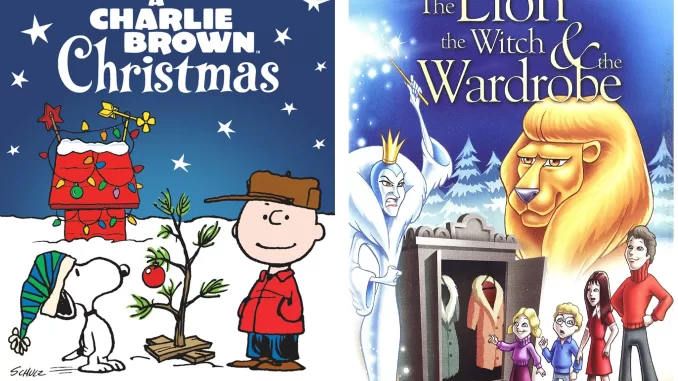
I’ll admit of Narnia adaptations this was one I had put of watching until recently. Personally, having seen it now in its entirely, I think I know why. Unlike the Charlie Brown specials that have the luxury of having original art done by Schulz for the covers, the animated Narnia movie releases tend to utilize screen caps from the film, with the art department appearing to use Microsoft Paint on at least one release to make the outfits and hair color of Susan and Lucy almost match Anna Popplewell and Georgie Henley from the 2005 release from Walden Media, and as a result seem to make it look like The Brady Kids in Narnia. My first impressions couldn’t be further from the truth and in fact I firmly belief that the cover art for the animated Narnia fails to do it justice.
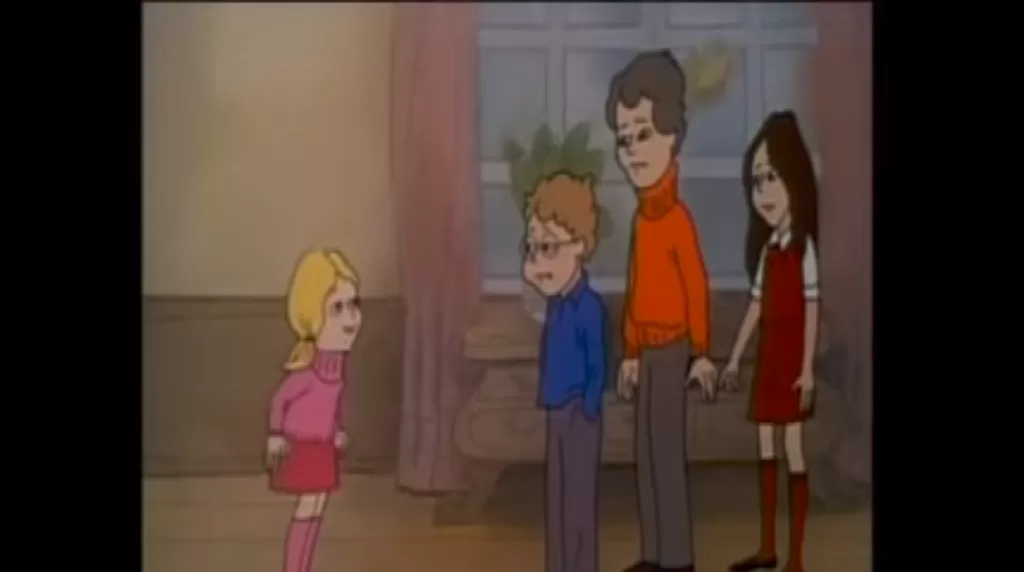
Watching the animated adaptation of The Lion, the Witch and the Wardrobe, it can safely be said that much like seeing Rankin/Bass branch out from the animation style used for say Frosty the Snowman and challenging themselves in doing The Hobbit, it’s impressive to see Bill Melendez stretch as an animator and director with LWW. If anything, it’s a return to form for him, considering his background working with both Disney and Warner Brothers, on such projects as Disney’s Fantasia. And much like how he stuck to Schulz character designs for A Charlie Brown Christmas, the four Pevensies strongly resemble the characters as seen on the book covers from the 70s, and even the copies of the books my mom ordered from my Scholastic Book order in ’94. It’s clearly meant to be Peter, Susan, Edmund, and Lucy brought to life. Thankfully one of the biggest hurdles he faced in animating Charlie Brown and the Gang, their great big heads, isn’t present here. On the one hand I wonder if more fans would have a fond place for it if Peter, Susan, Edmund and Lucy from the animated version if they looked almost like Schroeder, Violet, Shermy and (not Peppermint) Patty from A Charlie Brown Christmas, but on the other hand I can more then readily acknowledge that by having original character designs Melendez and co it allows the story to stand on its own.
Lucy, Edmund, Peter, and Susan Pevensie
Right of the special opens with a sense of melancholy, as it’s raining in the countryside on the day Lucy discovers Narnia. Somehow in that single frame as the camera slowly pans in on the Professor’s house, he imbues it with the same sense of mystery that haunts the opening credits of Its the Great Pumpkin Charlie Brown. From CS Lewis’s Narnia books, to L’Engle’s A Wrinkle in Time, to the Sherlock Holmes stories of Sir Arthur Conan Doyle, to the mysteries of Edgar Allen Poe, to the works of Dickens, Shelley, Stoker, and Washington Irving, authors understood that little things like the weather could help set the scene, and Melendez thanks to his work on the Peanuts specials knew that too. The discovery of Narnia needs to feel mysterious, and it needs to be gloomy in order for the kids to be confined to quarters to allow them to explore the house.
Despite how much has been made about how Melendez moved the story up from World War II as of late, there is nothing about this special that feels overtly like the 1970s. The Professor doesn’t have a phone in his study and the Pevensies aren’t seen watching a TV. Further, nobody disco dances to The BeeGees, Abba, or The Village People, they don’t talk about Margret Thatcher being elected Prime Minister of Great Britain or Jimmy Carter as President or the United States, and Peter and Edmund don’t go off to see Jaws or Star Wars in theaters. The special feels “timeless”, much like how the Charlie Brown specials feel. And perhaps this is the best way to approach Narnia. If you aren’t going to set it in the era from the books, then the stories should at least be made to feel timeless and obvious dated cultural and technological references should be avoided like a plague infested gibbon.
I was most impressed with how Melendez and his team handled Lucy. Like Linus Van Pelt in A Charlie Brown Christmas, because of her innocence and faith, Lucy is an easy to get wrong. Both could come across as arrogant, obnoxious, pretentious, condescending brats like the “Know it all Kid” in The Polar Express. But there’s an innocence and sincerity in Lucy’s voice, just as there was in Linus, coupled with a sweetness, that makes you wish for a moment you too could have that level of faith.
Lucy meets Mr. Tumnus
In fact, because of her innocence, this meant when she meets Mr. Tumnus, I was more worried for Lucy’s safety. Certainly, increasing my concern is Tumnus appearance as due to his red skin and horns he looks more like the devil while Victor Spinetti’s voice in the British dub kind of reminded me of Roddy McDowell’s delightfully unsettling performance as Mad Hatter on Batman: The Animated Series. There was something about him that wasn’t quite trustworthy, that only increased the sense of danger in the special, and only when Tumnus repented of his actions do we see his voice and appearance soften and become less like a tempter.
He’s hardly the only character given a surprisingly deep story arc despite the specials brief runtime. Edmund, like his sister would be very easy to get wrong in animation due to his shifty nature, to say nothing of who he bullies his sister. Think for a moment of any of the obnoxious kids we’ve seen on cartoons in the past two decades who seem to be able to torment others with no repercussions for their actions. This isn’t the case for Edmund a he sees the consequences of his actions between his strained relationships with his siblings and his bondage to the witch. And his Grinch like smile when he decides to lie about going to Narnia? It’s one of the most unsettling smiles I’ve seen in animation, one that convinces you all is not right in this character’s heart, and you hope that somehow, he’ll see the light.
Edmund meets the White Witch.
Here we also see a Jadis that is as magical and tempting as she could be. She seems more sinister, a quality enhanced by the pink irises of her eyes. Incidentally I felt like Melendez experience with the surreal quality Red Baron scene in Great Pumpkin, really played well into the illusions that Jadis cast when tempting Edmund. She doesn’t just tell him what she’ll do, she plants the seeds in his mind through her illusions, making her spells far more compelling. While not in the book, it’s something that makes her more beguiling and conveys to the audience Edmund is being enchanted if no bewitched by this woman.
The Witch herself feels like Wicked Queen in Snow White with the mental manipulation of the Evil Step Mother in Cinderella with the unabashed evil and power of Maleficent from Sleeping Beauty. Now a days, films, especially animated, have devoted time to themes like “generational trauma” or even in taking a page from Milton attempt to have the villain “justify themselves to God and Man”. Jadis getting a mule for her birthday while her sister got a pink pony is not an excuse for eliminating all life on Charn, or her near obliteration of London or enslaving Narnia. She is evil wrapped in snow white beauty and trying to give her a “not evil, just misunderstood” reimagining akin to The Wicked Witch of the West in Wicked would undermine the theology and philosophy of Lewis.
Thankfully, not only have the previous live action attempts refused to justify her evil, it is also certainly not the case here with the animated Jadis. The Jadis as imagined by Melendez and his team is just as openly evil as any of the Disney villains of the past. She doesn’t want you to like her, and doesn’t care if the people of Narnia love her.
Jadis doesn’t want your sympathy and in fact she’s borderline Machiavellian. As the famed philosopher Nicolo Machiavelli noted in The Prince,
“ Upon this, the question arises: whether it be better to be loved than feared, for feared than loved? It maybe that one should wish to be both, but since it is difficult to unite them in one person, it is much safer to be feared than loved.”
She wants them to fear her, and as a result so to do we as the audience. Further just to hit home how evil she is, when she comes to claim Edmund, she treats Aslan, the children, and the audience to a horrific vision of the future in which Narnia is destroyed. By this point the audience had spent an hour falling in love with is pace and now the villain is not only telling, but showing us how it will be destroyed if she doesn’t get her way. It only makes Aslan’s sacrifice and later defeat of Jadis all the more meaningful as she is clearly a villain who needs to be conquered if Narnia is to endure.
Due to the fact it is animated some of the more outlandish aspects of the story are retained from the original novel, such as Jadis and her dwarfs shape shifting capabilities. And apparently one of the Blue Meanies from the Beatles Yellow Submarine are under the employ of the White Witch as her dwarf hinting at a surreal nature towards her forces, as the Witch’s army is populated with wonderfully creepy ghouls and goblins. All which feel less like the ghosts and spooks that bothered Charlie Brown and his friends in It’s the Great Pumpkin, Charlie Brown and more like the weird, trippy and bizarre cartoons of the 70s and it works perfectly. Lewis even implied in the that that Jadis and her minions are the stuff of nightmares and these special relishes that fact.
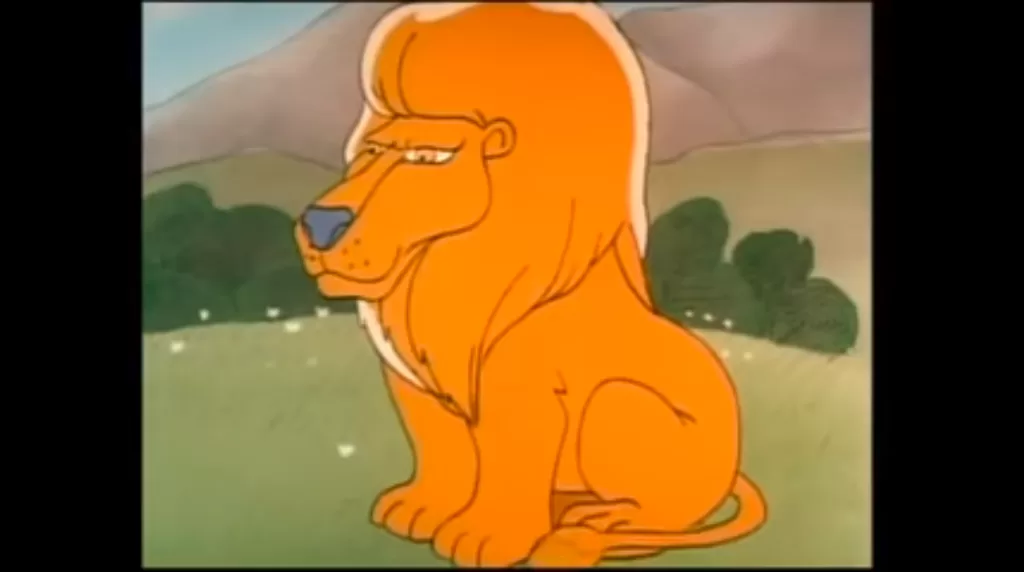
However, perhaps the most perfect casting choice was Aslan. For a brief moment upon His arrival, I wondered if it was the voice actor for King Moonracer from Rudolph the Red-Nosed Reindeer. Let’s face it before Mufasa…there was King Moonracer. The fact that Stephen Throne was not only British but lesser known, made him an inspired choice for a TV production. While James Earl Jones may have been a long-time fan favorite for Aslan it would have been far too distracting to have the newly minted Darth Vader voicing Aslan in 1979, only two years after Star Wars, in the same way that having unknown child actors voice Peter, Susan, Edmund, and Lucy was far more effective than casting say Richard Thomas from The Waltons, Maureen McCormick from The Brady Bunch, Danny Boneduce from The Partridge Family and Melissa Gilbert from Little House on the Prairie in the roles.
Aslan
Thorne has the same sense of majesty, wonder and authority in his voice that Stan Francis as Moonracer in Rudolph or Alfred Drake as The Great Ak in The Life and Adventure of Santa Claus. Yet there’s also a hint at a sense of humor, perhaps best conveyed when the witch confronts Aslan and the other Pevensies about Edmund’s treachery. Not since Sebastian Cabot’s Bagheera in Disney’s the Jungle Book as a talking cat been infused with so much appropriate sarcasm and while I love ” Don’t speak to me about the deep magic, witch…I was there when it was written” from the Walden film, the sarcasm in animated Aslan says “let us say that I have” is the perfect set up for the most necessary exposition dump in literature. Jadis knows that Aslan’s knows…but the exposition is for the sake of the other characters, and ours as well.
In one particularly brilliant moment at the films climax as Lucy and Susan accompany Aslan to the table, while other adaptions play the area as grassy and wooded, perhaps evoking Gethsemane, Melendez instead has the girls walk with Aslan through with a rough, rugged landscape, making his walk to the Stone Table feel *more* like Christ heading up Calvary. Further, perhaps thanks censorship rules on television as far as what level of violence they could show on network prime time television in a family feature, right when Jadis raises her knife to kill Aslan, the camera cuts up to the clouds over head and there is a massive thunderclap before cutting back to Susan and Lucy weeping, evoking Christ on the cross.
As a result, what was probably initially meant as a stylistic choice to appease censors, Melendez allowed the story to embrace the deeper magic. We aren’t told of the terrain of Aslan’s journey to the Table, nor of any weather conditions in the book, but Melendez, perhaps subconsciously, connected more the symbolism of the moment and it enhanced the story. Like Liam Neeson’s Aslan saying to Peter “it is finished” in the Walden Media Narnia after he defeats the Witch in the Walden media adaptation, these simple touches make it undeniable just Who Aslan really is.
Best of all, this is the only version in which we get Aslan’s playful romp with Susan and Lucy upon his resurrection. This is a moment left out of the BBC version due to technical limitations, and the Walden version due to a desire to avoid being seen as cheesy, but it’s here in all its joy and revelry. And I loved every minute of seeing it, especially as Aslan’s power brings new life to Narnia.
I would argue that much like how his work on A Charlie Brown Christmas and It’s The Great Pumpkin gave Melendez the necessary experience to handle the spiritual and philosophical themes of Lewis’ story, while A Charlie Brown Thanksgiving meant he knew how to handle complex character interactions and heartfelt apologies necessary to render the relationships between the characters, the often ignored Its the Easter Beagle, Charlie Brown meant that only Melendez could have been able to include Aslan’s Romp, and not make it appear cheesy, all while embracing the mythic and fantastic that he delved into with Disney’s Fantasia.
Allow me to elaborate for those unfamiliar with the Charlie Brown Easter special. In the final moments of the Easter Beagle, As the sun rises, we hear the second movement, “Allegreto” from Beethoven’s 7th symphony, perfectly capturing the melancholy and somber feeling the kids feel, like it was Good Friday. It creates a sense of melancholy waiting, longing and anticipation in the characters and the audience.
Then from over the hill as the sun grows higher, we see the familiar shape of Snoopy on the hill as the music we hear two sharp, sustained flute notes. Then slowly the tempo begins to pick up and we hear the first movement, “Poco sostenuto-Vivace” from Beethoven’s 7th Symphony as there is a sudden change, or twist, in the story as it begins to pick up and becomes brighter, the sun growing higher as Snoopy grows closer and begins passing out Easter Eggs as he romps through town. Then, one by one each of the once despondent children feel that change coming on as a new found sense of joy of which they had never known before suddenly over takes each of them.
This feeling was best described by JRR Tolkien in letter 89 from TheLetters of JRR Tolkien as,
“ ‘Eucatastrophe’: the sudden happy turn in a story which pierces you with a joy that brings tears… And I was there led to the view that it produces its peculiar effect because it is a sudden glimpse of Truth, your whole nature chained in material cause and effect, the chain of death, feels a sudden relief as if a major limb out of joint had suddenly snapped back. It perceives – if the story has literary ‘truth’ on the second plane (….) – that this is indeed how things really do work in the Great World for which our nature is made. And I concluded by saying that the Resurrection was the greatest ‘eucatastrophe’ possible in the greatest Fairy Story – and produces that essential emotion: Christian joy which produces tears because it is qualitatively so like sorrow, because it comes from those places where Joy and Sorrow are at one, reconciled, as selfishness and altruism are lost in Love.“
This exact same feeling is at the core of Aslan’s resurrection in the novel. The romp is probably one of Lewis’ most vivid word pictures and one of several moments in the book captured through the illustrations by Pauline Baynes, and as it’s described in the book,
“He stood for a second, his eyes very bright, his limbs quivering, lashing himself with his tail. Then he made a leap high over their heads and landed on the other side of the Table. Laughing, though she didn’t know why, Lucy ( Pevensie) scrambled over it to reach him. Aslan leaped again. A mad chase began. Round and round the hill-top he led hem, now hopelessly out of their reach, now letting the almost catching his tail, now diving between them, now tossing them in the air with his huge and beautifully velveted paws and catching them again, and now stopping unexpectedly so that all three of them rolled over together in a happy laughing heap of fur and arms and legs .It was such a romp that no one has ever had, expect in Narnia; and whether it was more like playing with a thunderstorm or playing with a kitten, Lucy could not make up her mind. And the funny thing was that when all three lay together panting in the sun the girls no longer felt in the least bit tired or hungry or thirsty.”
Melendez seemed to understand this incredible sense of joy that exists in Aslan’s romp through his work on Easter Beagle, and in fact every moment in this adaptation of Narnia has been leading towards it. For what is a children’s TV special the score by Michael J. Lewis for this production feels almost cinematic. It starts out feeling like a children’s fantasy, but the minute the children meet Aslan it segues to the feel of a biblical epic. This isn’t just a simple adventure story, nor is it just a fantastic bedtime story, but it’s a story of spiritual significance in which the characters will counter and embrace deeper truths, and meet the Creator of the Universe himself. Such a moment should feel as epic as The Ten Commandments, Prince of Egypt, The Greatest Story Ever Told, or Jesus of Nazareth.
I feel that the animated Narnia had the fidelity of the BBC, with the pace of the Walden and dare I say it Melendez managed to capture the perfect balance, and translated the core themes, spirit, and imagery of the book to screen. Perhaps it makes since. We’ve argued ad nauseum before seeing the films whether an animator for Shrek or the director of Barbie were right for Narnia. But truthfully, I feel that if anyone was going to hit the proverbial bullseye and get Narnia *right* on film, it would have to be part of the team that took a risk in ’65 and had Linus van Pelt drop his blanket to quote the Gospel of Luke.
And for an imperative reason. It’s pretty much well noted that in the early 2000s with the success of Lord of the Rings and Harry Potter film franchises, that studios were trying to chase the next fantasy hit, and at least with the first film The Lion, the Witch and the Wardrobe in the Walden Media Narnia franchise audiences could have been in for a third. However, by Prince Caspian, this would not be the case, as like other franchises before, it tried too hard to be like it’s cinematic fantasy siblings. In the process, for many of the fans its soul was lost. But if the sequels to the first Walden film had stayed the course with the cast, special effects, and acting that they established in the first film, combined them with the pacing and fidelity to the text of the animated film with the reverential tone of the BBC, the Narnia film franchise could have managed to have what both Lord of the Rings and Harry Potter had.
In a word: sincerity.
Linus says it best in Its the Great Pumpkin Charlie Brown,
“You look around and there’s not as sign of hypocrisy. Nothing but sincerity as far as the eye can see.”
As Jack Coleman says of Peter Jackson’s Lord of the Rings trilogy in “Lord of the Rings is the Perfect Trilogy, Why Roll the Dice Again?” that looked at the attempt to expand the universe of the Lord of the Rings film trilogy for Collider,
“While focusing on setting and character makes the world of Lord of the Rings feel lived in and real, the reason that the franchise has fared so well is its focus on sincerity and honest emotion. Movies and TV shows these days can feel a bit insecure about their big emotions, lamp shading them with quick quips and jokes, or even a fourth wall break. This is usually in place to ensure that the audience never assumes the work is “pretentious” or “melodramatic”. There’s nothing wrong with that, in theory, but overuse means that nothing can feel genuine anymore. If the writers are too afraid to leave the audience alone to experience big emotions for fear of judgment, everything ends up feeling immature, and the audience is never allowed to immerse themselves. It’s as if a film interrupted its story every ten minutes to yell, “Oh, but don’t worry, it’s a movie!”… Lord of the Rings never gives in to the impulse to undercut scenes or interrupt genuine emotional moments. This has a cumulative effect that makes everything in the movies feel impactful because the audience is properly immersed in the world. Lord of the Rings juggles big world-ending stakes, it deals with grand emotion in the context of old operatic stories of good and evil. The movies are made with this tone in mind and aren’t ashamed of it.”
Neither should a director of Narnia. It doesn’t need a director who will try to recontextualize or modernize the story, nor does it need a director who wants to “subvert the audience expectations”, it needs someone who loves it, just as it is and wants to tell that story. It occurs to me that maybe, just maybe, Narnia had that back in 1979.
To me, it’s almost a shame that this was a “One and Done” for Melendez. We can debate all we like about the merits of the BBC or Walden films, but for my money if we could have a series of seven well-done animated TV specials from Bill Melendez of Peanuts fame with that same sincerity that he imbued Schulz characters and world, then nothing else could hold a candle. Granted part of me says, why not all of the above. I would love to be in a timeline in which we had a series of solid blockbuster films from Walden Media, a beloved live action TV mini-series, and a set of classic animated specials from one of the creative minds behind The Peanuts holiday specials.
Now, I’ll be the first to admit that from a pure technical and aesthetic stand point, compared to it’s contemporaries, Mr. Magoo’s Christmas Carol, Rudolph the Red-Nosed Reindeer, and Dr. Seuss’ How the Grinch Stole Christmas, A Charlie Brown Christmas is incredibly rushed and sloppy due to the demands on the production. It’s not as crisp and fluid as Mickey’s Christmas Carol, A Garfield Christmas or even some of the later Peanuts Christmas specials. It doesn’t illicit the laughs of Elf, The Santa Clause or any of the Muppets holiday specials. Compared to the cutting-edge animation featured in The Polar Express, Arthur Christmas, Olaf’s Frozen Adventure, Ice Age Mammoth Christmas, Shrek The Halls, or The Toy Story that Time Forgot it’s flaws become even more obvious. It doesn’t even have a novelty tie in like Grandma Got Run Over by a Reindeer.
But we don’t love A Charlie Brown Christmas because it is bright and flashy and colorful and fast paced. There’s nothing in it that draws us into it from a mere aesthetic standpoint. We don’t even love it for the novelty. I would argue that what draws us back each year to the story Charlie Brown, and his little Christmas tree is that they reflect a far greater glory, that of the Suffering Servant, Jesus Christ as prophesied by Isaiah, in Chapter 53 verses 1-3
“Who has believed our message and to whom has the arm of the Lord been revealed? He grew up before him like a tender shoot, and like a root out of dry ground. He had no beauty or majesty to attract us to him, nothing in his appearance that we should desire him. He was despised and rejected by mankind, a man of suffering, and familiar with pain. Like one from whom people hide their faces he was despised, and we held him in low esteem.”
And its that same quality at the heart of the 1979 animated Narnia movie. It may not be as fun as a Hanna-Barbera cartoon, as whacky as a Bugs Bunny and Daffy Duck cartoon, and it may lack the artistry of Walt Disney, but that sincere heart is impossible to deny and it is why I wish it had continued on to the other six books. Melendez even felt of the fantasy movies he worked on, this was the best.
It’s for that same reason I think we keep coming back to Narnia and Aslan. Much ink has been spilled, even among fans about inconsistencies and contradictions, and we all know about Tolkien’s criticism. I also don’t need to elaborate much on the reception to the religious aspects of Narnia. The world building isn’t as detailed as Lord of the Rings, nor the politics as complex as Game of Thrones, but I think for the friends of Narnia we keep coming back because not just because it’s a fun, fantasy adventure but because of Aslan and Who He really is. The Suffering servant, and Risen King, Who is the only one Who can end the feeling in our hearts that it is “Always Winter and Never Christmas” and bring us new life and that deeper and more transcendent sense of joy and with it a strength to face the challenges that come our way and a peace that passes all understanding. And if an animated Narnia adaptation can have all that, then I say it hits the bullseye.
A Charlie Brown Christmas and The Lion the Witch and the Wardrobe are two enduring childhood classics that made an indelible mark on my life and imagination. It may not seem like the two would lever cross over, but thanks to a wise decision made back in 1979 the same animator who helped Charlie Brown discover the true meaning of Christmas and delivered a Christmas classic 60 years ago was able to help the Pevensies meet Aslan and in the process may have delivered a near-perfect adaptation of the beloved fantasy novel.
As a lifelong fan of animation, I feel indebted to Bill Melendez work on the Charlie Brown specials and their warm, heartfelt, simplicity but as a Friend of Narnia I consider myself fortunate that he brought that same genuine sincerity that he gave Charlie Brown and Linus on snowy Christmas Eve as they looked for the true meaning of Christmas to Lucy when she discovered the land of Narnia.
Happy 75th Anniversary to The Land of Narnia. And A Happy 60th Anniversary to A Charlie Brown Christmas. I hope you will both continue to enchant and inspire generations for years to come with your deep and profound messages of faith.
*You read that right. 365 times. The same number of days in a year.
BIBLIOGRAPHY:
Be My Valentine, Charlie Brown. Dir. Phil Roman. By Charles M. Schulz. Original Airdate: Jan. 28. 1974. WCCO-CBS 4
Chaikin, Andrew, A Man on the Moon.Penguin Books: New York, NY. 1994.
A Charlie Brown Christmas. Dir. Bill Melendez. By Charles M. Schulz Original Airdate: Dec. 9, 1965. WCCO-CBS 4
A Charlie Brown Thanksgiving. Dir. Bill Melendez and Phil Roman. By Charles M. Schulz. Nov. 20,1973. WCCO-CBS 4.
The Chronicles of Narnia: The Lion, The Witch, and the Wardrobe. Dir. Andrew Adamson. Perf: Georgie Henley, Skander Keynes, William Mosely, Anna Popplewell, James MacAvoy, Tilda Swinton, Ray Winston, and Liam Neeson. By CS Lewis, Anne Peacock, Andrew Adamson, Christopher Markus, and Stephen McFeely 2005. Walden Media/Walt Disney. DVD.
Coleman, Jack. ““Lord of the Rings” Is the Rare Perfect Trilogy, Why Roll the Dice Again?” Collider, 18 Mar. 2023, collider.com/lord-of-the-rings-perfect-trilogy/. Accessed 1 Dec. 2025.
“Comfort and Joy” Justice League. Dir. Butch Lukic. By Paul Dini. Original Airdate: Dec. 13, 2003. Cartoon Network.
Dr. Seuss’ How The Grinch Stole Christmas. Dir. Chuck Jones. Perf: Boris Karloff, June Foray and Thurl Ravenscroft. By Dr. Seuss. Warner Bros. Home Video. 1966. DVD.
“Episode 1” The Lion, The Witch and The Wardrobe. Dir. Bill Melendez By CS Lewis, Bill Melendez and David C. Connell.
Original Airdate: April 1, 1979. WCCO-CBS 4
“Episode 2” The Lion, The Witch, and The Wardrobe. Dir. Bill Melendez. By CS Lewis, Bill Melendez and David C. Connell. Original Airdate: April 1, 1979. WCCO-CBS 4
Gass, Zach. “5 Reasons Charlie Brown Christmas Is Timeless (& 5 Reason’s It’s Dated).” ScreenRant, Screen Rant, 6 Dec. 2019, screenrant.com/charlie-brown-christmas-timeless-dated-good-bad. Accessed 2 Dec. 2025.
It’s the Easter Beagle, Charlie Brown. Dir. Phil Roman. By Charles M. Schulz. Original Airdate: April 9, 1974. WCCO-CBS 4
It’s the Great Pumpkin, Charlie Brown. Dir. Bill Melendez. By Charles M. Schulz. Original Airdate: Oct. 27, 1966. WCCO-CBS 4
Isaiah. NIV Study Bible. Zondervan, Grand Rapids, MI. 1985.
Keane, Michael. Charlie Brown’s Christmas Miracle: The Inspiring, Untold Story of the Making of a Holiday Classic. Center Street: New York, NY. 2023. Pgs. 83,111-12,188.
L’Engle, Madeleine. A Swiftly Tilting Planet. Bantam Del Ray: New York, NY. 1978.Pg.40.
Lewis, CS. The Lion, the Witch, and the Wardrobe. Harper Collins: New York, NY.1978.179-80.
Lewis, CS. “Sometimes Fairy Stories May Say Best What’s to be Said.” On Stories and Other Essays on Literature. Harcourt, Inc.: New York, NY. 1982.Pg. 47
The Little Drummer Boy. Dir. Arthur Rankin and Jules Bass. By Romeo Muller. Original Airdate: Dec. 19, 1968. KSTP NBC-5
Lovell, Jim and Jeffrey Kluger. Apollo 13. Houghton Mifflin Company: New York, NY. 1995. Machiavelli, Niccolo The Prince and Other Writings. New York, NY. Fall River Press: 2008. Pg. 80. Print.
“The Nativity” The Greatest Adventure: Stories From the Bible. Dir. Don Lusk. Perf: Darleen Carr, Terry McGovern, Rob Paulsen, Michael Rye, Helen Hunt, Gregory Harrison, David Ackroyd, and Vincent Price. By Bruce D. Johnson, Harvey Bullock and Dennis Marks. Hanna-Barbera. 1987. VHS.
Nestor The Long-Eared Christmas Donkey. Dir .Arthur Rankin and Jules Bass. By Romeo Muller. Original Airdate: Dec. 3, 1977. KMSP ABC-9
“On Angels Wings.” X-Men: Evolution. Dir. Frank Paur, By Boyd Kirkland. Original Airdate Dec. 15, 2001. Kids WB-23.
Peace on Earth. Hugh Harman. Perf. Mel Blanc, Martha Wenworth, Shirley Reed, Jeanne Dunne, and The Hollywood Boys Choir. By Jack Cosgriff and Charles McGirl. MGM/Warner Bros. 1939. YouTube.
Rudolph the Red-Nosed Reindeer. Dir. Larry Roemer and Kizo Nagashima. By Romeo Muller. Perf. Bille Mae Richards, Stan Francis, Paul Kligman, Paul Soles, Janis Orenstein, Larry Mann, Peg Dixon, Carl Banas, Alfie Scopp, Corinne Conley, and Burl Ives. Rankin/Bass Productions, Inc. /NBC Universal Television. 1964. DVD.
Solomon, Charles. The Art and Making of Peanuts Animation: Celebrating Fifty Years of Television Specials. Chronicle Books: San Francisco, CA. 2012. Pg 13.
Schulz, Charles M. “Peanuts. Featuring Good Ol’ Charlie Brown.” Minneapolis Tribune. Sept. 17, 1967.
Short, Robert L. The Parables of Peanuts. Harper& Row Publishers: New York, NY. 1968. Pg. 18.
The Small One. Dir. Don Bluth. Pef: Sean Marshall, Olan Soule, William Woodson, Hal Smith, Joe Higgins, Gordon Jump, Thurl Ravenscroft, and Ken Sansom.By Vance Gerry, Pete Young and Charles Tazewell. 1978. Walt Disney Productions. DVD
Tolkien, JRR. “Letter 89” The Letters of JRR Tolkien. Humphrey Carpenter and Christopher Tolkien, editors. Houghton Mifflin Company: Boston, MA. 1981. Pg.100.
PHOTO CREDIT:
1955 BBC, 1995 Associated Press, 1995 asifa-hollywood.org, 1965 Peanuts WorldWide/WildBrainStudios/Apple, 1979 CBS/Children’s Television Workshop/Episcopalian Radio Hour.





Be the first to comment