

Before 3D releases, one of the easiest ways to indicate that a studio had faith in a film project was in the artists on the official soundtrack. The end credits for Disney movies featured the likes of Celine Dion, Pebo Bryson, Regina Bell, Phil Collins, Michael Bolton and Sir Elton John. An American Tail and The Land Before Time featured Linda Randstad and Diana Ross respectively. Robert Zemeckis’ Beowulf boasted Broadway superstar Idina Menzel. Even the Prince of Egypt was able to attract Whitney Houston and Mariah “All I Want for Christmas is You” Carrey. These were the names, and voices, featured during the credits of a film to allow the move to end on a high note and get audiences to buy the soundtrack, with songs themselves often submitted for Best Original song at the Oscars.
There were outliers of course. Richard Donner for example was concerned that having Karen Carpenter sing “Can You Read My Mind” on the end credits of Superman: The Movie would date the film, and Producer Gene Roddenberry had Shawn Cassidy’s “Star Across Time” left off the soundtrack for Star Trek: The Motion Picture for similar reasons, while Peter Jackson insisted that Lord of the Rings needed to feel more like folk music due to the mythic nature of the story. However, Donner and Jackson were directors focusing on a singular, epic vision for their story, while Roddenberry wanted Star Trek to reflect the future, not the present day, much to the annoyance of the studios who wanted a return investment on their film. Thus, for most films getting a major name in music to perform for your end credits is a sign to general audiences that this can’t be missed.
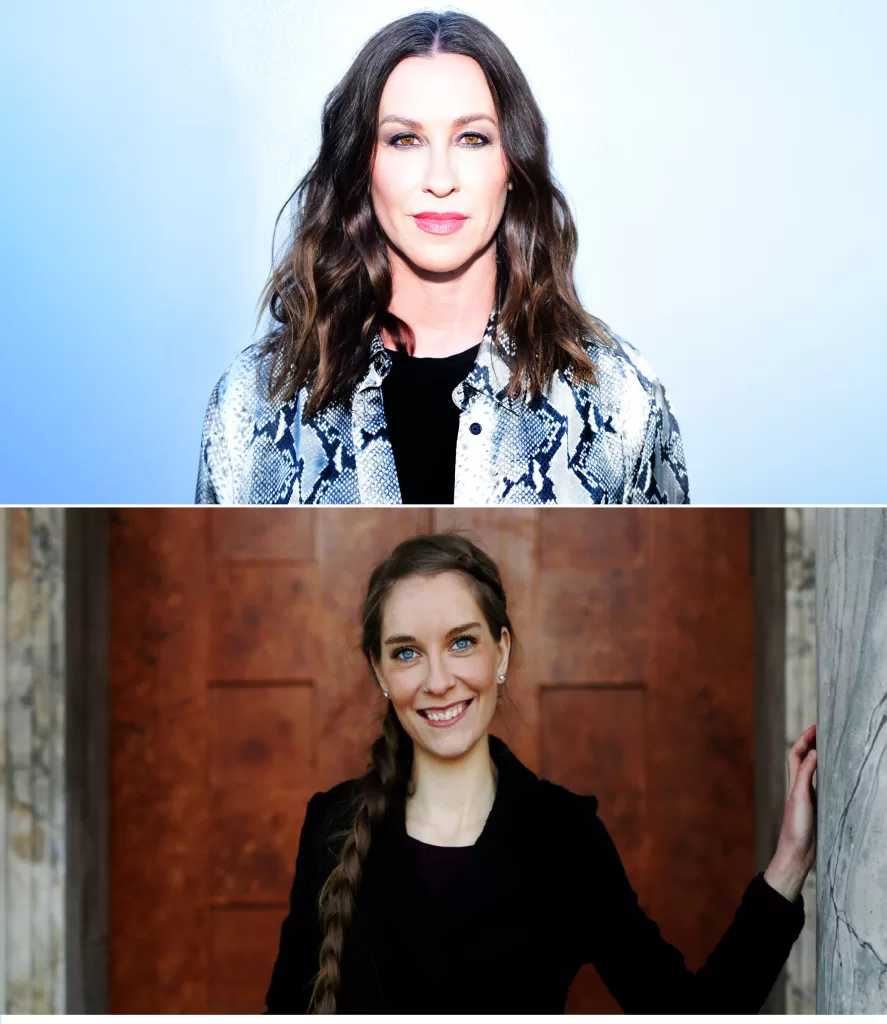
In the case of the Walden Media/Disney release of The Lion, The Witch and The Wardrobe, along with securing Liam Neeson fresh off his roles in Star Wars and Batman as the voice of Aslan, the one way Disney showed how much faith they had in the project was in the form of one of the biggest name artist of that time, pop star, Alanis Morissette. A frequent chart topper and Grammy winner, known for her edgy music, and hard-hitting songs about relationships “Like You Outta Know” she could be at times a literal “Jagged Little Pill” long before Taylor Swift. Granted she also was the consternation of many English teachers thanks to her number one hit “Ironic” that has led at too least two or three generations of students to misusing the term.
In fact her song “You Outta Know” and the rumors surrounding it were so legendary in pop culture at the time that she inspired the character “Corinna” on The Boy Meets World Episode “Shallow Boy”. It is an established rule of thumb in the music industry that if you are parodied in any way, you’ve made it in the industry and that episode more than demonstrates how popular Alanis was at the time.
Thus, it made sense that for the official soundtrack of The Lion, The Witch, and The Wardrobe while several other performers considered, including lead singer of Evanescence Amy Lee, they ultimately went with Morissette. She had broad crossover appeal with both young adults and grown-ups alike, and had a sound closer to the folk artists of the time that lent itself well to a fantasy film. With her status, she was just slightly north of the likes of Enya, Emiliana Torrini or Annie Lennox in The Lord of the Rings, but still just enough niche to her to avoid distracting from the project like say, The Spice Girls, probably would have.
Alanis admitted to loving the books as a child and that Lucy was her favorite character and appropriately her son reflects that. She acknowledges how Lucy’s wonderment of Narnia has attracted readers for generations with her simple faith and strength that feel missing now a days. Throughout the chorus she reflects on how dangerous Narnia is. It’s something out of the fairy tales she’s heard and she’s boldly taking a step forward into this world, and at the same time, it’s a strange new world, under the grip of an icy tyrant and spies are everywhere. However, Lucy has a much greater destiny as do her siblings not only to serve Aslan but to reign as kings and queens of Narnia.
Most intriguing is the lyric that compress Lucy to Joan of Arc. Most think of Joan of Arc simply leading the French people into battle and being burned at the stake as a heretic. But they forget that her call to free France began with the fervent religious belief that she had seen a visitor from Heaven who had called her to do this. This is what makes Lucy’s journey so scary. She could easily kowtow to her brothers and sister and agree she was just playing a game, but she holds fast to her faith and through it, not only is an entire world free, but her family is brother to a deeper faith.
Regrettably the song is not available on Spotify, and many of Alanis ‘s songs might not be suitable for the context of our play list. To address that deficit and in order to provide a complete look at the story of Narnia in music, we hope you will enjoy this beautiful cover by Danish recording artist Amalie Skriver. Honestly if I didn’t look at the name…I’d swear it was Alanis…she’s that good. Not only that she has some beautiful songs of faith in “I Surrender”, “I Can Do All Things”, and “Beautiful Worries” that reflect deeply on faith in God and finding our strength and purpose in Him through going what the Pevensies must, surrender to Him and let go of control of our own life.
Playlists:
Side A-“Wunderkind” ( Covered by Amalie Skriver).
“I Surrender”
Side B-“I Can Do All Thing”
“Beautiful Worries”
I don’t know what Corinna told any of you people but “Shallow Boy” and “Loser Freak” are NOT based on me.
ha ha ha! Great comment!
Ugh. Don’t mention Taylor Swift or that lady whos name sounds like a church built in the lands of the Rohirrim. They’ll probably hear you and join the soundtrack for TMN! ( I heard tell some of the trees are on her side.)
How dare you speak ill of Taylor Swift! her latest album changed my life!!!! I bought every single variant!
and Chappelle Roan is Amazing!!!
Narnia would be lucky to have them both.
I’m not sure how that’s relevant to anything any ones saying, but ok.