
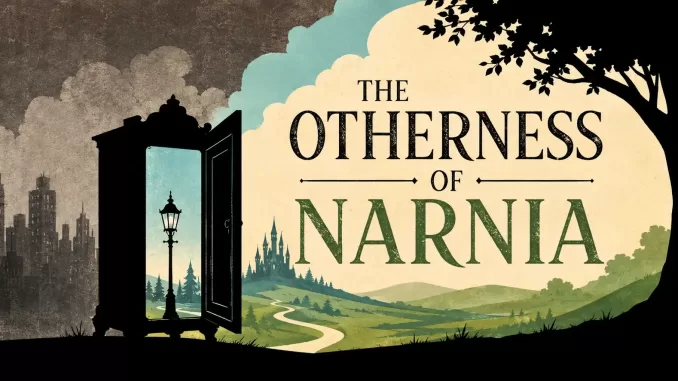
DYSPHORIA
Dysphoria is a feeling of not belonging, of being that odd key left on the keyring because no one knows what you do but they’re afraid to throw you away. My Christian faith is quite clear that all mankind suffers from a kind of dysphoria caused by the brokenness of creation. In the late 4th Century AD, Augustine wrote: “You have made us for yourself, O Lord, and our heart is restless until it rests in you.” Paul in his Epistle to the Romans is more explicit:
“For the creation waits with eager longing for the revealing of the children of God, for the creation was subjected to futility, not of its own will, but by the will of the one who subjected it, in hope that the creation itself will be set free from its enslavement to decay and will obtain the freedom of the glory of the children of God. We know that the whole creation has been groaning together as it suffers together the pains of labor, and not only the creation, but we ourselves, who have the first fruits of the Spirit, groan inwardly while we wait for adoption, the redemption of our bodies.”
Given our restless groaning, is it any wonder that a vast swath of fantasy literature and speculative fiction deals with escape from this world into The Otherness? Do we not dream of being that odd bolt that rescues a lawnmower?
THE OTHERNESS
What exactly is The Otherness? First, we must know what it is NOT. For this we go not to the Bible but to Economics 101. Economics is defined as “The servicing of man’s unlimited wants with limited resources.” If we can stop thinking only in terms of money, it describes life on earth very nicely. As God put it bluntly in Genesis 3:19, “By the sweat of your brow you will eat your food until you return to the ground, since from it you were taken; for dust you are and to dust you will return.” For such is life in this world, though for believers there is a way to regain paradise. In fiction, The Otherness is an intermediate locale that brings us a step closer to paradise. While not paradise itself, it is a great improvement over what we see on the evening news.
Paradise is usually thought of as a sybaritic Disneyland, a garden of infinite delights. It is more subtle than that, but infinitely so much more. Paradise is a place where you can get what you need without buying it—or taking it—from someone else. When God dwells among us, the very source of all blessings does not take from the prey to give to the predator, from the weak to give to the strong, wrest from the naïve to give to the crafty. Rather, the God who said, “let there be light” and made it so produces what is needful fresh and new rather than simply moving needful things from owner to owner.
We have lost our opportunity to enjoy paradise, but not our desire. We harbor notions of fairness, idealism, peace on earth. In Mere Christianity, C. S. Lewis himself asked, “How had I gotten this idea of just and unjust? A man does not call a line crooked unless he has some idea of a straight line. What was I comparing this universe with when I called it unjust?”
We long for our lost Eden, our connection with God, nature, and other forms of life. Ted Perry was inspired by Chief Seattle to write, “What is man without the beasts? If all the beasts were gone, man would die from a great loneliness of spirit.”
Into this longing comes The Otherness. Whether it is Narnia, Wonderland, or Oz, it offers us some satisfaction of our frustrated longings. It is also less extreme of a step than the way to enter paradise—death. The Otherness offers us a means to explore beyond the strictures of this world and perhaps to return and bring some of the magic back.
THE OTHERNESS OF NARNIA
In the world through the wardrobe, all of life and meaning is not explained away in terms of scientific materialism. Right is right, wrong is wrong, and food is not chock full of preservatives. Unlike rescuing trapped animals in this world (which I have done), I can tell the otter and badger I mean no harm, and they understand (which I have longed to do). Unlike prayer in this world to the invisible God veiled from our eyes, the divine makes a heart-pounding theophany in Narnia in the person of Aslan, rending the curtain that separates the mortal and immortal realms. It is not yet paradise, but it is so much closer.
I have never had any personal experience with The Otherness, but I have taken comfort from the themes explored in the Chronicles of Narnia. While I don’t confuse fantasy with science, history, or geography, it serves an important function. It keeps alive my search for truth and beauty even in the darkest of times. Sometimes fantasy is more real to me than the evidence of my senses because it looks beyond my eyes and ears to catch the glimmer of a new dawn, a time when all tears shall be wiped away, and grievous things shall not be brought to mind.
FINDING THE OTHERNESS
Our solar system is separated from other planetary systems by unimaginably vast distances measured in light years. One light year is roughly (adjusting for inflation) six trillion miles. The distance to the nearest star with a planet in the habitable zone is 48 light years away, and just because there is a planet there doesn’t mean it has a Walmart. If you accept the possibility of life on other planets in our galaxy, you know on a gut level that you’ll never go there, at least not in this life. Lucy Pevensie could never show up on Tumnus’ doorstep wearing a spacesuit.
What makes travel to Narnia so plausible is that it is not a matter of where it is (like Gene Roddenberry’s Planet Vulcan) or even when it is (Tolkien’s Middle Earth), but rather what it is. Separate realities with their own physical laws and times dispense with transportation in favor of transposition. Rather than choosing the second star to the right and on till morning, Lucy walked through a magical wardrobe. You could probably see yourself doing that. You probably have daydreamed about it already.
So why haven’t you or the people you know travelled between realities? We must assume that realities are kept separate for a reason. Either because they operate on different principles or because they must not interfere with one another for a reason known only to God. Does this mean it is impossible to go from one reality to another? Without God’s leave, most likely. With God, all things are possible.
THE OTHERNESS AS THE SEPARATENESS
The term “physical law” gives the misleading impression that science has uncovered certain laws such as Newton’s Laws of Motion, and that those laws are strictly enforced in nature. Laws require free will, and objects such as the moon orbiting the Earth cannot obey laws; they can only behave consistently. The apple did not obey the law of gravity to strike Isaac Newton’s head. Even “nature” does not have free will and cannot enforce laws.
The consistency of so-called “physical laws” is not evidence that other realities would have identical patterns. Narnia is in many respects like Earth, and that is for a reason. The beings of Narnia and Earth, Charn and heaven-knows-what-else will all experience their afterlife together. Therefore, it makes sense they should be similar enough to feel comfortable interacting in positive ways.
Of course this may raise a certain question in people of faith. Namely, why God would “bother with” creating more than one order. There isn’t a Biblical prooftext to explain this to everyone’s satisfaction, yet we are faced with the 8.3 billion humans alive on earth today. It is estimated that 117 billion human beings have existed so far. If God’s concept of “enough” were based on how many people he “needed,” then zero would be the only logically defensible answer. Wanted, but not needed. 117 billion human beings so far, and that is subject to continued growth. So how many realities does God need to create? Again, zero, and that includes the one where this article is being read.
Given that God may well have a great many realities at a given time, and given that our physical laws do not dictate how they must operate, we must assume that a Narnia-like world not only could exist, but that it probably should exist if God finds satisfaction in diversity, expressing himself in different ways the way some artists sculpt, paint, draw, ink, carve, and engrave as the mood strikes them.
HOW PLAUSIBLE IS OTHERNESS?
What evidence do we have that such Otherness exists? Nothing direct, but plenty indirect. There are too many people to ignore who claim to have near-death experiences. Several people who have given credible-sounding accounts spoke of other forms of life than our own. Whether they referred to life on other planets in our galaxy or from other realities is not clear, but it is food for thought.
It would be disingenuous for me to suggest that The Chronicles of Narnia is anything other than the creation of C. S. Lewis’ imagination. There is no Tumnus, no Jadis, no Reepicheep. Yet Charlotte Brontë’s Jane Eyre is also a work of fiction, and that does not lead us to deny the existence of men and women, England, and manor houses.
It is precisely this level of plausibility that leads us to buy into Narnia in a way that is deeper and broader than we could ever buy into Star Trek with its facial prosthetic of the week. It taps into a longing we feel for a level of intimacy, trust, and wonder we find sorely lacking in this world of disease, politics, and jihad.
We cannot dismiss The Otherness out of hand because at the very least we understand God as an Otherness. We cannot dismiss the idea of different realities since we already understand the fallen world is notably different from Eden and will be notably different again when Christ returns.
Narnia? I don’t hold out hope of meeting Mr. Tumnus someday. I don’t hold out hope of meeting someone who actually saw the castle of Cair Paravel. That said, do I expect to encounter The Otherness? Perhaps not as a stepping stone to Paradise, but certainly in the lives of those who lived in an Otherness who become my neighbors in God’s good time.

Be the first to comment