

Set photos from the NETFLIX adaptation of Magician’s Nephew reveal that the film appears to be set in the 1950’s which has shocked and puzzled the Narnia fan community. The discussion online has led many fans to try and remember when the Magician’s Nephew book was actually set, but anyone who has read the entire series knows that it is an origin prequel. When it came to placing a date for the book’s setting there were differing time periods imagined by the fan community. To clarify the controversial issue about the time period this article explains what year C.S. Lewis chose to set The Magician’s Nephew, why he chose that date, and explores the thematic repercussions of a re-imagined Narnia timeline.
In The Magician’s Nephew book, C.S. Lewis sets the London scenes in 1900 AD. It is clear that C.S. Lewis’s confirmed this date in his Narnian timeline outline which was given to his secretary Walter Hooper who published it after the author’s death in the book Past Watchful Dragons where he lists:
“1888 Digory Kirke born.
1889 Polly Plummer born.
1900 Polly and Digory carried into Narnia by magic Rings.” (Hooper, 1979)
Justifying a Potential Time Shift
The Magician’s Nephew book itself sets the time frame by the opening sentence: “This is a story about something that happened long ago when your grandfather was a child.” (Lewis, 1955). On one hand, a child today reading this sentence would infer a 1950’s time period to imagine the era of their living grandparents, but since the book was published in 1955 the sentence’s original meaning for a child of the 1950’s called back to the turn of the century. The apparent time period change of the movie might be an attempt by Greta Gerwig to modernize the series into a time period that would be familiar nostalgia for the grandparents in today’s moviegoing audience.
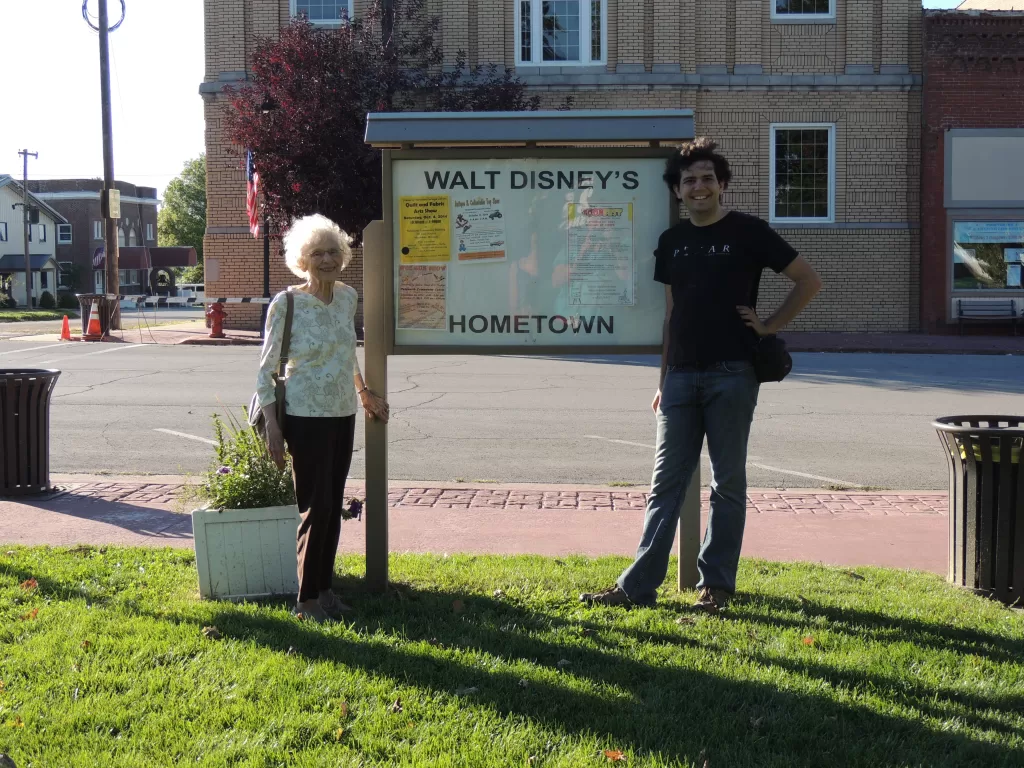
This problem of maintaining nostalgia between grandparents and grandchildren relevant is represented by Disneyland’s Main Street USA. The Magician’s Nephew was published in the same year that Disneyland opened and at the time Walt Disney intended Main Street to be the living recreation of his childhood growing up in Marceline, Missouri (Lewis, 1955a; Parish, 2012). I have traveled to Walt Disney’s Hometown with my grandmother and we were enchanted by the small town charm where quaint businesses all closed on Sunday.
To the early guests of Disneyland’s Main Street it represented not a historical recreation, but living nostalgia. Grandparents taking their grandchildren to Disneyland in the 1950’s would bring back memories from their childhood as they shopped not for plastic souvenirs, but old fashioned handmade wares from long lost stores like the candle shop (Parish, 2012a; Weiss, 2020). The original Main Street prioritized living nostalgia rather than commercializing merchandise sales by featuring unique shops like the Upjohn Pharmacy complete with live jars of leaches (Parish, 2012).
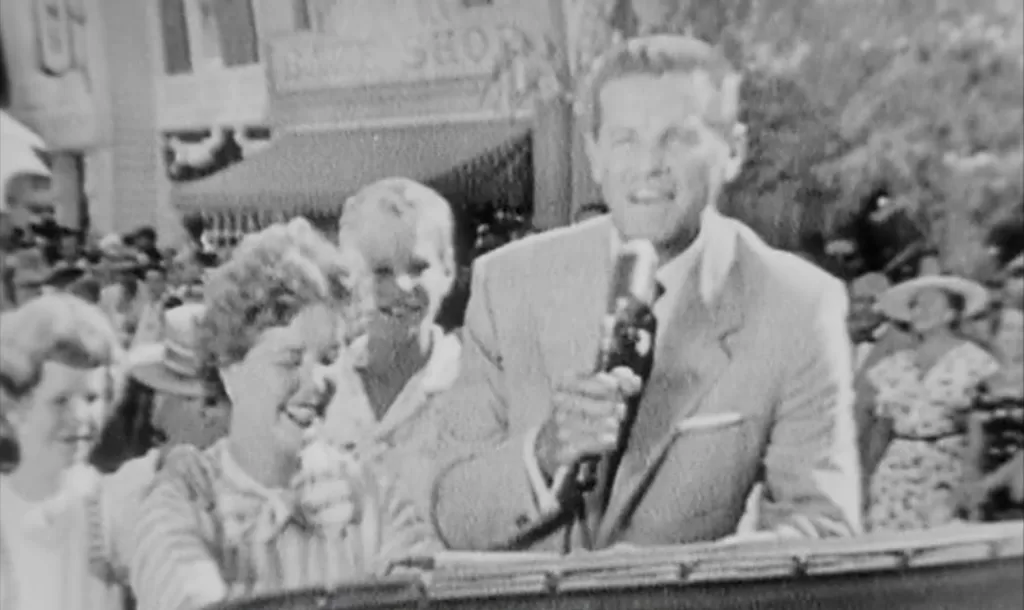
Notice how Bob Cummings describes the 1900 Main Street in terms of family memories to his 1955 TV audience on the Disneyland opening day special:
“This is a Main Street ladies and gentlemen just like my grandma used to tell me about back in Joplin, Missouri. Sometimes she had a whole penny for herself to spend on a Saturday night. Now, all these stores are different. For instance now, right over here is the Candy Palace. Now, that’s probably where Grandma got those licorice whips and jujubes. …. And, of course, there’s the bake shop. And then there’s the jams and jellies store. Mom—old Grandma certainly loved those tarts and those rich ladyfingers. Of course, on the corner is the ice cream store. I guess, next to marrying Grandpa the biggest thrill she ever had was to have a taste of tutti-frutti ice cream and a sarsaparilla. …. here is one of the most famous motion-picture theaters in the world. …. believe me, if Grandma was here she’d come and see one of the series of Perils of Pauline tonight.” (Raison et al., 1955)
The problem was that as time marched forward Disneyland’s Main Street remained locked to a static turn of the century snapshot until eventually it lost the intended quality of living nostalgia. By now anyone who remembered that time period has long since died off. By the early 1990’s when Imagineer Tony Baxter designed Disneyland Paris he didn’t think a turn of the century Main Street was relevant to a modern European audience (Barnes, 2015). He tried to modernize Main Street by pushing the timeframe up to a 1920’s American street with a speakeasy, but met resistance from Disney’s C.E.O. Michael Eisner (Barnes, 2015). When I became an engineer for the team that created Shanghai Disney Resort it was also determined that a turn of the century American town didn’t have any relevancy to a modern Chinese audience (Barnes, 2015). Instead of recreating another Main Street for the world’s sixth Disney resort, an entirely new Mickey Avenue was designed by Christopher Merritt as a street inhabited by classic Disney characters who operate the shops.
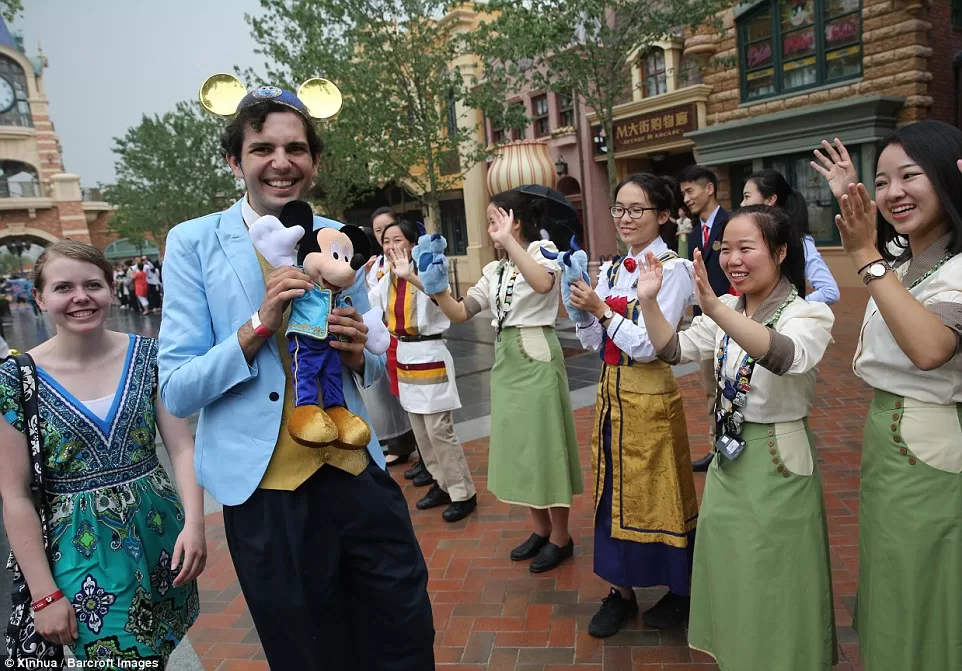
Just like Walt Disney Imagineering eventually recognized that a turn of the century Main Street had lost relevance as living nostalgia to modern audiences, it is possible that the same issue might be the motivating factor behind the NETFLIX creative re-imagining of Magician’s Nephew in the 1950’s “when your grandfather was a child” (Lewis, 1955).
Despite waning public interest in the turn of the century time period Disney fans have strongly opposed any attempts to modernize Disneyland’s Main Street like turning the Main Street Bakery into a Starbucks (Parish, 2012). Just as the purity of Main Street USA is cherished to Disney fans, the setting of The Magician’s Nephew is precious to Narnia Fans who have expressed outrage on social media about this period change as well as the rumor of a transgender Aslan. Neither group of dedicated fanbase is welcoming a change to the traditional turn of the century setting or sacred traditions.
Should Greta Gerwig learn from the stale relevancy of Disneyland’s turn of the century Main Street or respect the authenticity of The Magician Nephew’s original 1900 era?
Contextual Clues for 1900 Setting
If we were to judge the time period of The Magician’s Nephew solely by, “a story about something that happened long ago when your grandfather was a child”, it might be easy for a modern reader to accept the 1950’s as the right time period, but other contextual clues clarify the 1900 setting (Lewis, 1955).
The third through fifth sentences set a clear picture of C.S. Lewis’s intended time period:
“In those days Mr. Sherlock Holmes was still living in Baker Street and the Bastables were looking for treasure in the Lewisham Road. In those days, if you were a boy you had to wear a stiff Eton collar every day, and schools were usually nastier than now. But meals were nicer; and as for sweets, I won’t tell you how cheap and good they were, because it would only make your mouth water in vain.” (Lewis, 1955)
The Sherlock Holmes books by Sir. Arthur Conan Doyle were published from 1887 to 1927 (Obenza, 2025). The reference to the Bastables narrows down the time period to the Bastables series by Edith Nesbit published from 1899 to 1904 (Nocloo, n.d.). More specifically the treasure of Lewisham Road came from the first Bastables book The Story of the Treasure Seekers published in 1899 (Nocloo, n.d.).
The Eton collar described was a stiff, starched, white collar with square points folding down over the jacket — began as part of formal wear for upper- and middle-class boys in Britain in the 19th century. It came from Eton College (the famous public school) in the mid 1800s, where boys wore it with short jackets or tailcoats (Eaton College Collections, n.d.). Because Eton College was culturally influential, the style spread to other schools and even to children’s dress clothes outside school. Eton collars were most likely worn between the late 1800s and the 1930s, with a rapid decline after WWII.
The quality of food and sweets is highly subjective, but likely something C.S. Lewis is writing about his own childhood experiences born 1898 (C.S. Lewis Foundation, n.d.). The way C.S. Lewis reminisces about turn of the century candies in The Magician’s Nephew is surprisingly similar to the emphasis Bob Cummings placed on describing the confectionaries of Main Street USA set in the same time period (Lewis, 1955a; Raison et al., 1955).
These contextual clues from the first two paragraphs of The Magician’s Nephew narrow down the era of the book from the general “when your grandfather was a child” down to a specific 1899-1904 literary reference, and then was later pinpointed to 1900 by C.S. Lewis’s own timeline notes (Lewis, 1955a; Hooper, 1979a; Nocloo, n.d.). Clearly the book’s events occur in Edwardian-era London, just before the reign of King Edward VII, not in the post-war period we’re seeing in the new NETFLIX adaptation.
Lewis’s choice of 1900 for The Magician’s Nephew’s is more deliberate than it looks. The setting wasn’t arbitrary, but layered with historical and thematic resonance.
Why C.S. Lewis Chose 1900 as the Starting Point
1. A Threshold Between Eras
Victorian → Edwardian Transition
1900 was the final full year of Queen Victoria’s reign (Royal Family, n.d.). England was poised between the moral rigidity, imperial certainty, and industrial optimism of the Victorian era and the more modern, questioning Edwardian age. This mirrors the hero’s journey of Digory and Polly: starting in a familiar, “safe” London, then crossing the threshold into strange, dangerous, and awe-inspiring new worlds (Lewis, 1955).
2. A World Before War
By placing the story before World War I, Lewis captures an England untouched by the disillusionment and trauma that would dominate the 20th century (National WWI Museum, n.d.). The innocence of this pre-war world parallels the newness of Narnia, which is literally being created before the children’s eyes—an unspoiled beginning (Lewis, 1955).
3. The Spirit of Early Science & Wonder
1900 was a time of rapid technological progress—telephones, electric trams, and the first silent films—but still infused with old-fashioned gas lamps and horse-drawn carriages (Parish, 2012). That tension between new discoveries and old traditions fits Uncle Andrew perfectly: a magician dabbling in experiments at the edge of what science and mysticism could explain (Lewis, 1955).
4. The Personal Layer
Lewis himself was born in 1898, meaning he was only ten years younger than Digory (C.S. Lewis Foundation, n.d.a; Hooper, 1979). Digory’s London—modest homes, attic crawlspaces, and sweet-shop visits—seems to come straight from Lewis’s own childhood memories.
5. Mythic “Year One” of Narnia
By making 1900 the year of Narnia’s creation, Lewis set a neat chronological anchor for the entire series (Hooper, 1979). In his personal Chronicles of Narnia Timeline, everything else—wars, reigns, and final endings—unfolds from this moment (Hooper, 1979).
If NETFLIX is moving The Magician’s Nephew to the 1950’s, it’s not just a cosmetic shift—it changes the entire cultural and emotional backdrop. In 1955 London, Digory and Polly would be growing up in a world still scarred by WWII rationing, Cold War fears, and a society undergoing massive change. That’s a very different kind of threshold than Lewis originally envisioned.
How Changing the Time Period Alters the Themes of the Story
Changing to a 1955 setting would be like swapping the warm, flickering gaslamps for a streetlight buzzing with Cold War electricity.
1. Cultural Mood Shift
1900:
- Britain is confident, still at the height of its empire.
- Innocence and optimism define the children’s world.
- Faith in science and progress feels unshaken.
1955:
- Post-WWII Britain is still recovering—rationing only fully ended in 1954.
- The Blitz is a living memory for their parents, maybe even for older siblings.
- The empire is shrinking; there’s uncertainty about the nation’s role in the world.
- Children grow up amid talk of nuclear weapons and Cold War tensions.
Effect on story:
Instead of the awe of seeing a new world made, the children’s wonder might be tinged with the knowledge that worlds like Charn can be destroyed in the same way as Hiroshima and Nagasaki (Atomic Heritage Foundation, 2014). Aslan’s creation of Narnia could stand in sharper contrast to the devastation they’ve known.
2. Digory and Polly’s Character Backgrounds
1900:
- They come from stable middle-class homes; the greatest personal hardship is Digory’s mother’s illness (Lewis, 1955).
- Polly’s and Digory’s friendship forms in the safe boredom of summer holidays (Lewis, 1955).
1955:
- Their parents might be veterans of the war, possibly shaped by loss, displacement, or injury.
- Housing shortages in post-war London could explain their homes’ proximity or shared buildings.
- Their “exploring” might stem from an instinct to escape cramped, drab surroundings.
Effect on story:
The stakes of bringing back the apple to heal Digory’s mother may resonate more with audiences used to war-related loss—healing becomes not just personal, but almost restorative for a whole generation.
3. Technology & Aesthetic
1900:
- Horse-drawn cabs, lamplighters, and coal smoke form the London backdrop (Lewis, 1955).
- The Wood between the Worlds feels like a leap away from a world still touched by the Victorian imagination (Lewis, 1955).
1955:
- Electric lights, motor buses, radios, and cinema are normal for the children.
- They might wear short-sleeved shirts and pleated skirts instead of pinafores and knickerbockers.
- The leap to magical worlds would contrast with the modern convenience they take for granted.
Effect on story:
Audiences might see Uncle Andrew less as an eccentric throwback, and more as a mad scientist, perhaps with hints of Cold War superweapon paranoia.
4. Mythic Resonance
1900:
- Feels timeless, part of the “before our time” past that makes fairy tales feel ancient.
1955:
- Anchors the story firmly in living memory for many viewers’ grandparents; less “once upon a time,” more “just a few decades ago.” (Lewis, 1955)
- Could make the story feel closer and more relatable, but risks losing the Victorian fairy-tale mood.
Effect on story:
Audiences across generations might personally relate to the 1955 setting. Technological advancements of the atomic age risk turning the rings into articles of science fiction rather than fairy tale magic.
5. Thematic Weight
In 1900, The Magician’s Nephew is about innocence encountering creation.
In 1955, it could become about renewal after ruin—creation as an act of hope in a world that has already known destruction. It is possible that Greta Gerwig might be aiming for this angle: a 1950s Magician’s Nephew could parallel Britain’s own postwar “re-creation” of itself, with Narnia’s birth symbolizing resilience and rebirth.
The contrast can be vividly seen by reimagining how key moments would play differently in 1900 vs. 1955.
Scene By Scene Example of 1900 vs 1955 Setting
Measuring the 1955 shift against Lewis’s original theological and symbolic framework for The Magician’s Nephew, shows where it aligns, stretches, or risks snapping.
1. Creation as an Act of Pure Goodness
Lewis in 1900 setting:
- Aslan’s song represents creatio ex nihilo—God creating the world out of nothing, purely out of joy and love (C.S. Lewis Bible, 2010, Genesis 1:1).
- Digory and Polly enter the scene without baggage from mass destruction—they witness creation in its most innocent form (Lewis, 1955).
Gerwig in 1955 setting:
- Viewers would carry the memory of the Blitz and Hiroshima into the scene (Atomic Heritage Foundation, 2014).
- Creation now stands in conscious contrast to human destruction—still aligned with Lewis’s theology, but now tinged with restoration after ruin rather than unspoiled beginning.
Risk: The allegory shifts subtly from Genesis 1 to something closer to Isaiah’s prophecies of rebuilding after exile (C.S. Lewis Bible, 2010). That’s theologically different.
2. The Temptation in the Garden
Lewis in 1900:
- Modeled on Eden’s forbidden fruit and Satan’s temptation; the drama is personal and timeless, not rooted in modern history (C.S. Lewis Bible, 2010, Genesis 3:1).
- Jadis tempts Digory in a way that echoes the Genesis Fall, not a particular political or historical event (Lewis, 1955).
Gerwig in 1955:
- The temptation could now be read as an allegory for the temptation to use destructive technology “for good” like nuclear weapons to end a war (Atomic Heritage Foundation, 2014).
- This might give the scene a Cold War flavor—temptation as the lure of power to prevent future devastation—which shifts the focus from spiritual obedience to moral pragmatism.
Risk: The theological clarity of the Genesis parallel could be muddied by political subtext.
3. Uncle Andrew’s Role
Lewis in 1900:
- Uncle Andrew is a Victorian occultist dabbling in forbidden knowledge; he’s a parallel to alchemists or even Renaissance magicians (Lewis, 1955).
- His folly is hubris in the face of divine order.
Gerwig in 1955:
- He risks being read as a “mad scientist” in the Oppenheimer mold—brilliant but morally blind, unleashing forces he can’t control.
- That makes him more relevant to mid-20th-century fears, but less anchored in the timeless archetype Lewis used.
Risk: The allegory might drift from hubris before God toward political cautionary tale.
4. Healing and Sacrificial Love
Lewis in 1900:
- Digory’s choice to obey Aslan and bring the apple back for his mother reflects obedience, trust, and personal sacrifice (Lewis, 1955).
- The healing is intimate and symbolic of divine grace.
Gerwig in 1955:
- Healing could be read as part of national or generational recovery from war—resonating with postwar audiences.
- Still compatible with Lewis’s theme, but with an added community dimension that wasn’t central in the original.
Risk: This could deepen the story’s emotional power for a modern audience, but the collective restoration element clashes with Christian theology of individual salvation.
5. The Timelessness Factor
Lewis in 1900:
- The turn-of-the-century setting puts the story in a storybook past that feels safely distant from the reader’s own lifetime, enhancing its fairy-tale quality.
Gerwig in 1955:
- For many viewers, this will feel closer to living memory—less once upon a time, more recent history.
- This risks reducing the mythic distance Lewis cultivated, but could also make the story more immediate and relatable.
Final Thoughts
When my father first read The Magician’s Nephew to me he interpreted Charn’s deplorable word through a grown up perspective of nuclear destruction. As a child born in the 1990’s I didn’t grow up with cold war fears despite living in an American city that is a likely nuclear bomb target. At some point my father explained how Jadis’s use of the deplorable word was like an atomic bomb, but I don’t think that perspective was necessary or enhanced my understanding. To my imagination I was perfectly content to believe in magic spells that could freeze time.
For the Digory and Polly C.S. Lewis described being born in 1888 and 1889 their imaginations would have been unadulterated by cold war fears the way mine was when I first heard The Magician’s Nephew read to me (Hooper, 1979). Shifting the timeframe 55 years after what was described in the book fundamentally alters the thematic context of the story in shifts which will cascade into the timelines of the sequels (to be explored in another article). Children who lived through WW2 would understand Charn’s destruction with a visceral horror that might deepen the dramatic resonance, but Narnia fans aren’t looking for Greta Gerwig to recreate Barbenheimer as cautionary political theme.
In the historical rebirth of post WWII Britain it is easy to reimagine Aslan building a new Narnia out of Charn’s ruins, but that’s not what The Magician’s Nephew is about. Charnia would be an abomination to the unadulterated world C.S. Lewis described (C.S. Lewis Bible, 2010, Genesis 1:1a; Lewis, 1955). The idea of building a new world out of the ruins of a dead one resonates with the cultural setting of 1950’s and could theologically resemble the creation of the new earth after our fallen earth passes away (C.S. Lewis Bible, 2010, Revelation 21:1). The fundamental problem is that this type of creation completely alters the biblical symbolism C.S. Lewis intended in The Magician’s Nephew since the pure creation of Genesis is wholly different than the re-creation in Revelation and should not be confused (C.S. Lewis Bible, 2010a; Lewis, 1955). If NETFLIX dabbled into envisioning Narnia like a phoenix birthed out of Charn’s ashes it might complement the rebirth of post-war Britian, but such drastic changes would also cast Aslan as a colonizer with Jadis as the rightful ruler. The majority sentiment of the Narnia Fan community has voted no confidence in Greta Gerwig and NETFIX to faithfully adapt The Magician’s Nephew. The apparent radical re-imagining of the time period on top of gender bending a sacred character who represents Jesus Christ call into question whether the film’s creative team will maintain any fidelity to the themes and symbolism C.S. Lewis intended.
Verdict
Compatible but reframed: The 1955 shift might still be able to convey Lewis’s theological points—creation, temptation, obedience, and grace—but will refract them through a postwar lens.
Potential gain: Greater emotional resonance for audiences familiar with recovery from devastation or nostalgic grandparents who remember the 1950’s.
Potential loss: Some of the timeless, Genesis-like purity of the original may be replaced by Cold War cautionary echoes.
If NETFLIX does this well, they could position The Magician’s Nephew as not just Narnia’s Genesis, but also a meditation on rebuilding after humanity’s darkest moments—without erasing the Eden imagery.
A future article will explore the repercussions of how shifting the timeline of The Magician’s Nephew would fundamentally alter all future sequels. For example, instead of The Lion, the Witch, and the Wardrobe being set with the premise of displaced children evacuated from the London Blitz the new film would have a modern backdrop (likely around the mid 1990’s).
As one Narnia Fan put it in a comment to our Facebook page:
“If Magician’s Nephew is 1950’s, then maybe for the next book the Pevensies will show up in 2020, get sent to live in the country due to Covid-19.” John-Mark Palacios
Changing the setting of The Magician’s Nephew opens Pandora’s box of reinterpretations which might result in sequels where modern kids bring their iPhones and Apple Watches into Narnia. Until then, let’s hope that the 1955 setting of the leaked set photos is just a framing device. I wouldn’t mind centering the movies around the late 1940’s “Friends of Narnia” meetings or even having C.S. Lewis himself as the living 1955 narrator. I am not ready to accept fundamentally reinterpreting the entire series as a modern story any more than I am prepared to accept a transgender Aslan.
References:
Atomic Heritage Foundation, The (2014). Bombings of Hiroshima and Nagasaki Retrieved August 15, 2025 from https://ahf.nuclearmuseum.org/ahf/history/bombings-hiroshima-and-nagasaki-1945/
Barnes, D. (Host). (2015, January 1). The Tony Baxter Interview Part 4! (No. 292) [Audio podcast episode]. In The Season Pass: The Essential Theme Park Podcast. Retrieved August 14, 2025 from https://podcasts.apple.com/us/podcast/the-season-pass-the-essential-theme-park-podcast/id268430539?i=1000329716875
C.S. Lewis Bible, The (2010). HarperCollins.
C.S. Lewis Foundation (n.d.). The Life of C.S. Lewis Timeline. Retrieved August 15, 2025 from https://www.cslewis.org/resource/chronocsl/
Eaton College Collections (n.d.). Celebrating 80 years of School Dress. Retrieved August 15, 2025 from https://collections.etoncollege.com/celebrating-80-years-of-school-dress/
Hooper, W. (1979). Past Watchful Dragons. Collier Books
Lewis, C.S. (1955). The Magician’s Nephew. HarperCollins
National WWI Museum and Memorial, The (n.d.) Key Dates. Retrieved August 15, 2025 from https://www.theworldwar.org/learn/about-wwi/key-dates
Nocloo (n.d.). Edith Nesbit Biography. Retrieved August 15, 2025 from https://www.nocloo.com/edith-nesbit-biography/
Obenza, M. (2025). A Reading Guide to the Sherlock Holmes Books by Arthur Conan Doyle. IGN. Retrieved August 15, 2025 from https://www.ign.com/articles/sherlock-holmes-books-in-order
Parish, N. (Host). (2012, October 11). Main Street 1.0 (No. 131) [Audio podcast episode]. In WEDway Radio – Walt Disney World and Disneyland Examined with some Disney History. Retrieved August 14, 2025 from https://podcasts.apple.com/us/podcast/wedway-radio-walt-disney-world-and-disneyland/id306604808?i=1000122339158
Parish, N. (Host). (2012, October 11). Main Street 1.0 Part II (No. 136) [Audio podcast episode]. In WEDway Radio – Walt Disney World and Disneyland Examined with some Disney History. Retrieved August 14, 2025 from https://podcasts.apple.com/us/podcast/wedway-radio-walt-disney-world-and-disneyland/id306604808?i=1000125310714
Raison, W. (Writer), Jackson, W. (Director), Phelps, S. (Director), & Rich, J. (Director). (1955). Dateline: Disneyland [Television series episode]. In Disney, W. (Producer) Disneyland. Burbank, CA: ABC-TV
Royal Family, The (n.d.). Victoria. Retrieved August 15, 2025 from https://www.royal.uk/encyclopedia/victoria-r-1837-1901
Weiss, W. (2020, April 3). Candle Shop. Yesterland. Retrieved August 14, 2025 from https://yesterland.com/candleshop.html
Xie, Q. (2016, June 16). Ecstatic fans finally get inside Shanghai Disney as the $5.5billion theme park opens its doors to the public. Daily Mail. Retrieved August 14, 2025 from https://www.dailymail.co.uk/travel/travel_news/article-3643728/Disney-brings-brand-Shanghai-new-theme-park.html



Well done David! This is a thorough analysis of the pros and cons of reworking the time frame for the setting of The Magician’s Nephew. I hold out no hope that Netflix will be true to book and prefer to dwell on the stunning images evoked in my mind from Lewis’ brilliant writing. When I read Chapter 1 of Genesis, I have images in my mind of creation. Using my God-given and directed imagination, I find enjoyment in reading good literature and seeing it come alive in my mind. People have explored showing Shakespeare’s work set in 1960s, and while some people like that, I prefer following the original intent and design. I’d rather see people use their creativity to produce new works with the setting that they choose. I doubt I’ll see the movie because I don’t want wokeness tainting Lewis’ masterpiece.