
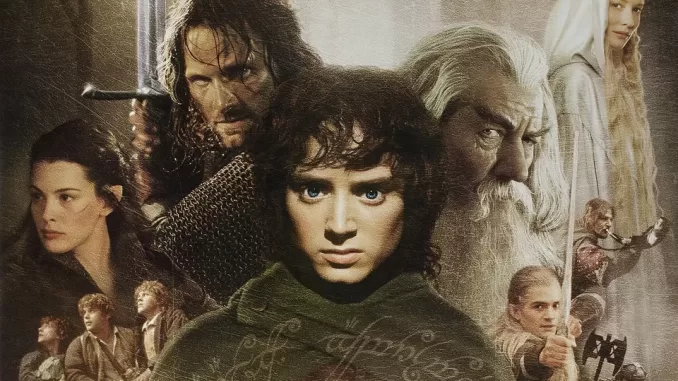
This year marks the 25th anniversary of The Lord of the Rings: The Fellowship of the Ring, and I’ve decided to take this opportunity to revisit and review every Middle-earth film released so far. One film per week.
J.R.R. Tolkien and C.S. Lewis gave us two of the richest fantasy worlds ever created, and I have loved living in both of them for most of my life. So this anniversary run feels personal to me.
I also want to handle these reviews a little differently. Since most of these films have both theatrical and extended editions, I’m treating each one as a two-part review. The theatrical and extended cuts are not enemies. In most cases, they complement each other. One version may play tighter. The other may deepen the world, the characters, or the emotional texture. So I want to look at both.
We begin where the cinematic journey began: The Fellowship of the Ring.
The Lord of the Rings: The Fellowship of the Ring – Theatrical Cut
There are some movies you enjoy for an evening, and then there are movies that feel like they open a door and let you walk into another world. The Fellowship of the Ring does that for me every time.
What makes this film so special is that it understands something a lot of large-scale fantasy stories miss. Before it asks us to care about the fate of the world, it gives us people to love. It gives us the peace and warmth of the Shire. It gives us Frodo’s gentleness, Sam’s loyalty, Gandalf’s wisdom, Aragorn’s uncertainty, and Boromir’s struggle. So when darkness starts closing in, it matters. We know what is being threatened.
That is one of the reasons the Shire works so beautifully. It is more than picturesque. It feels worth saving. Bag End feels warm and lived in. Hobbiton feels rooted and whole. Peter Jackson and his team do such a remarkable job making Middle-earth feel tangible that the world never comes across like a fantasy backdrop. It feels inhabited. It feels old. It feels fully lived in.
The story itself moves with real purpose. The theatrical cut has a strong shape to it. It knows when to linger and when to move. It lets the mythology settle in without getting buried under it. We get the history of the Ring, the growing fear in Frodo, the call to leave home, the refuge of Rivendell, the terror of Moria, the sorrow of Gandalf’s fall, the breaking of the Fellowship, and Sam’s choice to stay with Frodo. None of it feels rushed, but the film still carries momentum all the way through.
One of the great strengths of The Fellowship of the Ring is that adventure is only part of it. It is about burden, temptation, friendship, and faithfulness. Frodo is given something terrible to carry, and very quickly the story makes clear that good intentions alone are not enough to master dark power. The Ring corrupts. It preys on weakness, pride, fear, and desire. But around that darkness, the film keeps showing us something better: loyalty, humility, mercy, and sacrifice.
The emotional core of the movie lands so well. Frodo may be the Ring-bearer, but he is never meant to stand alone. The deeper truth of the story is that fellowship is not a decorative title. It is the thing that keeps hope alive. We see it in Gandalf’s guidance, in Aragorn’s quiet protection, in Boromir’s final stand, and above all in Sam.
The cast is excellent from top to bottom. Elijah Wood gives Frodo a softness and seriousness that fit the part beautifully. Ian McKellen is extraordinary as Gandalf, wise and warm without ever becoming remote. Viggo Mortensen gives Aragorn a quiet nobility that feels earned rather than announced. Sean Bean makes Boromir human and tragic instead of merely weak. And Sean Astin gives Sam the kind of faithfulness that ends up becoming the backbone of the entire trilogy.
Visually, the film is still breathtaking. The Shire feels peaceful. Rivendell feels like a place outside ordinary time. Moria feels ancient, haunted, and crushingly sad. Amon Hen feels like the edge of something breaking apart. The production design and cinematography do more than impress. They draw you in.
And then there is Howard Shore’s score, which is one of the greatest film scores ever written. It is far more than background music. It gives the film soul. The music makes the beauty more beautiful, the danger more dreadful, and the hope more stirring. By the time Enya’s “May It Be” arrives, the whole journey feels wrapped in longing, sorrow, and grace. That ending song does more than sound beautiful. It feels like the right final breath for this first chapter.
If I have any criticism of the theatrical cut, it is only that a few quieter character beats and world-building moments naturally go by faster here because this version is built to move. But that is not really a damaging flaw. The film still feels complete. It still lands where it needs to land. It still gives us wonder, loss, friendship, courage, and hope in abundance.
What lasts with me most is the heart of it. This is a story about ordinary people asked to carry impossible things. It is a story about choosing goodness when darkness feels stronger. It is a story about friends staying with each other when everything is falling apart. That spirit runs through the whole film.
- Story: 5/5 Shields
- Characters: 5/5 Shields
- Heart: 5/5 Shields
- Visuals / World-Building: 5/5 Shields
- Music: 5/5 Shields
- Theatrical Cut: 5/5 Shields
The Lord of the Rings: The Fellowship of the Ring – Extended Edition
If the theatrical cut is one of the great opening chapters in film history, the extended edition feels like being allowed to stay in Middle-earth longer and breathe it in more deeply.
What I love about the extended cut is that it does not replace the theatrical version. It enriches it. The theatrical edition is beautifully shaped and moves with confidence. The extended edition gives the same story more room to live. It adds more texture, more quiet, and more of that sense that Middle-earth is a world with age, memory, sorrow, and beauty in every corner.
The added material helps the film feel even fuller without changing its heart. The Shire feels richer. Rivendell gets to breathe a little more. Lothlórien carries more of its sadness and mystery. The journey feels less like a line of major events and more like a true passage through an ancient world. With Tolkien, that depth is important. This story is not supposed to feel thin or hurried. It should feel storied, and the extended edition leans into that.
I also think the extended cut helps some of the emotional currents settle in more deeply. The tenderness surrounding Frodo, the weariness of the older world, the sense that some beauty is already passing away, and the aching nobility of the people trying to resist darkness all come through with a little more fullness here. You feel the cost of the journey more keenly. You also feel more clearly what is being lost as the world changes.
That bittersweet feeling has always been one of the things I love most about The Lord of the Rings. Even in the beauty, there is sadness. Even in moments of peace, there is the sense that this peace is fragile. The extended edition gives that feeling a little more space, and for me that makes an already moving film even more affecting.
The performances hold up just as strongly here, and in some cases the added breathing room helps them even more. Frodo’s burden feels heavier. Sam’s devotion feels even steadier. Aragorn’s reserve and Boromir’s ache both have a little more room to register. Nothing is radically transformed, but the characters feel more settled into the world around them.
Howard Shore’s music remains one of the film’s greatest gifts. The score carries so much of the nobility, sadness, and wonder of Tolkien’s world that it is hard to imagine the trilogy having this kind of emotional power without it. And once again, when Enya’s “May It Be” closes the film, it feels exactly right. There is something deeply tender about the way that song sends us out of the first chapter.
If I were showing someone these films for the first time, I might still start with the theatrical cut because of how cleanly it moves. But when I want the fuller experience, the one that lets Middle-earth settle into my heart more completely, this is the version I reach for. It gives me more of what I already love without weakening the shape of the story.
I do not really see these cuts as competing with each other. The theatrical cut gives the film shape and drive. The extended cut gives it extra breath, atmosphere, and emotional texture. They really do complement each other.
- Story: 5/5 Shields
- Characters: 5/5 Shields
- Heart: 5/5 Shields
- Visuals / World-Building: 5/5 Shields
- Music: 5/5 Shields
- Extended Edition: 5/5 Shields
Overall
The Fellowship of the Ring is one of my favorite films of all time. It captures the beauty, sorrow, danger, moral weight, and deep human heart of Tolkien’s story in a way that still feels extraordinary. The theatrical cut stands tall on its own. The extended cut lets the film’s world and spirit breathe even more. Together, they make one of the great fantasy films feel even fuller.
Favorite Quotes
Frodo: “I wish the Ring had never come to me. I wish none of this had happened.”
Gandalf: “So do all who live to see such times, but that is not for them to decide. All that we have to decide is what to do with the time that is given to us.”
Sam: “I made a promise, Mr. Frodo, a promise. ‘Don’t you leave him, Samwise Gamgee.’ And I don’t mean to. I don’t mean to.”
Be the first to comment