
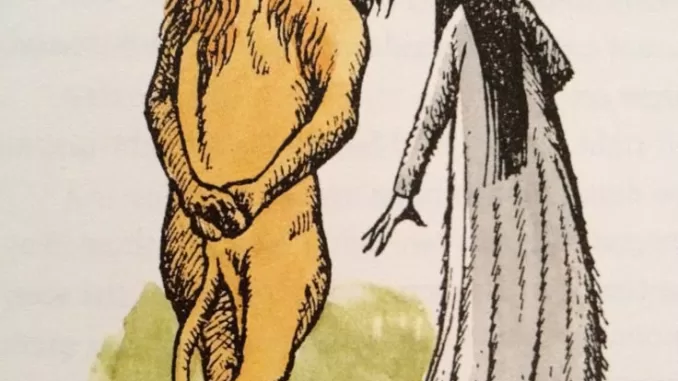
Follow enough fantasy and science fiction related accounts on social media and you will inevitably find one of two memes find their way to your feed. The first is the argument of it could Goku from the anime series DragonBall Z could defeat character X from another series. Aside from Batman preparing feast fort the notoriously gullible super sayin and telling him the meal was poisoned, up until the arrival of the adorable Red Heeler Bingo with her feather wand saying “Heavy”, it took a supernatural god level being like Eru Illuvatar or Aslan to defeat him. These debates have largely grown stale and are basically about power scaling, a mere mathematical formula that you can apply to any and every character.
The second is the character alignment charts for major science fiction, fantasy and comic book franchises. For the most part these tend to have a cut off around the 19th century and can range from Hammer Horror monsters, to members of the Avengers, The Justice League, the crew of the Enterprise to Star Wars characters. One involved Narnia and it positioned Aslan as “Lawful Good” with Jadis as his polar opposite as “Lawful Evil”. Of any alignment chart this created considerable debate among the followers on the page as it seemed to position Aslan and Jadis as complete polar opposites of each other on the spectrum of good and evil.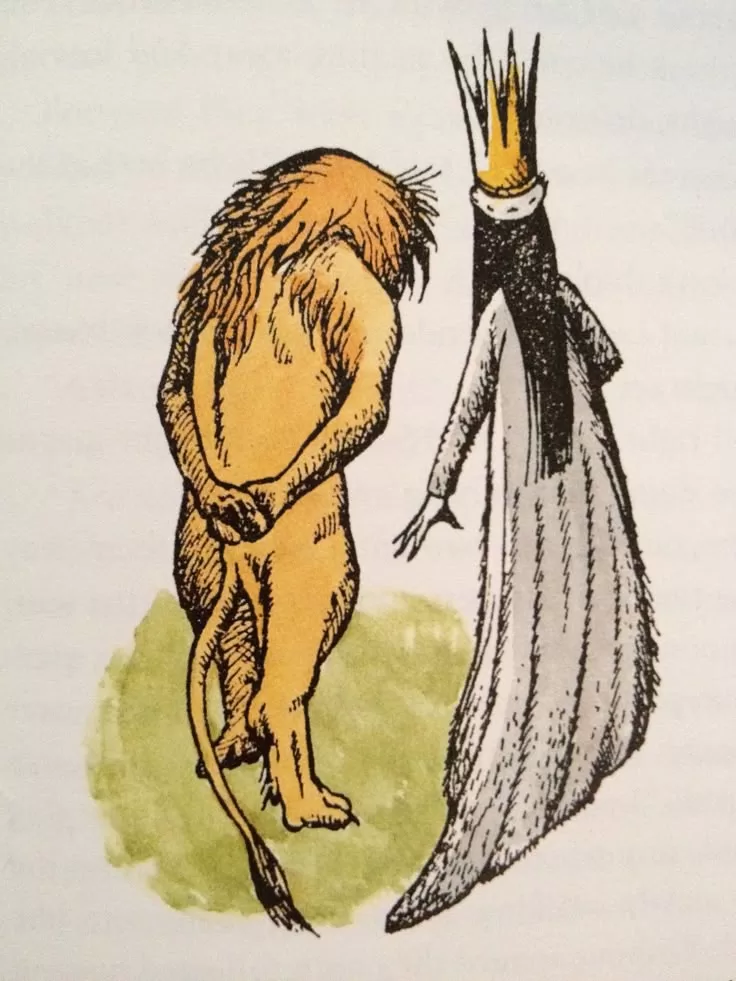
On a surface level it’s easy to see why they were positioned as such. Our minds are essentially trained to look for this sort of binary in the world. In fact, it’s nearly supported by Newton’s Third Law of Motion,
“For every action, there is an equal and opposite reaction.”
It’s a very basic, simple, elegant way of looking at the universe and the way it operates, and it even describes human nature perfectly. The Apostle Paul said it best in lamentation in his epistle to the Romans, chapter 7
“I do not understand what I do. For what I want to do I do not do, but what I hate I do. And if I do what I do not want to do, I agree that the law is good…For I have the desire to do what is good, but I cannot carry it out. For what I do is not the good I want to do; no, the evil I do not want to do this I keep on doing…”
To put it another way, as Robert Louis Stevenson wrote in the novella The Strange Case of Dr. Jekyll and Mr. Hyde,
“This, as I take it, was because all human beings, as we meet them, are commingled out of good and evil…”
There’s even the old parable of the two wolves that is often told to describe both sides of a human’s personality and that the one who wins is ultimately the one that is fed, the darker, more destructive and “evil ‘side” or the “kinder, gentler, nobler ‘good side.”It’s simple, it’s elegant, it’s clean, and it makes a lot of sense on paper.
Further when we think of our favorite heroes, we often quickly think of their great villain who is the perfect foil, be it through power set, mental acuity, strength, status, or symbol. Superman and Lex Luthor. Batman and the Joker. Green Lantern and Sinestro. The Flash and Reverse-Flash. Wonder Woman and Ares. Spider-Man and Green Goblin. Captain America and Red Skull. Iron Man and Iron Monger. Vision and Ultron. Thor and Loki. Luke Skywalker and Darth Vader. Obi-Wan Kenobi and Darth Maul. Yoda and The Emperor. Indiana Jones and Rene Bellok. James T. Kirk and Kahn Noonien Singh. Neo and Agent Smith. Harry Potter and Lord Voldemort.
Good and evil. Right and wrong. Order and chaos. It’s a classic tried and true formula and one that can make a work approachable, especially one so loaded with imagery like Narnia. It’s two central characters, Aslan and Jadis can look like the perfect dyad for the cosmos of that world, the two opposing forces caught in a timeless struggle between the balance of good and evil.
To be certain to a casual observer they seem like the perfect opposite pair. Aslan is male, Jadis is female. Aslan is warm, Jadis is cold. Aslan represents spring, Jadis represent winter. Aslan is light, Jadis is dark. Aslan’s design tends to be a lot of bright golds and warm browns, while Jadis is a pale white and blue. Aslan is life, Jadis is death.
The Pevensies even notice a stark physical and spiritual contrast between Aslan and Jadis when the witch arrives at Aslan’s camp to lay claim to Edmund in novel The Lion, the Witch and The Wardrobe,
“A few minutes later, the witch herself walked out on to the top of the hill and came straight across and stood before Aslan. The three children who had not seen her before felt shudders running down their backs at the sight of her face; and there were low growls among all the animals present. Though it was bright sunshine everyone felt suddenly cold. The only two people present seemed to be quiet at their east were Aslan and the Witch herself.”
If any concept in pop culture perhaps best captured this idea of a dichotomy between light and dark being polar opposites it’s The Force in Star Wars. To long-time fans of the saga, it probably needs no introduction but for the initiated perhaps a brief explanation from one of its practitioners, Obi-Wan Kenobi, is in order. As he tells Luke Skywalker in the original Star Wars movie, when he first begins to teach the boy about the Force,
“The Force is what gives a Jedi his power. It’s an energy field created by all living things. It surrounds us and penetrates us. It binds the galaxy together. “
Even in the franchise there’s a certain religious feel to the Force as people frequently say to one another “May the Force Be with you”, with Din Djarin being the first to have the correct response “May it also be with you” in episode 10, “The Passenger” from the TV series The Mandalorian, while Han Solo during Luke’s training on the Falcon even says, when asked if he doesn’t believe in the Force,
“Kid, I’ve flown from one side of this galaxy to the other. I’ve seen a lot of strange stuff, but I’ve never seen anything to make me believe there’s one all-powerful Force controlling everything. There’s no mystical energy field that controls my destiny. Anyway, it’s all a lot of simple tricks and nonsense.
John Williams leitmotif for The Force, first heard in the original film during the iconic binary sunset scene on Tatooine has even has a hymn like feel and occurs in pivotal moments in the saga when fortunes for the heroes are about to change, and in the original movie, Admiral Motti openly mocks Darth Vader’s devotion to his “ancient religious practices” at his peril.
As George Lucas admitted in a 1999 interview with Bill Moyers prior to the release of The Phantom Menace in the documentary The Mythology of Star Wars as to why The Force was in the Star Wars franchise,
“I put the Force into the movies in order to try to awaken a certain kind of spirituality in young people. More a belief in God than a belief in any particular, you know, religious system. I mean, the — the — the — the real question is to ask the question, because if you — if you — having enough interest in the mysteries of life to ask the questions, is — is there a God or is there not a God?, that’s — that’s, for me, the worst thing that can happen. You know, if you asked a young person, ‘Is there a God?’ and they say, ‘I don’t know. ‘ You know? I think you should have an opinion about that…”
It’s later films, the Empire Strikes Back, and the Phantom Menace where we learn a bit more about the concept of the Force. The prequel and sequel trilogy in particular introduce into the mythology the concept of balance in the force, derived not only from Eastern Religions, but Zoroasterism. According to the teachings of the prophet Zoroaster, their were two equal and opposing gods, one light, one dark, and they were in a constant struggle but one day a chosen one would come who would bring balance to both sides. It is believed by some that the Magi may have seen the Christ child as the fulfillment not only of the prophecy the Old Testament, but of their own.
For good or ill, because of the immense popularity of Star Wars, Hollywood cashed in, big time. Other popular franchises relied on the idea of the forces of good and evil being to equally opposing sides, including magic users in Harry Potter to the element benders in Avatar: The Last Airbender and its themes of balance and harmony between those elements of the four nations, while the Disney film adaption of A Wrinkle in Time deleted all references to Christian theology and merely depicted the three Mrs Ws as cosmic beings with no hint of a connection with the Heavenly host.
Regardless, the Force itself became an instant catch all for handling religion in film, despite George Lucas insisting that the Force really couldn’t be God per se. As Lucas recounted to Moyers,
“I think there’s definitely a place for organized religion and it’s a very important part of the social fabric. And I would hate to find ourselves in a completely secular world, where, you know, entertainment was passing for some kind of religious experience. …It ( The Force) is a thin base for theology, that’s why I would hesitate to call the Force God. When the film came out, almost every single religion took “Star Wars” and used it as an example of their religion and — and were able to relate it to young people and saying, ‘This is what’ — and relate the stories specifically to the Bible and relate stories to the Koran and, you know, the Torah and things. And so it’s like, you know — if it’s a tool that can be used to make old stories be new and relate to younger people, that’s what the whole point was.
 From an objective perspective it’s easy to see just why Hollywood may lean closer to the Star Wars concept of the Force then the Abrahamic concept of God. The Force is a vague and nebulous concept, easy to wrap your mind around. Scroll down enough on Facebook and you’re certain to find on a Star Wars fan site a cheeky image of an action figure of the Force where it’s an empty plastic window glued to a cardboard box. Not only does it cynically poke fun at how the marketing machine would no doubt rake in a fortune selling empty action figure packages to fans if they correctly label it, it speaks to the true nature of the Force.
It’s nothing. It’s empty. You can literally put anything in that package and it would fit. The Force could be God, Jesus, Allah, Ahura Mazda, Shiva, Odin, Zeus, Osiris, Dagda, Kly’bn, The Supreme Intelligence, X’hal, Rao, Enlightenment, Zen, Universal Knowledge, the Power of Positive Thinking, or Col. Sanders walking in on Dark Helmet playing with dolls without knocking to give him a status update. It can even be nothing at all. Just a plot device or a character power in a cool sci-fi film you like.
And it can still ring true for you.
In contrast if you try to depict God Himself as an action figure or in an image or with an actor you’re going to run into problems. Look no farther then how modern art has gone devolved from the sacred images of Christ that can be beautiful and evocative like Christ with the Sacred Heart or Madonna with Child or Michelangelo’s Pieta, to the adult comedies like the Simpsons, Family Guy or South Park and their nearly blasphemous depictions of God. The high art provokes feelings of awe and wonder, the crass cartoons, shock, and offense.
Yet beyond the emotional reaction there is also the philosophical and spiritual nature of the questions that God places upon the soul. With God, He forces a person to grapple with the questions of life and death, eternity, purpose, creation, stewardship and to ponder the nature of good and evil. When stricken with cancer the ill are likely to wonder why this is happening and why God doesn’t heal them. In the face of conflict and suffering those caught in the wake find themselves wondering if God is so absolutely good doesn’t stop it.
This happens for viewers of biblical epics like The Ten Commandments, Ben-Hur, The Passion of the Christ, The Prince of Egypt, The King of Kings or David, as films like these aren’t only designed to entertain but allow viewers the space to ask those hard questions, space that isn’t often allowed in a big budget tent pole film meant to launch a franchise.
CS Lewis himself was abundantly aware of those gnawing questions that can keep one awake at night when it comes to God. As he acknowledged in A Grief Observed while grappling with the death of his beloved wife Joy,
“ Not that I am (I think) in much danger of ceasing to believe in God. The real danger is of coming to believe such dreadful things about him. The conclusion I dread is not ‘So there’s no God after all,” but; ‘So this is what God’s really like. Deceive yourself no longer’.”
As a result, it would be easy to lessen Aslan to make him appear less divine and more magical. Even back during the Walden Media Narnia movies, there were at least two instances where fans were concerned that the filmmakers were diminishing Aslan’s deity. The first was in his scene with Peter as he shows him Cair Paravel and tells him he will be kind and Peter tells him he doesn’t know who he is an Aslan lists his name and where he’s from before saying, “Mr. Beaver also mentioned something about wanting to turn him into a hat”. The second occurred in the film Prince Caspian in which when Lucy asked him if she had followed him right away despite what the others wanted Aslan tells her “We can never know what might have been”, in contrast to the original novel in which He simply tells her that He never tells anyone what might have been.
To many viewers it looked as if the filmmakers were diminishing Aslans divine knowledge of future events. Certainly, looking at the dialogue in question it looks to be the case, however in the end result of the films, we saw Aslan die and rise again to appease The Deep Magic, saw Him free a river with a roar, and got that big line in Voyage of the Dawn Treader where he tells Lucy, Edmund and Eustace that “in your world, I have another name.” Thus, those bits of dialogue were less of a matter of diminishing Aslan’s deity and more of Him stooping lower so the children might approach Him
That withstanding it still remains an incredible tempting proposition for those adapting the story and an area of deep concern for Friends of Narnia. Position Him and Jadis as merely the “Light Side” and Dark Side’ of two opposing forces locked in an eternal struggle and move forward with the fun fantasy adventure, especially if you want it to have the same feeling of empowerment young people get in watching something like Stranger Things where these teens and tweens go on these incredible adventures and grow and change as people, discover their self-worth, claim their power and defeat evil without needing supernatural or spiritual aid.
Why kneel before the Throne and accept His Grace, when the world shouts “you’re enough”?
Truthfully, the Force is hardly original to George Lucas. CS Lewis even made early observations about the concept of a Life-Force in Mere Christianity. As he observed,
“The Life-Force, being only a blind force, with no morals and no mind, will never interfere with you like that troublesome God we learned about when we were children. The Life-Force is a sort of tame God. You can switch it on when you want, but it will not bother you. All the thrills of religion and none of the cost. Is the Life-Force the greatest achievement of wishful thinking the world has ever seen?”
But in the cosmology of Narnia, there’s no room for such wishful thinking when it comes to the most powerful being in the universe. Right off the bat in the novel The Lion, The Witch, and the Wardrobe, Lewis doesn’t allow for a mere dualistic interpretation of Aslan and Jadis.
“Aslan a man! Certainly not. I tell you he is the King of the wood and the son of the great Emperor-Beyond-the-Sea. Don’t you know who is the King of Beasts? Aslan is a lion—the Lion, the great Lion…That you will…and no mistake…if there’s anyone who can appear before Aslan without their knees knocking, they’re either braver than most or else just silly…Safe?…Don’t you hear what Mrs. Beaver tells you? Who said anything about safe? ‘Course he isn’t safe. But he’s good. He’s the King, I tell you.”
And certainly, for a filmmaker, the allure of making Jadis a spiritual coeval for Aslan is incredibly tempting. In traditional dualist thinking, evil is enduring, necessary, balancing But the problem is if she retains her full power this elevates her to being an equal with Aslan in terms of power. The problem with this is it would be a direct contradiction to who the character is in the original text. Aslan exists before time and space, his power is divine, and in contrast Jadis is atemporal being with a beginning an and end. She was born on Charn to the royal family, and even her magical power and her secret weapon The Deplorable word is not “naturally occurring” but rather learned traits.
But much like merely reducing Aslan to the good side of a cosmic force or “Lawful good” on a character alignment chart, to merely position Jadis as his opposite is to undermine who Jadis is as a character. Jadis is not just a wicked fairy tale witch, but she is analogous to Satan, the tempter. As a result, she cannot be an equal or opposite of Aslan anymore then Satan could truly be the opposite of God.
As Lewis observed in the preface to The Screwtape Letters,
“The commonest question is whether I ‘believe in the Devil’…Now, if by ‘the Devil’ you mean a power opposite to God and, like God, self-existent from all eternity, the answer is certainly No. There is no uncreated being except God. God has no opposite…The proper question is whether I believe in devils. I do. That is to say, I believe in angels, and I believe that some of them, by the abuse of their free will, have become enemies of God and, as a corollary, to us. These we may call devils. They do not differ in nature from good angels, but their nature is depraved. Devil is the opposite of angel only as Bad Man is the opposite of Good Man. Satan, the leader or dictator of devils, is the opposite, not of God, but of Michael.”
Jadis, like Satan is not eternal. In fact, in The Magician’s Nephew even before we see Him, we feel Aslan’s presence at work creating Narnia in the stillness and darkness before the stars are given light. Jadis, like Satan probably enters the scene minutes after the song has begun.
Aslan even says in the The Lion, The Witch, and the Wardrobe,
“It means…that though the Witch knew the Deep Magic, there is a magic deeper still which she did not know. Her knowledge goes back only to the dawn of Time. But if she could have looked a little further back, into the stillness and the darkness before Time dawned, she would have read there a different incantation.”
This is but one of the first pieces of evidence as to Aslan’s omniscience and omnipotence throughout the Chronicles. Later, we witness him creation Narnia with His song in The Magician’s Nephew, granting speech and sapience to the animals, and call forth Helen, the wife of Frank the cabby, from England to be the first queen of Narnia, and give wings to the horse strawberry. In The Lion, The Witch and The Wardrobe we see Him breath life back into those Jadis turned to stone. In Hhe Horse and His Boy, we see how he divinely orchestrates the events of Shata’s a life, and watch him turn Rabadash into a donkey as punishment, but not how he sets guidelines for him to be free so he may never again harm Narnia. In Prince Caspian, we see him let loose a river summoning for the River God, and restore Reepicheep’s tail. In Voyage of the Dawn Treader, he restores Eustace from his dragon’s curse, and opens a door in the air to send the children back to Earth. In Silver Chair he brings Caspian back to life with his blood, breaks down the wall of the school so Eustace, Jill and Caspian can punish the bullies, and restore the wall. In The Last Battle, he calls time on the world of Narnia, bringing that world to its end.
Aslan is meant to be He who is the First and Last, the Alpha and Omega, the First and Last, the Beginning and the End and thus has dominion over all creation. As he reminds Jill in The Silver Chair,
“I have swallowed up girls and boys, women and men, kings and emperors, cities and realms.”
In contrast aside from the Deplorable Word that can destroy all life on Charn, creating a hundred year winter conjuring up treats to tempt Edmund, transforming her appearance to resemble a stump, and turning creatures into stone, her power scale isn’t that impressive. Further, when she enters the Wood Between the Worlds in The Magician’s Nephew she is weakened by the very air of that place, appearing deathly ill and trembles at Aslan’s voice during Narnia’s Creation. Even her winter spell is broken through prophesy of the arrival of the Two Sons of Adam and the Two Daughters of Eve and the return of Aslan.
More over when she approaches him to claim Edmund, she can’t even stand to face Him. As it’s noted in the novel The Lion, The Witch andTthe Wardrobe,
“It was the oddest thing to see those two faces-the golden face and the dead-white face-so close together. Not that the Witch looked Aslan exactly in his eyes; Mrs. Beaver particularly took notice of this.”
Aslan is so good, and so powerful, and so wise that He breaks the alignment charts and illusions of balance, and evil can’t stand to look Him in the eye. This is why there is a fundamental problem depicting the battle for Narnia as something more like a dualism of the fates. For embedded deep into the work of CS Lewis, and for the matter, JRR Tolkien and Madeleine L’Engle are informed by the central belief that, ‘The light shines in the darkness, and the darkness cannot overcome.’ That is the central foundation of the Gospel that informed the works of those three fantasy titans.
The final victory is already assured.
The Force from Star Wars is a good starting point for thinking about the existence of a deity. But at the end of the day to remain in that starting point is to just be left with an empty box, whimsically pinned to your social media profile that could be anything. Some stories, like Narnia, need something more. For the song of Creation of Narnia to truly soar from Lantern Waste to the Fords of Beruna is that it needs to be based on something much stronger than mere dualism and character alignment charts.
It needs to be based solely in Aslan and His goodness, power, strength, and mercy. It’s a risky prospect for what is hoped to be a four-quadrant blockbuster hit, not just by an aspiring filmmaker or for a studio executive nervous about turning off none religious persons from the Narnia series. But a Narnia steeped in dualism would be horribly empty, shallow and watered down, easy fodder for a bargain bin and buried by the streaming platform algorithm in favor of an hour -long loop of grass growing or paint drying. Thus perhaps they may find that, by staying true to the cosmology of Narnia, that the time has come to give children something far much more than simple dualism, but allow them space to wrestle with those big questions of good, evil, and the nature of God, and in the process offer them something of more eternal value.
More importantly Narnia can point them to a truth that the universe doesn’t always operate on a dualistic ‘light side/dark side’ ‘yin and yang’ view, and that while evil may have its moment, they can deliver them a promise: that evil can never truly be victorious as Aslan, like Christ, has secured the final victory.
As Lewis observed in Mere Christianity,
“Christianity agrees with Dualism that this universe is at war. But it does not think this is a war between independent powers. It thinks it is a civil war, a rebellion, and that we are living in a part of the universe occupied by the rebel….Enemy-occupied territory — that is what this world is. Christianity is the story of how the rightful king has landed, you might say landed in disguise, and is calling us all to take part in a great campaign of sabotage. When you go to church you are really listening-in to the secret wireless from our friends: that is why the enemy is so anxious to prevent us from going…Why is God landing in this enemy-occupied world in disguise and starting a sort of secret society to undermine the devil? Why is He not landing in force, invading it? Is it that He is not strong enough? Well, Christians think He is going to land in force; we do not know when. …God will invade. But I wonder whether people who ask God to interfere openly and directly in our world quite realize what it will be like when He does. When that happens, it is the end of the world. When the author walks on to the stage the play is over. God is going to invade, all right: but what is the good of saying you are on His side then, when you see the whole natural universe melting away like a dream and something else — something it never entered your head to conceive — comes crashing in; something so beautiful to some of us and so terrible to others that none of us will have any choice left? For this time it will be God without disguise; something so overwhelming that it will strike either irresistible love or irresistible horror into every creature. It will be too late then to choose your side. There is no use saying you choose to lie down when it has become impossible to stand up. That will not be the time for choosing: it will be the time when we discover which side we really have chosen, whether we realized it or not. Now, today, this moment, is our chance to choose the right side. God is holding back to give us that chance. It will not last forever. We must take it or leave it.”
BIBLIOGRAPHY:
Avengers: Age of Ultron. Dir. Joss Whedon. Perf: Robert Downey Jr., Chris Hemsworth, Mark Ruffalo, Chris Evans, Scarlett Johansson, Jeremy Renner, Don Cheadle, Aaron Taylor-Johnson, Elizabeth Olsen, Paul Bettany, Cobie Smulders, Anthony Mackie, Hayley Atwell, Idris Elba, Linda Cardellini, Stellan Skarsgård, James Spader, and Samuel L. Jackson. By Joss Whedon, Stan Lee, and Jack Kirby. 2015. DVD. Marvel Studios/Walt Disney Pictures.
Baker, Tim and Kate Etue. “Zoroasterism” Why So Many Gods?Thomas Nelson: Nashville, TN.2006.pg.pgs.106-110.
Ben-Hur. Dir. William Wyler. Perf: Charlton Heston, Stephen Boyd, Jack Hawkins,Haya Harareet, Hugh Griffith, Martha Scott, Cathy O’Donnell and Sam Jaffe. By Karl Tunberg, Maxwell Anderson, SN Behrman, Gore Vidal, Christopher Fry and Lew Wallace. 1959. DVD .MGM/Warner Bros.
Britannica Editors. “Ahura Mazdā”. Encyclopedia Britannica, 24 Jun. 2025, https://www.britannica.com/topic/Ahura-Mazda. Accessed 21 July 2026.
Britannica Editors. “Dagda”. Encyclopedia Britannica, 15 May. 2020, https://www.britannica.com/topic/Dagda. Accessed 21 July 2026.
Britannica Editors. “Odin”. Encyclopedia Britannica, 15 May. 2020,https://www.britannica.com/topic/Odin. Accessed 21 July 2026.
Britannica Editors. “Ra”. Encyclopedia Britannica, 15 May. 2020, https://www.britannica.com/topic/Ra. Accessed 21 July 2026.
Britannica Editors. “Shiva”. Encyclopedia Britannica, 15 May. 2020, https://www.britannica.com/topic/Shiva. Accessed 21 July 2026.
Britannica Editors. “Zeus”. Encyclopedia Britannica, 15 May. 2020, https://www.britannica.com/topic/Zeus. Accessed 21 July 2026.
“The Boy and the Iceberg” Avatar: The Last Airbender. By Michael Dante DiMartino, Brayn Konietzko, Aaron Ehasz, Peter Goldfinger, Josh Stolberg, Dir. Dave Filoni. Original Airdate February 21, 2005. Nickelodeon,
Captain America: The First Avenger. Dir. Joe Johnston. Perf: Chris Evans, Tommy Lee Jones, Hugo Weaving, Hayley Atwell, Sebastian Stan, Dominic Cooper, Toby Jones, Neal McDonough, Derek Luke, and Stanley Tucci. By Christopher Markus, Stephen McFeely, Joe Simon and Jack Kirby. 2011. DVD. Marvel Studios/Paramount Pictures
“Chapter 10: The Passenger” The Mandalorian. Dir. Peyton Reed, By Jon Favreau. Original Airdate Nov. 6. 2020 .Disney +
The Chronicles of Narnia: The Lion, The Witch, and the Wardrobe. Dir. Andrew Adamson. Perf: Georgie Henley, Skander Keynes, William Mosely, Anna Popplewell, James MacAvoy, Tilda Swinton, Ray Winston, and Liam Neeson. By Ann Peacock,Andrew Adamson, Christopher Markus, and Stephen McFeely. 2005. Walden Media/Walt Disney.
The Chronicles of Narnia: Prince Caspian. Dir. Andrew Adamson. Perf: Georgie Henley, Skander Keynes, William Mosely, Anna Popplewell, Ben Barnes, Sergio Castellitto, Peter Dinklage, Warwick Davis, Ken Stott, and Liam Neeson. By Ann Peacock, Andrew Adamson, Christopher Markus, and Stephen McFeely. 2008. Walden Media/Walt Disney.
The Chronicles of Narnia: The Voyage of the Dawn Treader. Dir. Michael Apted.Perf: Georgie Henley, Skander Keynes, Will Poulter, Ben Barnes, Simon Pegg, William Mosely, Anna Popplewell, Laura Brent, and Liam Neeson. By Christopher Markus, Stephen McFeely, and Micahel Petroni2010. Walden Media/20th Century Fox.
The Dark Knight. Dir. Christopher Nolan. Perf: Christian Bale, Michael Caine, Heath Ledger,Gary Oldman, Aaron Eckhart, Maggie Gyllenhaal, and Morgan Freeman. By Christopher Nolan, Jonathan Nolan, David S. Goyer, Bob Kane, Bill Finger and Jerry Robinson. 2008. DVD. DC Comics/Warner Bros. Entertainment
David. Dir. Brent Dawes and Phill Cunningham. Perf: Phil Wickham, Brandon Engman,Asim Chaudhry, Miri Mesika, Mick Wingert, Will de Renzy-Martin, and Lauren Daigle. By Brent Dawes, Kyle Portbury and Sam Wilson. 2025. DVD. Angel Studios.
Green Lantern: First Flight. Dir. Lauren Montgomery. Perf: Christopher Meloni, Victor Garber, Tricia Helfer, Michael Madsen, John Larroquette, Kurtwood SMith, Larry Drake, Malachi Throne, and Olivia D’Abo. By Allan Burnett and Micahel Allen. 2009. DVD. DC Comics/ Warner Bros.
Iron Man. Dir. Jon Favreua. Perf: Robert Downey Jr., Terrence Howard, Jeff Bridges, Gwyneth Paltrow, Leslie Bibb, and Shaun Toub. By Mark Fergus, hawk Ostby, Art Marcum, and Matt Holloway. 2008. DVD. Marvel Studios Paramount Pictures.
John. NIV Study Bible. Zondervan, Grand Rapids, MI. 1985.
The King of Kings. Dir. Seong-ho Jang. Perf: Kenneth Branagh, Uma Thurman, Mark Hamill, Pierce Brosnan, Roman Griffin Davis, Forest Whitaker, Ben Kingsley, and Oscar Isaac. By Seong-ho Jang, Rob Edwards and Charles Dickens. 2025. DVD. Angel Studios.
L’Engle, Madeleine. A Wrinkle in Time. Dell Laurel-Leaf: New York, NY. 1976.
Lewis, CS. A Grief Observed. Harper Collins: New York, NY. 1996. Pgs.6-7.
Lewis, CS. The Last Battle. Harper Collins: New York, NY. 1994.
Lewis, CS. The Horse and His Boy. Harper Collins: New York, NY. 1994.
Lewis, CS. The Lion, The Witch and the Wardrobe. Harper Collins: New York, NY. 1994. Pg.86,154, 178-79
Lewis, CS. The Magician’s Nephew. Harper Collins: New York, NY.1994.
Lewis, CS. Mere Christianity.Touchstone Books: New York, NY.1980. Pg.35,51,63-64
Lewis, CS. Prince Caspian.Harper Collins: New York, NY. 1994.
Lewis, CS. The Silver Chair. Harper Collins: New York, NY. 1994. Pg. 21.
Lewis, CS. The Voyage of the Dawn Treader. Harper Collins: New York, NY. 1994.
Lewis, CS “Preface” The Screwtape Letters. Touchstone Books: New York, NY. 1996. Pg. 6.
The Matrix. Dir. The Wachowskis. Perf; Keanu Reeves, Laurence Fishburne, Carrie-Anne Moss, Hugo Weaving, and Joe Pantoliano. By Dir. The Wachowskis. 1999. DVD .Warner Bros.
Moyers, Bill and George Lucas. The Mythology of Star Wars. PBS, 18 June 1999.
Newton, Issac. The Principia: The Authoritative Translation: Mathematical Principles of Natural Philosophy. Bernard Cohen, Anne Whitman, and Julia Budenz. (Translators.) University of California Press, Oakland, CA. 2016.
Passion of the Christ. Dir. Mel Gibson. perf: Jim Caviezel, Maia Morgenstern, Christo Jivkov,Francesco De Vito, Monica Belliucci, Mattia Sbragia, Luca Lionello, Hristo Naumov Shopov, and Rosalinda Celentano. By Mel Gibson and Benedict Fiztgerald. 2004. DVD. 20tH Century Fox.
Pak, Greg, Fred van Lente, and Rafa Sandoval. “ Sacred Invasion ( part 1):(The God Squad)” The Incredible Hercules vol. 1 issue 117. Marvel Comics, New York, NY. 2008
“Pilot” Smallville. By Alfred Gough and Miles Millar.Dir. David Nutter. Original Airdate: October 16,2001. KMWB WB 23.
The Prince of Egypt. Dir. Brenda Chapman, Steve Hickner, and Simon Wells. By Philip LaZebnik and Nicholas Meyer. Perf: Val Kilmer, Ralph Fiennes, Michelle Pheiffer, Sandra Bullock, Jeff Goldblum, Danny Glover, Patrick Stewart, Helen Mirren, Steve Martin and Martin Short.1998. DVD. DreamWorks Pictures.
Raiders of the Lost Ark. Dir. Steven Spielberg. By George Lucas, Lawrence Kasdan, and Philip Kaufman. Perf. Harrison Ford, Karen Allen, Paul Freeman, Denholm Elliot, John Rhys-Davies, Ronald Lacey, Alfred Molina, and Wolf Kahler. DVD. 1981. LucasFilm, LTD/Paramount Pictures.
Richards, Mark. “John Williams Themes, Part 1 of 6: The Force Theme – Film Music Notes.”2 Mar. 2013.
Romans NIV Study Bible. Zondervan, Grand Rapids, MI. 1985.
Rowling, JK. Harry Potter and the Sorcerer’s Stone.Scholastic Books, New York, NY. 1998.
Space Balls. Dir. Mel Brooks. Perf: Bill Pullman, John Candy, Rick Moranis, Daphne Zuniga,Dick Van Patten, George Wyner, Lorene Yarnell, Joan Rivers, Dom DeLuise, and Rudy De Luca. By Mel brooks, Thomas Meehan and Ronny Graham.1987. DVD. MGM/UA
“Space Seed” Star Trek. Dir. Marc Daniels. By Carey Wilber and Gene L. Coon. Original Airdate: Feb. 16, 1967. KSTP-TV NBC 5.
Spider-Man. Dir. Sam Raimi. Perf: Tobey Maguire, Kirsten Dunst, James Franco, Willem DaFoe, Cliff Robertson, Rosemary Harris, and JK Simmons. By David Koepp. 2002. Marvel Entertainment/Sony Pictures/Columbia Tri-Star. DVD.
Star Trek II: The Wrath of Kahn. Dir: Nichoals Meyer. Perf: William Shatner, Ricardo Montalban, Leonard Nimoy, DeForest Kelley , James Doohan, Walter Koenig , Nichelle Nichols, George Takei, Kirstie Alley, Paul Winfield, Bibi Besch, and Merrit Butrick. By Jack B .Sowards, Nicolas Meyer, Harve Bennett, and Samuel A. Peeples. DVD. 1982. Paramount Pictures.
Star Wars: Episode I: The Phantom Menace. Dir: George Lucas. Starring Liam Neeson, Ewan McGregor, Natalie Portman, Jake Lloyd, Ian McDiaramid, Ray Park, Ahmed Best, Pernilla August, Anthony Daniels, Kenny Baker, Samuel L. Jackson and Frank Oz. 1999. LucasFilm. LTD. Released by 20th Century Fox.
Star Wars: Episode II: Attack of the Clones. Dir: George Lucas. Perf: Ewan McGregor,Natalie Portman, Hayden Christensen, Ian McDiaramid, Christopher Lee, Anthony Daniels, Kenny Baker, Samuel L. Jackson, Tameura Morrison, and Frank Oz. 2005. LucasFilm. LTD. Released by 20th Century Fox.
Star Wars: Episode III: Revenge of the Sith. Dir: George Lucas. Perf: Ewan McGregor, Natalie Portman, Hayden Christensen, Ian McDiaramid, Christopher Lee, Anthony Daniels, Kenny Baker, Samuel L. Jackson, Jimmy Smits, and Frank Oz. 2005. LucasFilm. LTD. Released by 20th Century Fox.
Star Wars: Episode IV: A New Hope. Dir. George Lucas. Perf: Mark Hamill, Harrison Ford, Carrie Fisher, Peter Cushing, Alec Guiness, Anthony Daniels, Kenny Baker, Peter Mayhew, David Prowse and James Earl Jones. 1977. LucasFilm. LTD. Released by 20th Century Fox.
Star Wars: Episode V: The Empire Strikes Back. Dir: Irvin Kersner. Perf: Mark Hamill,Harrison Ford, Carrie Fisher, Billy Dee Williams, Anthony Daniels, Kenny Baker, Peter Mayhew, David Prowse, James Earl Jones, Sir Alec Guiness and Frank Oz. 1980. LucasFilm. LTD. Released by 20th Century Fox.
Star Wars: Episode VI: Return of the Jedi. Dir. Richard Marquand. Perf: Mark Hamill,Harrison Ford, Carrie Fisher, Billy Dee Williams, Anthony Daniels, Kenny Baker, Peter Mayhew, David Prowse, James Earl Jones, Alec Guiness, Ian McDiaramid and Frank Oz. 1983. LucasFilm. LTD. Released by 20th Century Fox.
Superman: The Movie. Dir .Richard Donner. Perf: Christopher Reeve, Marlon Brando, Gene Hackman, Ned Beatty, Jackie Cooper, Glenn Ford, Trevor Howard, Margot Kidder, Valerie Perrine, Maria Schell, Terence Stamp, Phyllis Thaxter and Susannah York.
Stevenson, Robert Louis. Dr. Jekyll and Mr. Hyde.Signet Classics; New York, NY. 2003.
The Ten Commandments. Dir. Cecil B. DeMille. Perf: Charlton Heston, Yul Brynner, Anne Baxter, Edward G. Robinson, Yvonne De Carlo, Debra Paget, John Derek, Sir Cedric Hardwicke, Nina Foch, Martha Scott, Judith Anderson , and Vincent Price. By Aeneas MacKenzie,J esse L. Lasky, Jr.,Jack Gariss, and Fredric M. Frank. 1956. DVD. Paramount Pictures.
“The Man in the Yellow Suit” The Flash. Dir. Ralph Hemecker. By Todd Helbing and Aaron Helbing. Original Airdate: December 9, 2014. WUCW-CW-23.
Thor. Dir. Kenneth Branagh. Perf: Chris Hemsworth. Natalie Portman, Tom Hiddleston, Stellan Skarsgård, Kat Dennings, Clark Gregg, Colm Feore, Ray Stevenson, Idris Elba, Jaimie Alexander, Rene Russo, and Anthony Hopkins. By Ashley Edward Miller, Zack Stentz, Don Payne, Mark Protosevich,and J. Michael Strazynski. 2011. DVD. Marvel Studios/Paramount Pictures.
Tolkien, J.R.R. The Lord of the Rings: The Fellowship of the Ring. Ballantine Books: New York, NY. 1993.
Tolkien, J.R.R. The Lord of the Rings: The Return of the King.Ballantine Books: New York, NY. 1993.
Tolkien, J.R.R. The Lord of the Rings: The Two Towers.Ballantine Books: New York, NY. 1993.
Wein, Len and Curt Swan. “The Man Who Murdered the Earth!”Superman Vol .1 #248. New York, NY: DC Comics.
Wolfman, Marv and George Perez. “Citadel Strike”The New Teen Titans. Vol 1 Issue 24. DC Comics: New York, NY. Oct. 1982.
Wonder Woman. Dir. Patty Jenkins. Perf: Gal Gadot, Chris Pine, Robin Wright,Danny Huston, David Thewlis, Connie Nielsen, and Elena Anaya. By Allan Heinberg, Zack Snyder, and Jason Fuchs. 2017. DVD. DC Entertainment/Warner Bros. Studios.
A Wrinkle in Time. Dir .Ava DuVernay. Perf: Oprah Winfrey, Reese Witherspoon, , Gugu Mbatha-Raw, Michael Pena, Zach Galifianakis, Chris Pine, Storm Reid, Levi Miller, Deric McCabe. By Jennifer Lee and Jeff Stockwell. 2018. Walt Disney Pictures
PHOTO CREDIT: 1955 Pauline Baines, Harper Collins.
2024. Pinterest.
OF COURSE evil cannot be equal to good. Every strength it boasts of is swiped from the pre-existing Creator. Evil, as Tolkien observed, can only mar, not make. Lewis remarked that Dualism, good Ahura-Mazda versus evil Ainya-Manu (sp?) gave a rousing call for mortals to take a stand; but taking a stand at all proves a greater stand than selfish souls can even imagine taking.
If Paul Martin sees this: I, Copperfox, am toiling to provide content in the written word and in hand-sketched pictures; but AUDIO of music or the spoken word has to wait until Wood Nymph and I get our hands on a tape RECORDER.
That sounds good, Joseph. If you have a cellphone, you can do audio recording with that, too.